




In the past decade or so, an increasing amount of technology has made it from luxury to mainstream offerings. Truth be told, the adoption has accelerated of late and can be seen through the adoption of things like stability control systems, push button starters, and even advanced driver assistance systems. Now, one major field of advancement has to do with electrification.
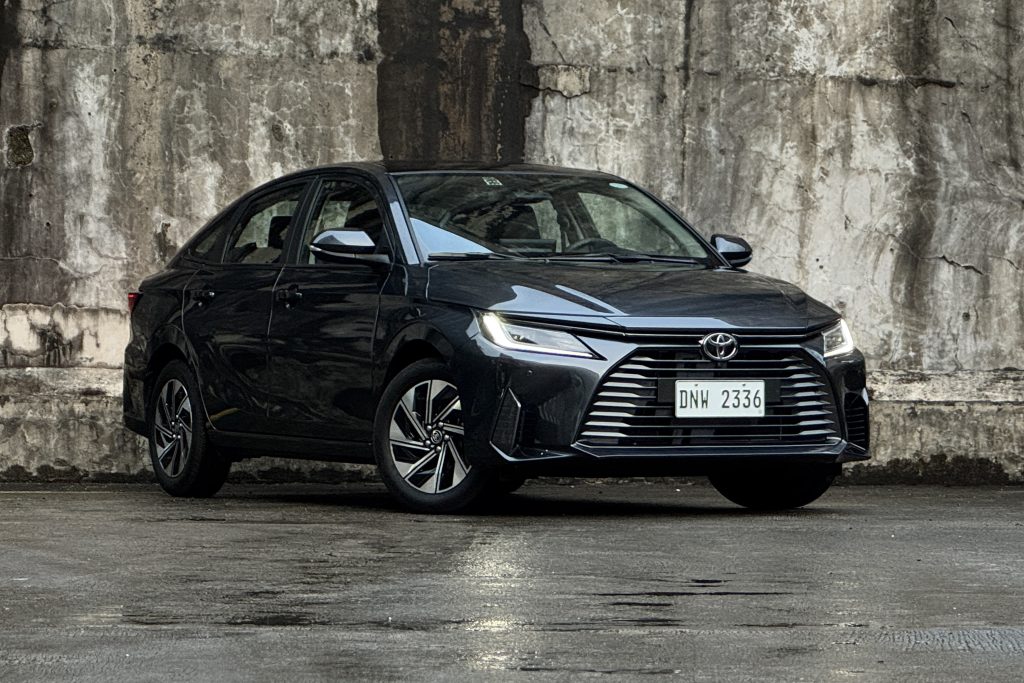
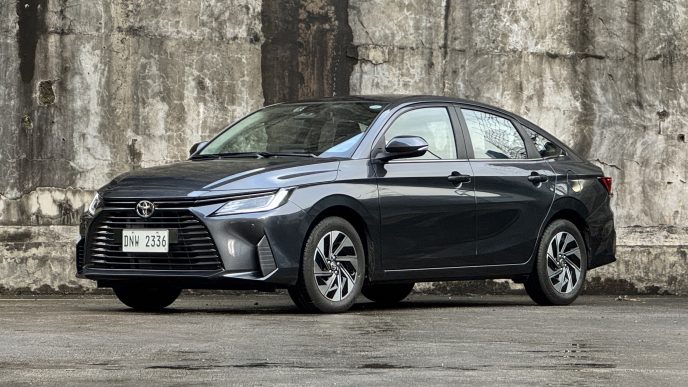
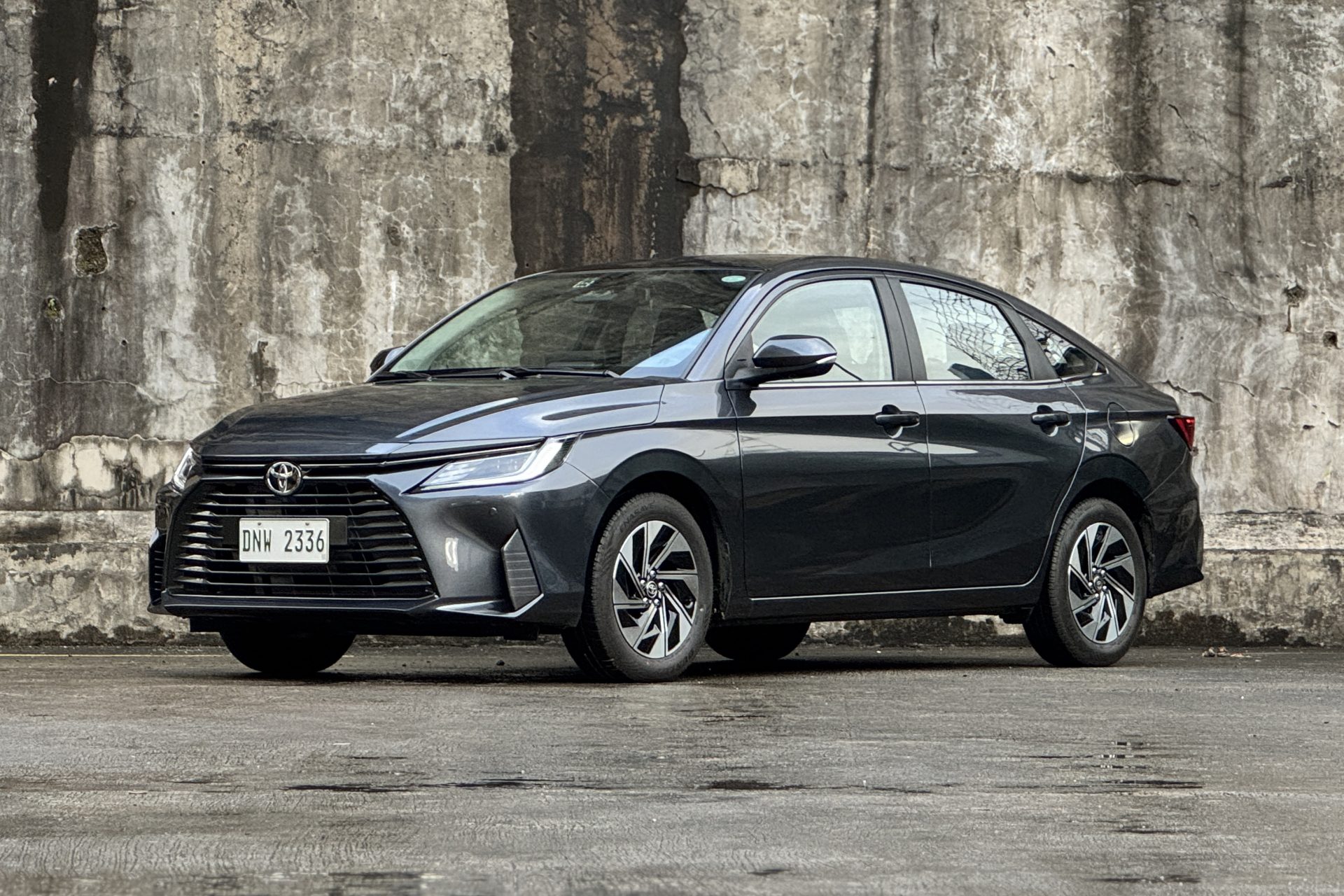
Toyota is one of those that led the hybrid charge here in the Philippines. From just one hybrid offering, the Prius, in 2009, they now have eight hybrid electric vehicles on offer. However, despite having the widest hybrid range among car brands, the one criticism you can throw their way is that none of them could really be classified as affordable. That is, before the Toyota Ativ came in. At P 1,198,000, the Ativ is P 316,000 lower than Toyota’s next most affordable hybrid, the base Corolla Cross. And despite the more accessible price tag, it doesn’t shortcut that much when it comes to its features and, most importantly, the drive.
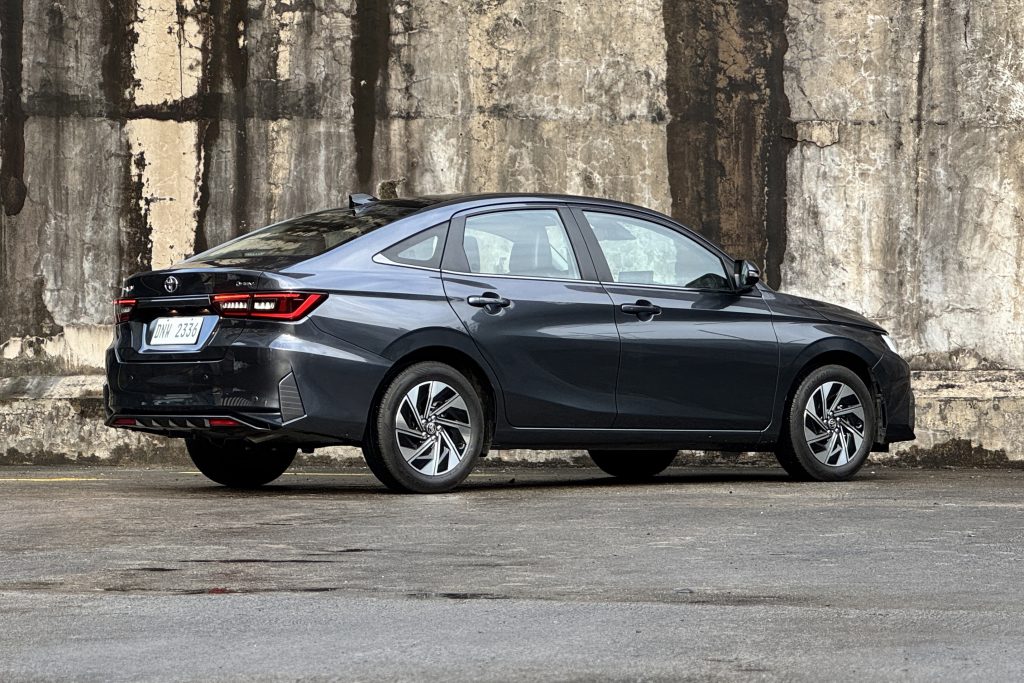
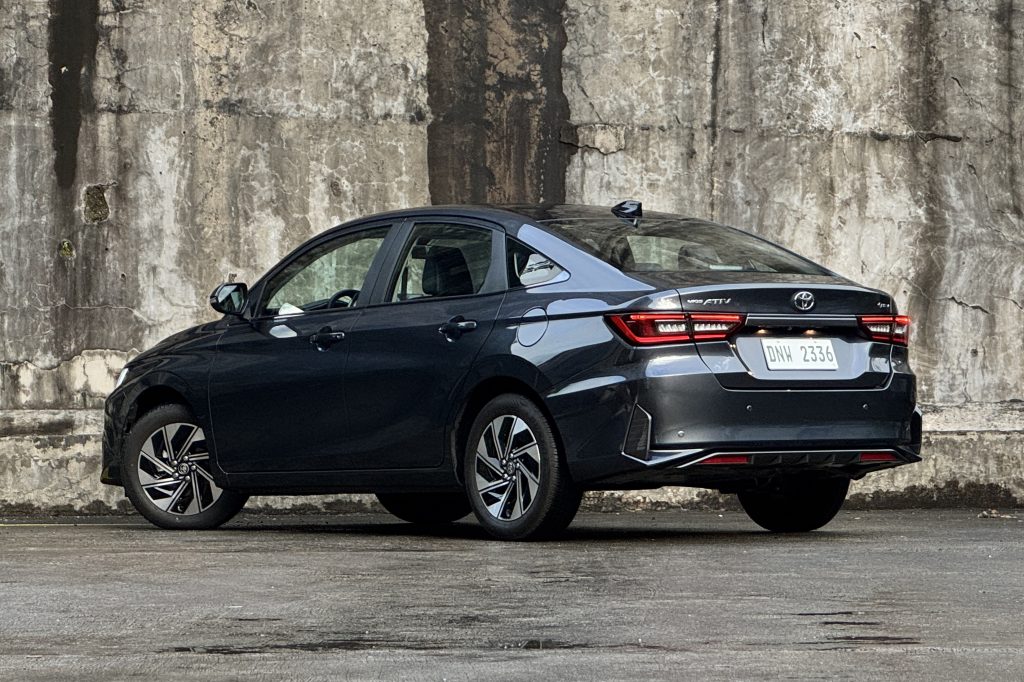
A look at the Ativ’s trunk badge shows, “Vios Ativ” and this tells you exactly what to expect. If you’re thinking of this being a baby Corolla or Camry, it’s not playing that tune. Instead, it’s a value-oriented sedan with the right amount of spec to be considered sensible and practical. It’s for the first-time new car buyer then.
Without a doubt, the Ativ’s best achievement is its powertrain. It deserves an Oscar for its fuel efficiency, managing to hit 23.1 km/L after a week of use. At one point, it can even hit 30 km/L when traffic gets light.
During sensible driving, the Ativ does fine. Like all other Toyota hybrids, it tries to operate on electric motivation most of the time: at start up, at slow speeds (up to 40 km/h), and during coasting. With the electric motor generating 80 horsepower, it can even climb up lightly graded roads with just the quiet hum of the electric motor serving as the accompanying soundtrack.
The Yaris Cross HEV received some flak for its lack of NVH isolation. For the Ativ, Toyota has managed to fix that (mostly). Subjectively, it’s quieter with less powertrain noise leaking into the cabin. The 1.5-liter engine is still audible especially when it maintains revs to charge the battery, but it’s not as obtrusive anymore. It’s still no Camry, but road and tire noise are better controlled thanks to tires with thicker side walls (60 series) and the abundance of sound-absorbing matting fitted not just to the rear, but front wheel wells, too.
Riding also on the same platform as the Yaris Cross, the Ativ offers a well-balanced driving experience. The steering offers decent accuracy. It feels agile, amplified with excellent sightlines all around. The suspension is well-tuned too, smoothening out even the worst of Manila’s roads without feeling floaty or unwieldly at speed. The Ativ offers confidence from behind the wheel.

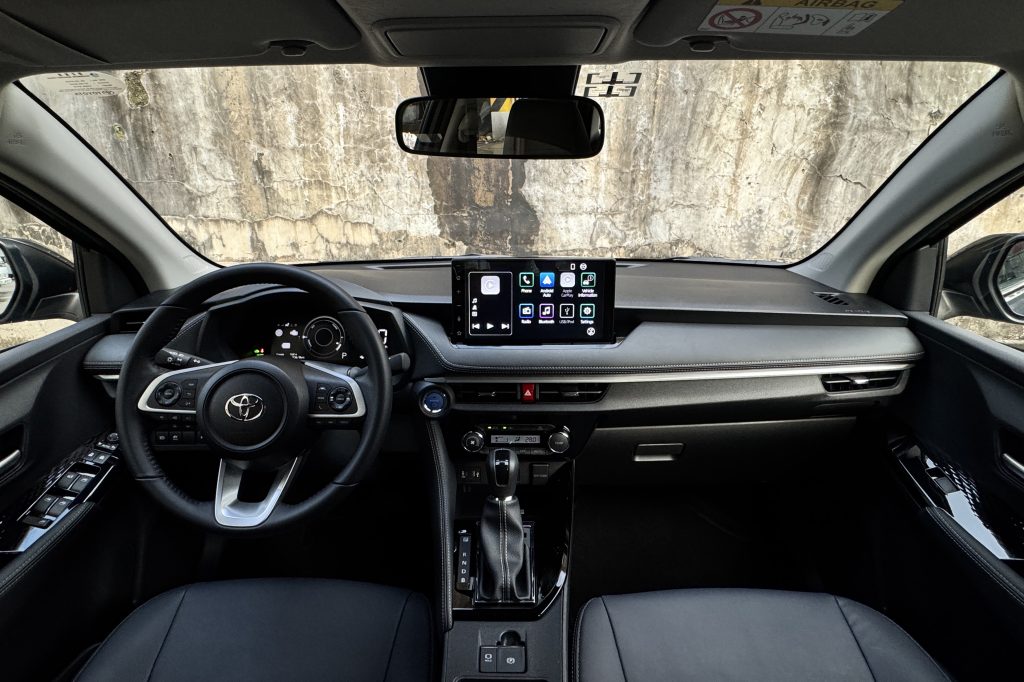
Nothing shouts economy sedan quite like the Ativ’s cabin. The hollow-sounding doors, dashboard, and interior trims don’t help its case. Still, at least everything feels well-wearing and gives off this vibe that’ll last for decades. The steering wheel is wrapped in leather and so are the seats (with a gray accent to boot), but mind you, there’s not the soft, plush kind. But, at least they’re easy to clean and maintain.
Ergonomically, the Ativ’s quite alright. The seats all move mechanically, but there’s good range of adjustment. The steering wheel also adjusts for both reach and height. The resulting driving position is lofty, but comfortable.
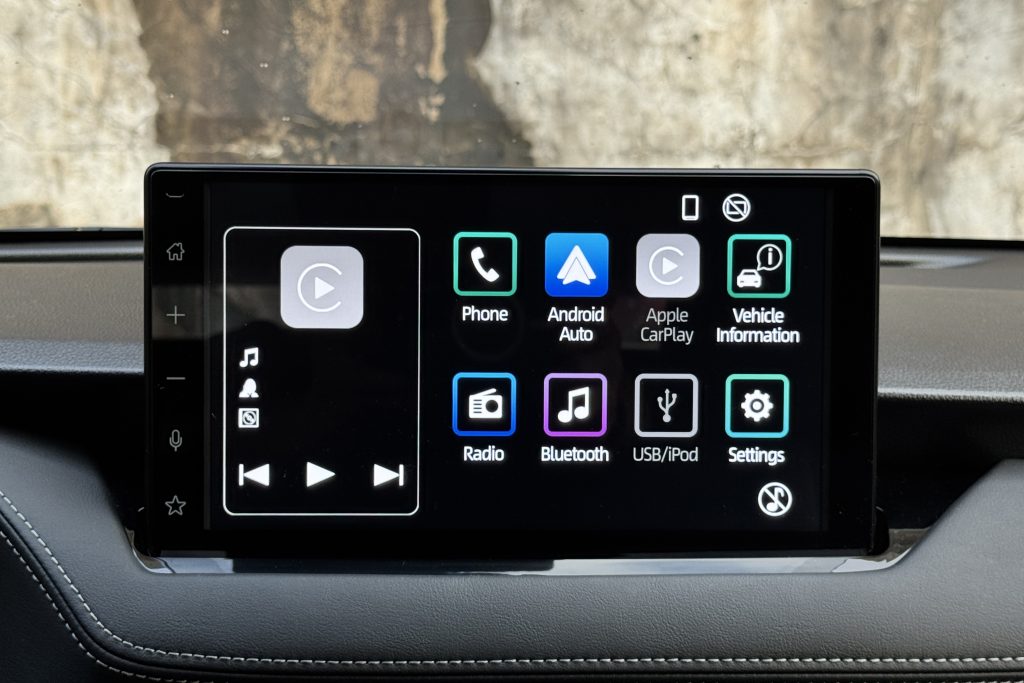
At the center, there’s a 10.1-inch screen. The interface looks low-res (as does the 360-degree camera) and the speaker system is one of the weakest we’ve tested in a modern car, but at least the menu system is easy enough with not too many submenus to master. In front of the driver, there’s a 7-inch screen with a segmented LED speedometer. The screen is configurable in four ways and always presents information in an easy to digest manner.
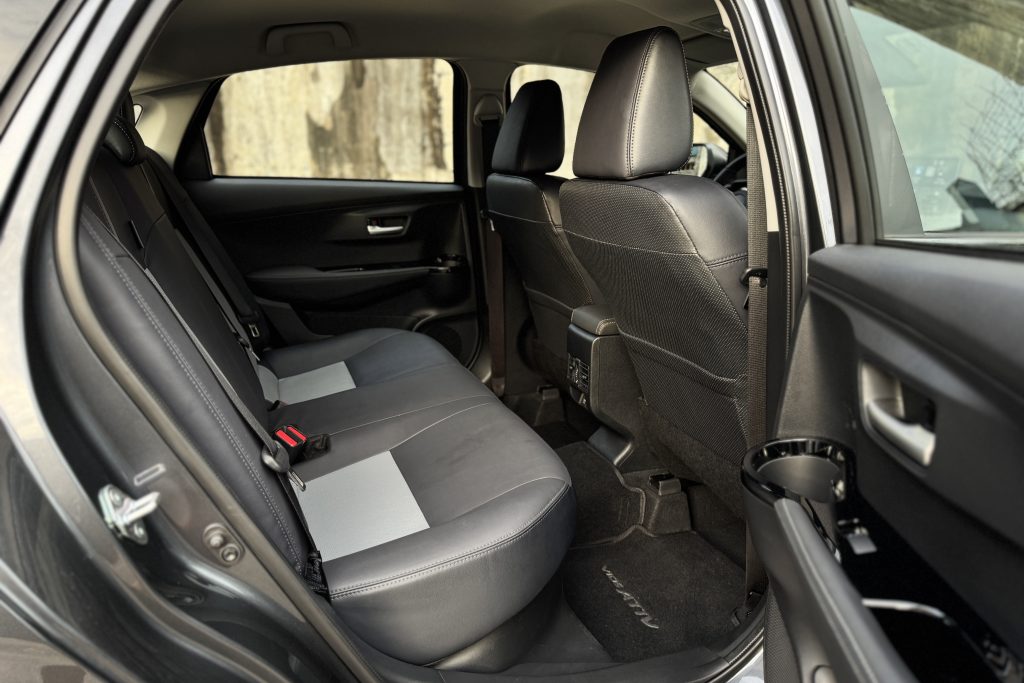
Towards the rear, the Ativ can easily seat two adults, three in a pinch. Knee room has grown versus the current-generation Vios, but there’s also a larger hump in the middle. The headrest and backrests are fixed too (no split-folding mechanism), and there’s less headroom. At 170 cm, you’ll find yourself already brushing the headliner when occupying the middle rear seat. But hey, at least there are rear AC vents and USB charging ports now. Mounting the high-voltage battery underneath the rear seats frees up enough space for a large trunk. The trunk is also where you find the 12-volt battery and a full-sized spare tucked underneath.
Equipped with Toyota Safety Sense, but using a dual camera (as opposed to a camera + radar setup), the Ativ comes with a full set of driver-assist tech. Better yet, dig through the menu and you’ll find that it’s highly customizable in terms of sensitivity and alert timing (you can even turn some audible alerts off). This allows you to drive without having continuous beeps blaring about the cabin.
The Toyota Ativ’s arrival comes at the right time. While one of the benefits of going hybrid—reduced tailpipe emissions—often escapes the Filipino car buyer, they do appreciate the tangible economic benefits such as less trips to the pump and not needing a second car due to hybrids (and EVs) being coding-exempt. These qualities surely resonate with the Toyota buyers, because after all, they do appreciate the built-in QDR or Quality, Durability, and Reliability of these vehicles.
In that regard, the Toyota Ativ is a sensible, practical decision that goes beyond what you see and read in the spec sheet.