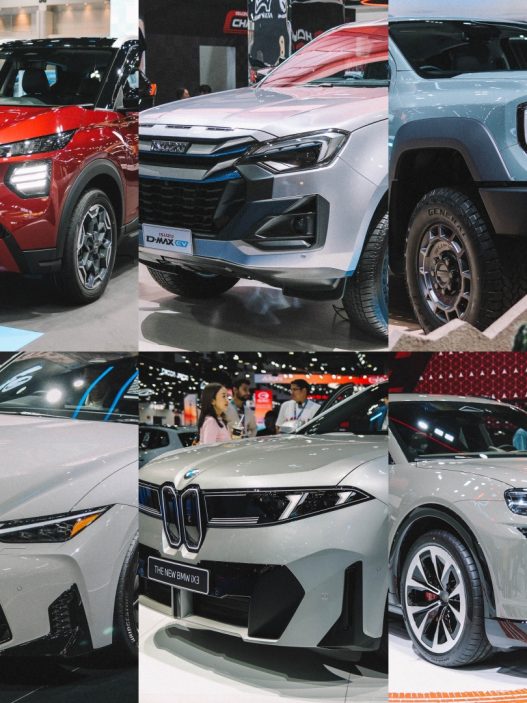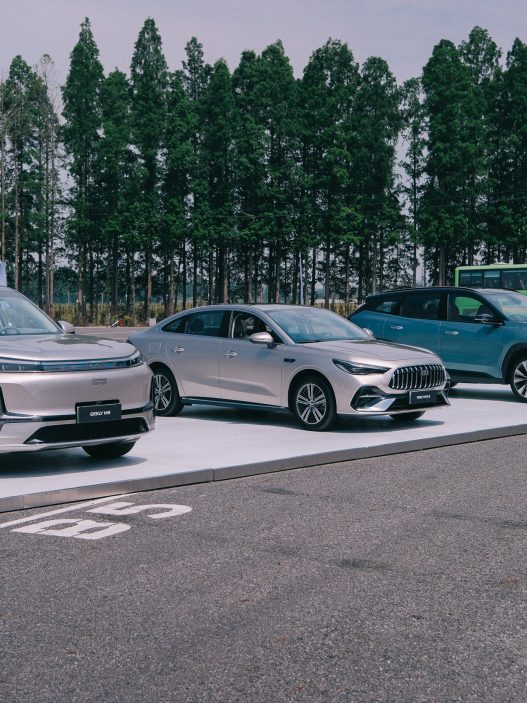






At this point in Q1 2026, almost all of the best-selling segments in the car market have an electrified option. Sedans, crossovers, 7-seaters, and SUVs. Even pickups have hybrid choices now thanks to Changan and Radar. The only void that remains is ironically, the one that will surely push electrification forward which is the sub-million price range.
I get it. We’re not in a position of power to command a car developed for us. All I’m saying is, this could be an option spec-wise.
I’m also focusing on hybrids because despite the improvement of EV charging infrastructures, battery EVs still present an anxiety to new car owners. Also those who cannot install a home charger in their current residence would look for a hybrid instead.
Right now most hybrid cars in the Philippines are in the top of the line trims of their models. There are some like the Toyota Corolla Cross that have hybrid power for all variants, while the Honda CR-V has recently moved their electrified power to the mid-VX trim. But these, and most of the hybrids are in the PHP 1.5M arena and above.
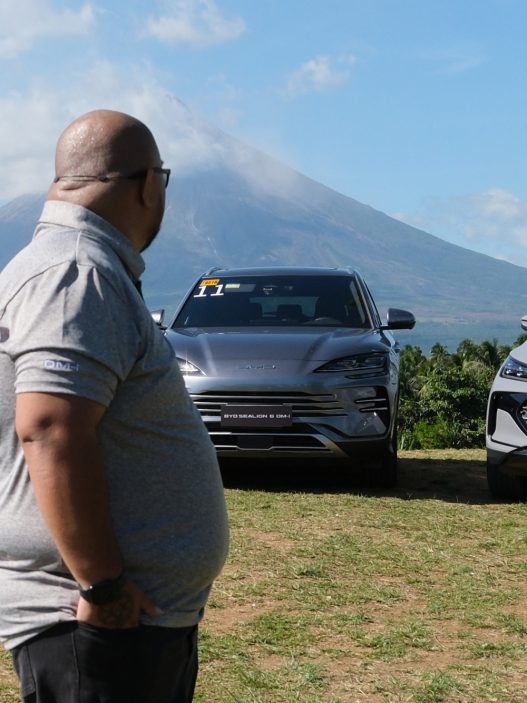
If you want something more affordable, there’s the BYD Seal 5 DM-i that starts at PHP 948,000. That’s still basically a million pesos, or more if you get it through financing.
The thing is, do we need all the features that come with a hybrid powertrain? Let’s take the Seal 5 as an example and see what features I can live without.
At PHP 948,000, the base model is already bare compared to its Premium sibling. Still, there are a few bits that can go in the name of practicality. Let’s start with the lights. Instead of an automatic LED, we can go for Manual Halogen Headlights with no height adjustment. We’ll also ditch its Follow-Me-Home feature. The Side, Rear, and Fog Lights can all have halogens as well while reducing the Sequential Turn Signals to standard blinks. Finally for the exterior, remove the Heated Side Mirrors.
There are more we can make do inside the cabin. Older drivers will certainly appreciate the removal of the keyless entry and Push-Start Ignition in lieu of a standard one. We’ll change the leather seats to standard ones and remove all the leather panels in the cabin in exchange of plastic.
We can also downgrade some things like the Auto Climate Control to a manual one, go from 6 to 4 speakers, and have the touchscreen fixed and not rotating. We can’t have a manual handbrake for this one because of the design of the center console so we’ll retain the Electronic Parking Brake, as well as the rear air vents.
Lastly in terms of safety features, there are only three we can possibly remove. The Cruise Control, Tire Pressure Monitoring System, and downgrading the rear Disc Brake for drums. I didn’t dare remove that other emergency bits like Stability Control, the number of Airbags, and Brake Assist since they protect you in emergency situations.
With all these removed from the BYD Seal 5 DM-i Dynamic, it’s not hard to see the price go down to around 800k or even at the high 700k. Of course the math is tricky since modifying a car only for 1 market will incur additional labor and production cost, cancelling the supposed savings.
My point here is this – we are moving from fuel cars to hybrid ones, in hopes of fully transitioning to battery-electric vehicles, all for the name of zero emissions. We want a healthier environment not just in far flung places but in cities too. So why is there a hybrid tax (added features, not money) in these cars? Shouldn’t they strive for a more affordable green offering in order to hasten meeting the zero emission goal?
Remember the time around the 2010s when car brands introduced small hatchbacks in the market? These more affordable offerings didn’t hurt their brand image. Instead, it allowed many Filipinos to have a better means of mobility without shelling a million pesos for a private ride. Of course it resulted in traffic but that’s another matter. All I’m saying is, we need another small hatchback moment with these hybrid cars for a bigger adoption rate in order to wake up with less smog in our cities.