



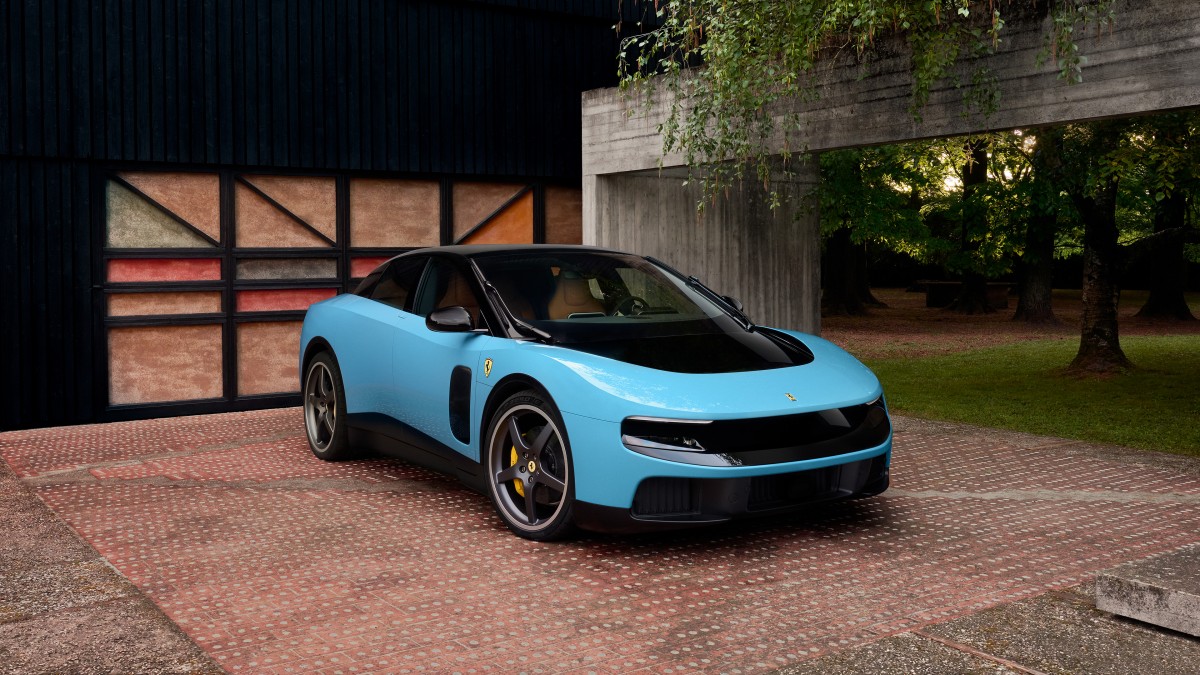
Ferrari today unveiled the Ferrari Luce in the symbolic setting of the Vela di Calatrava – Città dello Sport in Rome, a venue chosen to mark the beginning of a new chapter in Ferrari’s storied history of engineering excellence and innovation. Ferrari won its first ever victory in Rome on this day in 1947, with the Ferrari 125 S winning the Gran Premio di Roma at the Baths of Caracalla circuit. On that decisive day, driver Franco Cortese set in motion an unimaginable legend of success. Some 79 years later, Ferrari returns to unveil a project that reinforces its unwavering commitment to redefine the limits of what is possible.
The Ferrari Luce marks the culmination of Maranello’s multi-energy strategy, announced at the 2022 Capital Markets Day and subsequently confirmed on various occasions. In accordance with the principle of technological neutrality, electrification is just one of the means available to Ferrari to expand its design potential in product architecture, performance, design, and driving experience, without replacing existing engines.
Deepening the Prancing Horse’s in-house expertise in electric technology opens new potential for performance and efficiency across the entire Ferrari ecosystem. This includes technology transfer between road cars and the 499P that triumphed in the last edition of the World Endurance Championship, and the bold Ferrari Hypersail project, a unique laboratory of research and innovation. Ferrari Luce expands the Maranello marque’s expertise still further, opening up a new segment consistent with Maranello’s DNA of combining performance, engagement and versatility.
The Ferrari Luce name evokes clarity and direction. It lights the way towards the future and defines the intent to create a Ferrari 360°, not merely the “electric Ferrari” but an entirely new Ferrari, designed for deeper engagement and performance, with a unique and recognisable character. In keeping with tradition, Ferrari chosen to engineer, develop and manufacture the main components in-house; from the electric engines to the battery pack, every element is created in Maranello to guarantee quality, control and uniqueness. The project includes more than 60 new patents, testifying to Ferrari’s technical excellence and to a vision that also looks to long-term value. In the future, Ferrari will provide assistance on all electric components, including batteries, in line with the Ferrari Forever philosophy.
The design of the Ferrari Luce was entrusted to LoveFrom, the design collective led by Sir Jony Ive and Marc Newson. Introducing a team from outside the Ferrari Design Studio led by Flavio Manzoni invited a new perspective and cross-fertilisation, enabling a new design language to be introduced. LoveFrom was given the creative freedom needed to define the design direction of the project from the outset, translating this design language into an authentic Ferrari experience. The electric power source, Ferrari-engineered engines and advanced drivetrain affords a radically new architecture that uniquely combines extraordinary Ferrari performance with the luxury of spaciousness.
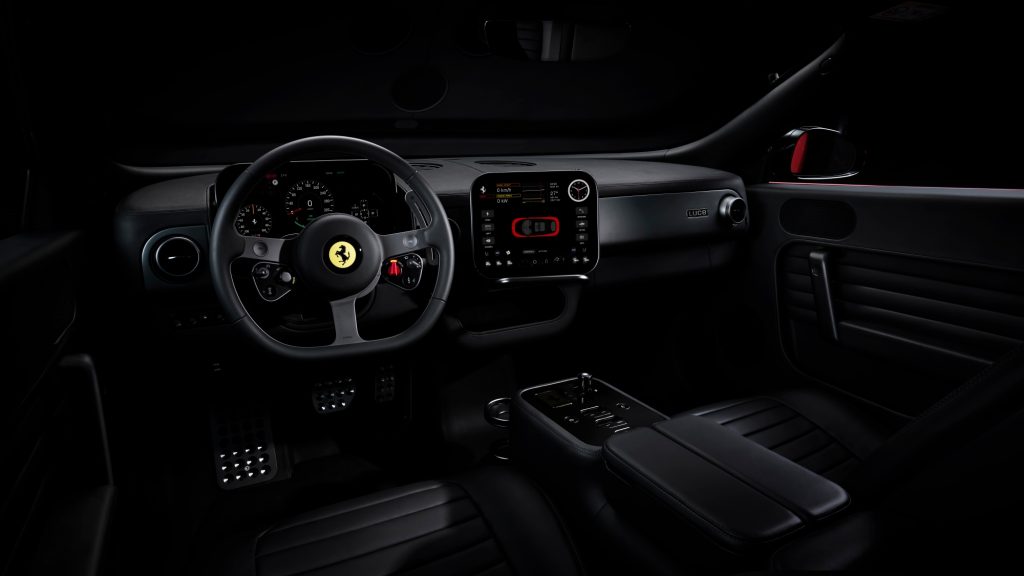
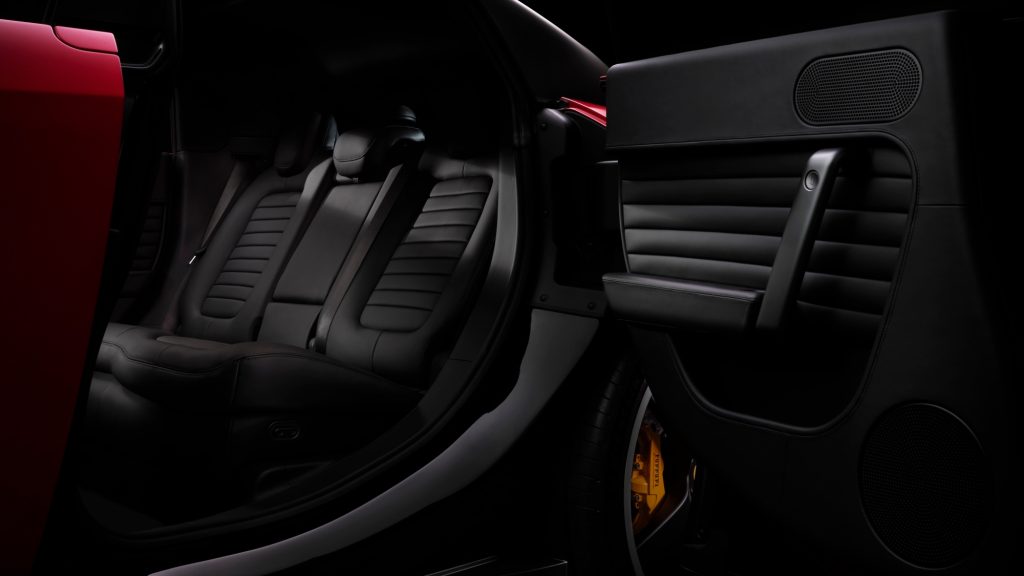
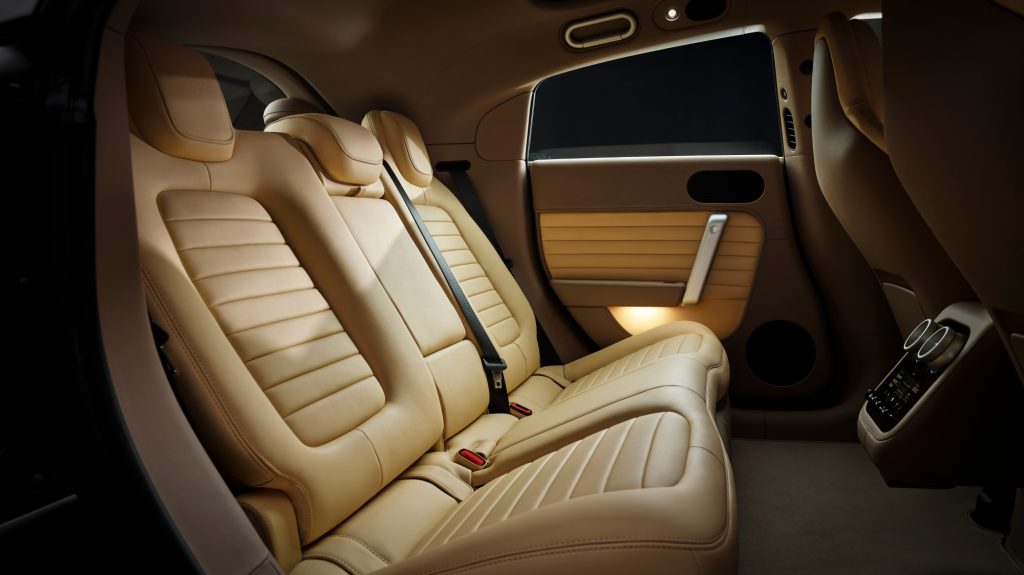
This architecture generously accommodates four doors and five seats, which is a first for the Prancing Horse (as transaxle configurations with a front-mid engine and a rear gearbox do not allow for a fifth seat). The interior is a celebration of hundreds of discrete products, each meticulously considered and treated with individual care. Together they create a single, clean volume, with forms simplified and rationalised in service of the driving experience. The exterior, interior and interface share a unified design language.
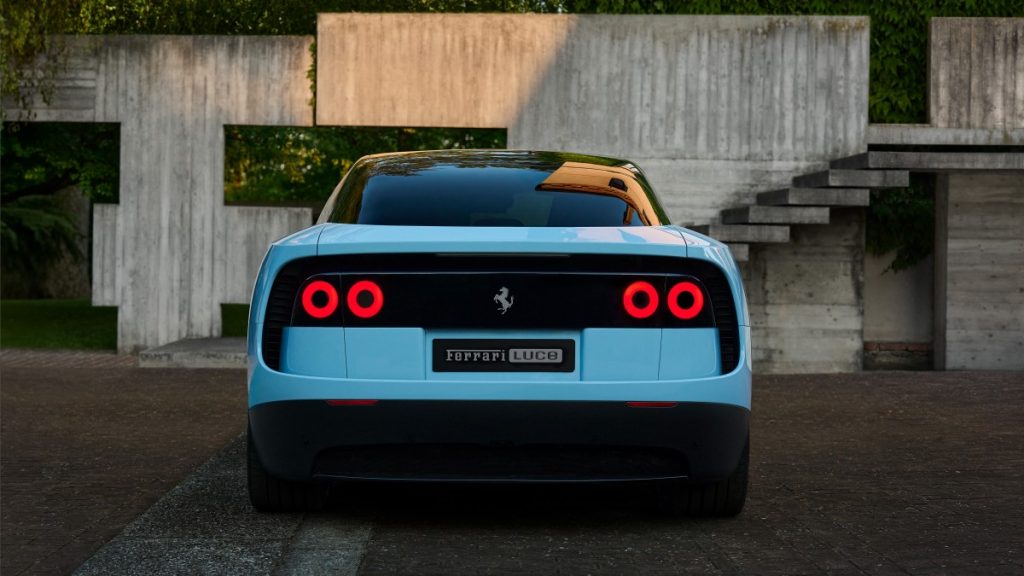
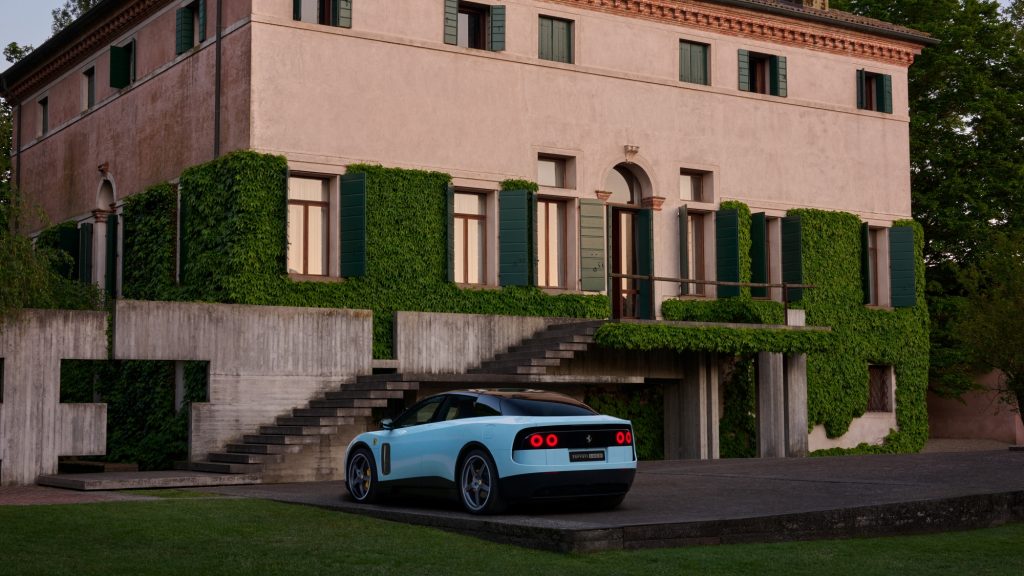
A defining visual characteristic of the Ferrari Luce is the unprecedented purity of the glass house. This uncompromised, shell-like form extends below the belt line to the extremes of the car. The front and rear aerodynamic wings, floating above and around the silhouette of the glass house, enable this uniquely pure and simple form. The front and rear light panels are transparent and part of the primary surfaces. The lights seem to gently recede when switched off, preserving the purity of the form. The halo tail lights celebrate the beauty and clarity of the 360 Modena and 458 Italia. The extreme innovation of the Ferrari Luce is manifest with a custom wheel design. Luce has the largest staggered wheel diameters on a series-production Ferrari road car: 23” in the front and 24” at the rear.
The interface is designed with clear organisational principles of input and output. Controls and displays are grouped functionally, with the most essential commands and feedback directly in front of the driver. Thousands of deeply considered details unite to create a singular driving experience. Precision-engineered mechanical buttons, dials, toggles and switches are combined with multifunctional digital displays developed with Samsung Display©. Materials are honest and pure – recycled anodised aluminium, Corning® Gorilla® Glass and premium leather. The superior audio system has 21 speakers and 24 channel/3000 W amplification incorporates the innovative Ferrari Audio Signature, and features presets, individual listening optimisation, and dynamic compensation functions.
From a technical perspective, the Ferrari Luce is based on a bespoke platform with a dedicated chassis and engineering innovations in every single component. Technologies derived from Ferrari’s unrivalled experience in the world of motor racing made it possible to contain kerb weight at 2260 kg, helping deliver best‑in‑class performance (0–100 km/h in 2.5 seconds, 0–200 km/h in 6.8 seconds, top speed over 310 km/h and maximum total power output of 1050 cv) and a range in excess of 530 km.
The car is powered by four electric engines, one per wheel, and is equipped with a high‑capacity 122 kWh battery, an active suspension system derived from the F80 and an independently steering rear axle. Within this framework of technological innovation, two concepts best encapsulate Ferrari Luce’s ambitious entry into the world of high‑performance electric sports cars: the control of each wheel’s motion in every direction and in any dynamic condition, and the authentic approach to sound.
Each wheel is equipped with one actuator for traction and regeneration, one for the steering angle and one to control vertical movement. The ability to adapt torque distribution in real time to road conditions and desired performance provides exceptional freedom and precision of control. Each of the Ferrari Luce’s wheels is therefore perfectly attuned to the driver’s input, allowing the driver to experience a single, fluid movement. Torque vectoring and the elastic balance of the suspension system also assist in changing direction, enhancing the car’s agility and ease of driving.
The Ferrari Luce’s approach to sound is based on the key principle that it must be authentic and functional, generated from the car’s mechanics and serving the driving experience. A precision accelerometer at the centre of the axle captures the dynamic texture and vibration of the rotating components while the sound waves are moving. Developed in-house and patented, this system filters, equalises and amplifies the signal in a similar way to an electric guitar, but only when functional to the driving experience. The sound level is based on the position of the e-Manettino and the use of the paddles, allowing the driver to switch from quiet focus to maximum expressiveness. Sound is emitted via an external amplification system that creates a natural sound wave, and an internal system that ensures detail and high fidelity. As well as the quality of the interior sound, this has the benefit of being audible outside the car. The Ferrari Luce has benefited from cutting-edge noise, vibration and harshness (NVH) research, making it the most comfortable Ferrari ever. Road noise is significantly reduced by the first elastically-mounted subframe in Maranello’s history, as well as active suspension, the optimisation of weight, rigidity, and soundproofing.
The Ferrari Luce succeeds in its ambitious goal of achieving by far the lowest drag coefficient in the history of Maranello’s road cars, paired with an unrivalled interior space. An extreme care for aerodynamics shaped the fundamental architecture of the entire car. Surfaces have been refined to be smooth, continuous and uninterrupted to maximise airflow and wake management. The active aerodynamic grilles are another first for Ferrari, regulating the airflow through the heat exchangers and always ensuring the correct balance between cooling requirements and aerodynamic drag. Active ride height can lower the front by 10 mm at speed to maximise efficiency without compromising comfort or performance. The cooling system is part of an integrated software that optimizes range by balancing power consumption and intelligent warm-up, fast-charging management, and battery and cabin preconditioning functions, operable remotely.
Vehicle dynamics have been developed to exploit the unprecedented advantages of the electric architecture in terms of centre of gravity, inertia, and freedom of control, allowing the Ferrari Luce to maintain dynamic behaviour that is always agile and natural. The driver manages the car via the e-Manettino, which modulates power and traction, and the iconic five-position Manettino equipped with logics that adapt to grip conditions. The Vehicle Control Unit (VCU) makes its debut on the Ferrari Luce; this control centre integrates powertrain and dynamics, updating targets 200 times per second and coordinating efficiency strategies with the brand-new Side Slip Control X.
The electric all-wheel drive is a first for a Ferrari. It allows the full potential of torque vectoring to always make the car precise and responsive, while the new torque shift engagement and extended regenerative braking deliver a progression of torque and engine braking worthy of a sports car. Torque management is a characteristically Ferrari response to one of the typical challenges of electric powertrains: the sensation of strong, instantaneous longitudinal acceleration, which can even be unsettling when pulling away and which levels off as acceleration increases. Ferrari has engineered a proprietary, patented system that allows the available torque to be increased by operating the right-hand steering wheel paddle, whilst maintaining the sensation of progressive acceleration. The left paddle increases energy recovery and the sensation of deceleration, delivering a dynamic experience unrivalled by any other car in its class.
The powertrain comprises four F80-derived permanent magnet synchronous engines with radial flux, delivering a maximum speed of 30,000 rpm at the front and 25,500 rpm at the rear. The system operates on 800 V architecture and combines performance with efficiency, with solutions directly derived from motorsport. The high-voltage battery pack was designed, validated, and built in Maranello and comprises 210 cells in series that deliver 122 kWh and support fast charging up to 350 kW. It is designed as a structural element of the car. Power electronics feature compact inverters and a DC/DC resonant converter for the active suspension to achieve record-breaking efficiency of more than 98%.
The Ferrari Luce’s battery pack, chassis and body form an integrated system capable of optimising structural performance and efficiency. The chassis combines hollow castings, extrusions, and aluminium, while the body utilises extrusions and aluminium sheet metal. The architecture maximises interior space, eliminating the central tunnel and integrating the battery beneath the floor and rear seats. The high level of optimisation and integration of an elastically mounted rear subframe combines the handling typical of a Ferrari with superior performance in terms of driving comfort. The battery housing actively contributes to rigidity, with an increase of over 25% (bending) and 35% (torsional) compared to previous four-door models. The BIW-battery housing combination is among the lightest in its class for a vehicle of this specification. The semi-virtual double wishbone suspension (with high-mounted upper arm), independent rear-wheel steering, optimised CCM brakes, and targeted solutions to reduce friction, complete a set-up designed to maximise driving excitement and comfort.
The extensive use of recycled secondary-alloy aluminium allows a reduction in CO₂e emissions during production of around 70% of the overall vehicle weight.
The Ferrari Luce marks a new chapter, yet one that continues its long history of uncompromising innovation, driving performance, and an engineering culture that seeks to redefine the limits of what is possible.
Additional images and information on the Ferrari Luce can be downloaded from ferrari.com/media-centre
Ferrari Media & PR
LOVEFROM
LoveFrom is a creative collective of architects, artists, engineers, filmmakers, graphic designers, industrial designers, interaction designers, motion designers, musicians, sound designers, type designers and writers. The collective was founded by Jony Ive with Marc Newson in 2019 and has studios in San Francisco and London. LoveFrom works closely with OpenAI as well as with a select number of carefully chosen projects, including Ferrari.
PRESS KIT
QUOTES
John Elkann, President of Ferrari:
“With Ferrari Luce, we are once again redefining the limits of what is possible. Today, we are not simply unveiling a new car, we are inaugurating a chapter that turns our vision into reality, strengthening Ferrari’s tradition of anticipating and shaping the future. Such a leap forward in product innovation could only have been achieved through process innovation; this is why we chose to embark on new collaborations, such as the one with LoveFrom for the design. And, as always, our research and engineering excellence have been placed at the service of driving emotions, without compromise. Rome, the symbolic location of our first victory, becomes the starting point for a Ferrari that lights up the future and opens new horizons”.
Benedetto Vigna, CEO of Ferrari:
“We are convinced that a company demonstrates its leadership when it has the courage to dare and to take on the challenge of new technologies. Ferrari Luce was born precisely from this challenge, offering our unprecedented vision of electrification. Never before have we offered our clients such freedom of choice. In line with our belief in technological neutrality, we are the first in the world to combine fully electric, hybrid and combustion engine architectures for sports cars. We have not limited ourselves to innovation in powertrains; with Luce, we have launched a whole new segment in our range. This model is the result of more than 60 of our new patents and lies at the heart of an ecosystem of collaborations with outstanding technology partners. We have created a car that combines unique driving emotions with extraordinary performance, driving pleasure, and comfort for the Ferraristi of today and tomorrow”.
DESIGN
The Ferrari Luce is the first electric Ferrari from the Maranello marque. Its design was approached in an unconventional way, intended to underline its uniqueness on a technological level as well – hence the idea of entrusting the project to a designer from outside the Ferrari Design Studio, headed by Flavio Manzoni. The creative collective LoveFrom was brought on board and tasked with bringing an unconventional, multidisciplinary perspective and experience of the luxury sector to enable cross-fertilization and inspire new design languages.
The Ferrari Luce has acquired such a specific identity precisely because the designers were given the freedom to conceive a disruptive yet coherent form. In tackling the development of the car, LoveFrom was in fact granted the philosophical and design autonomy needed to present a complete, global proposal, whose research would extend into fields beyond that of pure car design. The guiding principle was simplification, with styling cues that recall closed forms and smooth, pure shapes. Subsequently, during the development phase, LoveFrom worked with the Ferrari Design Studio, refining the concept in keeping with its original intent and ensuring that every solution was in line with Ferrari’s functional targets, architectural constraints, and the homologation requirements of a production road-going sports car.
EXTERIOR
The electric power source enables a radically new architecture that generously accommodates four doors and five seats. This is the second four-door Ferrari, and the first with five seats. A defining visual characteristic of the Ferrari Luce is the unprecedented purity of the glass house. This uncompromised, shell-like form extends below the belt line to the extremes of the car. The front and rear aerodynamic wings, floating above and around the silhouette of the glass house, enable this uniquely pure and simple form. A preoccupation with aerodynamics shaped the fundamental architecture of the entire car. Surfaces have been refined to be smooth, continuous and uninterrupted.
Inside, the Luce feels substantially larger than it appears. The light and airy interior feels expansive, pure, and affords the empowerment and luxury of choice and flexibility. The interior is a celebration of hundreds of discrete products, each meticulously considered and treated with individual care. Together they create a single, clean volume, with forms simplified and rationalised in service of the driving experience. The exterior, interior and interface share a unified design language.
Opening all four doors reveals a symmetrical and waisted contour of the silhouette. The generous apertures reveal the airy and spacious interior. The front and rear light panels are transparent and part of the primary surfaces. The lights gently recede when switched off, preserving the purity of the form. The halo tail lights celebrate the beauty and clarity of the 360 Modena and 458 Italia.
The extreme innovation of the Ferrari Luce is manifest with a custom wheel design. The car has the largest staggered wheel diameters on a series-production Ferrari road car: 23” in the front and 24” at the rear. There are two designs: a forged, open five-spoke design and an aerodynamically optimized turbine design.
Ferrari and LoveFrom worked closely with Corning® on precision-engineered advanced glass, resolving complex technical challenges in the composition and forming of the glass solution. This extends the use of glass on the interior surfaces of the cabin.
Launch colours of the Ferrari Luce comprise Azzurro la Plata, Giallo Luce, Rosso Dino, Bianco Artico, and Rosso Fiammante, selected to reflect the car’s contemporary character. In particular, the specially developed yellow was inspired by the historic yellow of the Ferrari logo and can also be found on the wheel hubs and the steering wheel.
INTERIOR
The Ferrari Luce interface is designed with clear organizational principles of input and output. Controls and displays are grouped functionally, with the most essential commands and feedback directly in front of the driver. Precision-engineered mechanical buttons, dials, toggles and switches are combined with multifunctional digital displays. Thousands of deeply considered details unite to create a singular driving experience, designed and engineered to be functional, intuitive, and thrilling to drive.
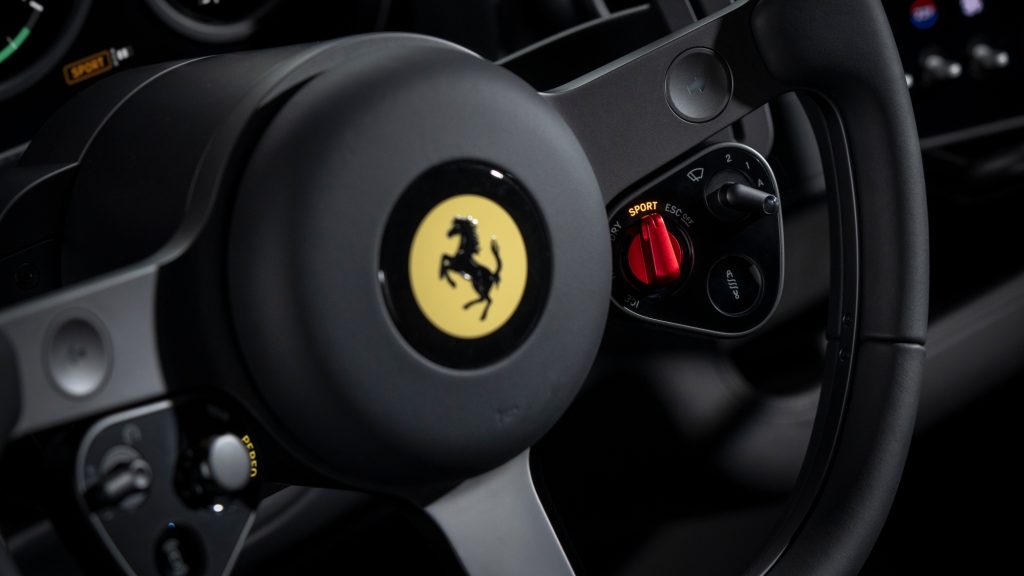
The steering wheel, torque control paddles and binnacle combine to form the steering assembly. The binnacle moves with the steering wheel, optimising the driver’s view of the instrumentation and supporting driver performance. The three-spoke steering wheel is a pure and singular form, machined from 100% recycled aluminum. Emblematic of driver control, the wheel is augmented with distinct and functional analogue control modules in the most ergonomic position for driving, and is constructed from precision-machined and hand-finished aluminium with anodised finish, glass elements and leather grip. The e-Manettino manages energy and range by optimising power flow to the system. The iconic Manettino controls multiple dynamics settings that change the character of the driving experience.
Manual “torque-control paddles” control the torque for progressive acceleration, combined with power from regenerative braking which adjusts the flow of energy recovery. The torque meter above the speedometer indicates the optimal moment for the driver to increase torque level. The magnetic mechanism of the paddle gives clear, deliberate and satisfying feedback to the driver.
Essential driver-focused information is concentrated on the binnacle, a multi-layered display combining digital and mechanical instrumentation. It is a distinct, standalone element containing three dials, each with an aluminium bezel and precision-machined glass lens, encased in anodised aluminium housing. The left dial displays power, and is directly connected to the e-Manettino mode, displaying available power output and regenerative braking. The central dial shows the two most critical data points, speed and battery level, on a dial which combines a mechanical needle with a digital dial. The driver dial on the right can display seven functional data points designed to improve driver performance, adjusted with a mechanical toggle on the right analogue control module.
The control panel is a self-contained articulating panel that augments the driving experience, combining mechanical controls with a digital touchscreen. The control panel can be pivoted by the driver and co-pilot using the handle and palm rest. Three physical buttons control climate, car settings and media. There are dedicated climate controls for cabin temperature, fan speed, seat heating and ventilation are all physical controls that can be accessed quickly and intuitively while driving. The touch screen is used for deeper climate settings, media, and navigation.
Combining mechanical dials with a digital face, the multi-functional Multigraph displays a clock, compass, or 60-second stopwatch. The control panel has a high-resolution, custom-shaped OLED screen laminated to a durable, high-visibility coverglass and protected by a machined aluminium frame. An anodised aluminium bracket runs from the back to form a handle and a palmrest.
The overhead control panel houses a physical pull that initiates Launch Mode. Additional controls include exterior lights, defrosters and the SOS emergency system. Launch Mode initiates a flawless performance start by adjusting torque and stability systems, and allocating extra power. During Launch Mode the power dial transitions to orange and expands to represent more power delivery.
The centre console is a standalone module integrating the key, shifter, armrests, storage, and controls for the rear cabin. The key represents the driver’s persistent, personal connection to their Ferrari Luce. When the key docks, the historic Ferrari yellow surges from the key across the interface. Docking the key starts the car and unlocks the shifter – ready to drive.
The rear control panel shares real-time drive information with passengers and houses rear climate controls. The form of the centre console is wrapped in premium Italian leather with storage lined in Alcantara©. Shifter controls are precision engineered in anodised aluminium and selectively textured glass. Handles are anodised aluminium with backlit e-latch buttons. Rear doors close via a button on the B-pillar, which is disabled while the car is in motion.
The central tunnel incorporates the key housing, the drive mode selector, the armrests, the storage compartment, and the rear seat controls. The start-up sequence begins with the insertion of the key, a uniquely designed item made from Corning® Gorilla® glass – the first automotive glass engineered to ensure exceptional durability and scratch resistance whilst delivering excellent visual performance. The key features a special display known as “E Ink”, which only uses energy when it changes colour, thanks to its bistable properties. The use of an “E Ink” display is a world first in the automotive industry.
Samsung Display© (SDC) developed the OLED screens exclusively for the Ferrari Luce, in accordance with the specifications agreed during the co-design phase for three display areas in the cabin: the binnacle, the central panel and the rear panel, with a total of four panels (12.9″, 12″, 10.1″ and 6.3″). In particular, the binnacle display adopts a multi-layered design based on the superimposition of two panels and openings cut into the upper layer, creating a sense of visual depth and a more natural way of reading the information, consistent with the desire to combine digital output with an analogue sense of interaction. Compared to traditional LCD designs, the use of OLED technology – which does not require an external backlight unit – allows for a simpler and slimmer structure, offering greater freedom of integration and contributing to a cleaner, more compact internal layout; furthermore, power consumption is limited to active pixels only, resulting in significant efficiency gains.
Seats are beautifully refined and simple forms that are functional, supportive, comfortable and luxurious. There are two choices of pattern, four fabric options, and multiple colourways. Seats are all independently power adjustable using a refreshingly simple and intuitive control. Front seats are heated, with an optional massage function. Every detail is carefully considered and engineered, down to the seat rail covers.
AUDIO SYSTEM
The Ferrari Luce introduces a high-end, state-of-the-art audio system: 21 loudspeakers engineered and integrated for maximum acoustic performance (ribbon tweeters, sealed-box midrange units, woofers, a subwoofer in an ultra-rigid enclosure, an ultra-flat speaker headliner for a 3D experience and sealed-box surround speakers). Processing is handled by the new proprietary Ferrari Audio Director software platform, which oversees all the vehicle’s audio streams, managing content, presets, functions, and equalisation to ensure the best experience in all driving conditions. The head unit integrates high-performance chips that enable best-in-class, tailor-made algorithms. Amplification is via 24 channels and 3000 W, with a dedicated high-power-density Class-D amplifier.
Ferrari is also introducing the exclusive Ferrari Audio Signature – a unique acoustic identity resulting from years of research and development: five presets (“Studio”, “Concerto”, “Immersive”, “Opera”, and “Electronic”) and a “Solo” mode to optimise the listening experience from every seat. Each car is measured individually using a proprietary, patented system that certifies its audio quality.
AERODYNAMICS
Developing an extremely high‑performance yet highly user-friendly electric car posed a new challenge for the company, which set itself a series of very ambitious, interlinked objectives. Among these are a new standard of ergonomics and passenger comfort for a Ferrari, the fastest possible battery charging speed (a major challenge from a cooling standpoint), and a long driving range, a key parameter for the Ferrari Luce. To maximise range, it was necessary to reduce the drag coefficient to a minimum, setting a new benchmark in the company’s history.
Aerodynamic development took more than five years, involving around 6000 CFD simulations, 250 hours of wind‑tunnel testing on scale models, and around 80 hours with a full‑scale car. The conceptual phase enabled the definition of the overall volumes and key sections; this was followed by close collaboration with LoveFrom and the Ferrari Design Studio to define the forms; finally, every detail of the car was refined, from the layout of individual components to their fitments, clearances, and profiles. Even an apparently simple element such as the windscreen wiper required careful study in order to achieve the ambitious performance targets.
To minimise drag, the silhouette is composed of smooth, continuous, convex volumes, with no interruptions – no recesses, sharp edges, or abrupt changes in curvature. Aerodynamic efficiency is achieved through cutting-edge solutions such as the suspended front wing and the airflow channelling at the rear, crowned by the rear wing that mimics the function of a truncated-tail sports car. The development of these concepts is perfectly integrated into the car’s design philosophy: a central cell houses the passengers, whilst the car’s mechanical and propulsive core is surrounded by bodywork elements that appear to float around it, including, notably, the two suspended front and rear wings.
The configuration of the cooling system has also been conceived to maximise vehicle efficiency: active grilles shield the radiators when cooling is not required and, under certain driving conditions, can even eliminate the drag associated with them. The positioning of the heat exchangers (two in front of the wheels and a centrally mounted front condenser) is designed to achieve, with the grilles closed, a teardrop aerodynamic shape similar to that of an aeronautical profile. The active suspension system also contributes to aerodynamic efficiency by lowering the front end by up to 10 mm under certain driving conditions.
The shape of the aerodynamic wheels, inspired by that of a jet engine turbine, reduces drag by around 5% by minimising the wake of the wheel without compromising brake cooling. On the underbody, the flat surface of the structually integrated battery and meticulous sealing work help reduce energy loss and improve aerodynamic flow management.
Great care has been taken to ensure aeroacoustic comfort: dedicated contours on key surfaces control vortex shedding to reduce noise, while rain and water‑flow management has been optimised with solutions that improve visibility in wet conditions while minimising the impact on aerodynamic drag. Meticulous attention to panel gaps, component fit, and flushness across the glazing, door handles and charging flap helps to improve both the Cx and aeroacoustics.
THERMAL MANAGEMENT
Thermal management is crucial to ensuring energy efficiency, dynamic performance, driving emotion, and the reliability of the battery, axles, and active suspension, as well as cabin comfort. The system has been reimagined, engineered, and validated from scratch to achieve a simple, lightweight, and versatile architecture, with the awareness that in an electric car every single unit of energy must be managed with care.
The ecosystem is based on three architectures built around three main fluids: coolant (with systems and know‑how carried over from F80 and Ferrari Purosangue), water (on three levels: low temperatures for thermal management of the 800 V battery and auxiliaries; medium temperatures for inverters, axles, and active suspension; and the cabin, where the medium‑temperature system recovers heat from the electric machines and uses an electric heater to reduce transients), and air, managed via three active grilles (two side grilles for the water radiators and one central grille for the coolant condenser) using a control logic that minimises total consumption by balancing aerodynamic drag against the electrical consumption of pumps and compressor. In very cold climates, the climate‑control system automatically mixes outside and recirculated air to reduce the load on the heat exchangers and thus increase range.
The sophisticated control software manages valves and pumps with great versatility thanks to functions such as combined warm-up of heat exchangers and axles in winter conditions, fast‑charging management, and preconditioning of the battery and cabin during charging to reduce or eliminate battery consumption. Finally, a remote instant preconditioning function is available to shorten or eliminate preparation time.
VEHICLE DYNAMICS
The Ferrari Luce was created from a blank slate, free from the legacy or constraints of previous designs: for the first time, a Ferrari model has been designed entirely around electric technology. Close collaboration with LoveFrom has also brought a fresh perspective to the company, helping to redefine the interaction between driver and car.
The 800 V battery is integrated into the centre of the floorpan and positioned low down; thanks to this, combined with the short overhangs and compact axle layout, the car achieves a centre of gravity that is 95 mm lower and a yaw moment of inertia that is 15% lower than that of the Ferrari Purosangue. This results in handling characteristics during direction changes equivalent to those of a car weighing around 400 kg less than its actual weight.
The car’s very architecture – with its forward-set cabin, a distance from seat to front axle identical to that of the 296 GTB, and rear spaciousness ensured by three rear seats and interior proportions similar to those of the Ferrari Purosangue – helps to make the Ferrari Luce a sports car in every sense of the word, without compromising on comfort or versatility.
The choice of drivetrain layout (four completely independent engines, two at the front, representing an evolution of the experience gained on the SF90 Stradale, 499P, and F80, and two at the rear, all developed and assembled in‑house in keeping with Ferrari tradition) enables full torque vectoring on both axles during both acceleration and braking, with complete control of yaw moment and a naturalness of response unattainable with a traditional mechanical system.
State‑of‑the‑art control systems make it possible to manage each wheel independently in its three fundamental functions (acceleration/braking, steering, and control of the contact patch), creating a driving dynamic that is fully consistent with Ferrari’s DNA yet further enhanced by the responsiveness of the electric powertrain. The Ferrari Luce is therefore a different kind of Ferrari, because it combines performance, driving pleasure, comfort, and on‑board experience in a way that no ICE architecture could ever have achieved, opening a new chapter for the brand without betraying its philosophy.
On the steering wheel, the five‑position Manettino and the three‑position e‑Manettino sit side by side. The latter defines power, torque curve, type of traction, and maximum performance, while keeping the level of regeneration unchanged in all ‘Drive’ positions. In ‘Range’ mode, power is limited to 320 kW, operation is predominantly rear‑wheel drive, top speed is 260 km/h, and it uses dedicated strategies to maximise efficiency without compromising smoothness and dynamism. In ‘Tour’ mode, available power rises to 460 kW, all‑wheel drive is always active, and top speed remains 260 km/h: this is a mode that is more consistent regardless of the remaining energy. In ‘Performance’ mode, maximum power reaches 725 kW, all‑wheel drive is permanent, and the car reaches a top speed of 310 km/h, along with the strongest response intensity.
The five-position Manettino, ranging from “Ice” to “ESC Off”, introduces a new “Dry” position that is ideal for everyday driving. New adaptive logic based on grip estimates from the Side Slip Control X system ensures a consistently predictable response. On the right-hand selector of the binnacle the Dynamic Dial screen displays the control settings categorised by function.
VEHICLE CONTROL UNIT
At the heart of the architecture is the new Vehicle Control Unit (VCU), making its debut on a Ferrari, which for the first time brings together powertrain and vehicle dynamics under a single functional controller, managing a three‑line network: 800 V (engines), 48 V (active suspension), and 12 V (auxiliaries). The VCU interprets driver inputs and component status, governing power delivery and energy recovery and updating actuation targets 200 times per second.
In the e‑Manettino ‘Range’ mode, the VCU activates a high‑frequency alternating‑traction logic between the right and left rear wheels to operate constantly at the point of maximum efficiency, the Inverter Standby function that eliminates losses when neither delivery nor recovery is required, and physical disconnection of the front axle whenever it is not needed, while still maintaining the possibility of rapid re‑engagement. This results in a much lower consumption (around 15%) with the same smoothness of travel.
In ‘Performance’ mode, the VCU’s Power Deployment Control (PDC) logic proactively shapes power as a function of the electrical and thermal stress on the high‑voltage battery, bringing sustainable power closer to peak power while keeping the layout lean: the result is performance that is sustained for longer and a smooth, progressive response even under repeated or highly demanding use.
To support range estimation and journey planning, the Vehicle State Estimator (VSE) system, which is also included in the new Vehicle Control Unit, gives the driver maximum peace of mind by reconstructing the energy state through a data‑driven, learning‑based approach that memorises driving habits, updates its forecasts in real time, and offers dedicated monitoring interfaces on the binnacle.
ELECTRONIC CONTROLS
The car’s dynamic behaviour is managed by the highly acclaimed Side Slip Control system in its latest iteration, known as Side Slip Control X, which incorporates new dedicated controllers alongside established technologies such as Active Suspension Control (ASC) 3.0, Virtual Short Wheelbase (Passo Corto Virtuale – PCV) 3.0, Ferrari Dynamic Enhancer+ (FDE+), and ABS Evo.
The first all-wheel-drive electric Ferrari is equipped with four independent engines, two on each axle, and maximum freedom in distributing torque between the axles. Torque Vectoring is divided into two functions: the first is the virtual differential (vDiff) on the rear axle, which ensures straight-line tracking of the car and stability on the straight. The system filters disturbances from the road surface and, especially at high speed, helps make the car linear, neutral, and predictable in relation to the driver’s inputs. The second is Ferrari Lateral Optimisation Wheeltorque (FLOW), which is essentially torque vectoring, active on both axles: when exiting a corner, it manages the rear torque differential to maximise traction and the front differential to naturally control understeer and oversteer, making the front end responsive and consistent. FLOW also intervenes when entering a corner, distributing negative torque to stabilise the car and optimise energy recovery.
The Ferrari Luce’s electric traction control system (eTrac) is derived from the knowhow of F1Trac and has evolved to suit a four‑engine, fully independent architecture. Each wheel has its own torque actuator; therefore, when grip availability drops on one wheel, eTrac intervenes with surgical precision, leaving the contribution of the others untouched. Modulation is thus highly targeted and proportionate, ensuring maximum Performance as well as absolute stability. eTrac is designed to guarantee stability and ease of driving even in low‑grip scenarios where traction control is intrinsically more sensitive. Certain related functions have been integrated into the inverters, allowing torque corrections on the millisecond scale while preserving naturalness and smoothness in all conditions.
Among the confirmed control systems, worthy of mention is ASC 3.0 for active suspension management which, on the Ferrari Luce, in addition to ride comfort and handling functions, also contributes to overall efficiency by lowering the car by 10 mm at the front when advantageous and by recovering energy by exploiting the relative wheel/body motion; FDE+, which gives priority to the electric actuators; independently steering rear wheels (PCV 3.0); and ABS Evo, integrated with extended regenerative‑braking logics.
The advanced regenerative‑braking system (eCRB) utilises a battery capable of absorbing up to 0.5 MW and four engines that can regenerate up to 0.5 g, i.e. almost all everyday road‑use braking, to increase the electric contribution by 50% compared with previous Ferrari hybrid models and to distribute braking in a differentiated way across the four corners; benefits include 20% greater range on mountain roads and 5% in motorway traffic conditions.
The SSC X architecture mentioned above incorporates the FIVE estimator, derived from the F80, which is based on the concept of a digital twin of the car and reconstructs quantities that are not directly measurable. A step up from the version featured on Ferrari’s latest supercar, the Ferrari Luce introduces a two-axis road inclination estimate; the higher resolution of the engine rotor sensors ensures a more accurate estimate of wheel slip and, consequently, more robust control.
The car includes a complete set of standard ADAS, calibrated for progressive interventions consistent with Ferrari’s dynamic philosophy, including ACC, AEB with cyclist recognition, LDW, LKA, BSD, RCTA, Surround View 3D, Driver Attention, and Traffic Sign Recognition. Integration with the electric powertrain enables advanced functions such as modulation of regenerative braking via Smart Overbrake, which uses the front radar to modulate regenerative torque on lift‑off and, when possible, to decelerate without resorting to the hydraulic brake.
The Torque Shift Engagement system makes its debut on Ferrari Luce, introducing a completely new torque-management philosophy consisting of five power levels selectable with the right-hand paddle and five engine braking levels via the left-hand paddle; each action adjusts the corresponding level, creating continuous interaction between deceleration and acceleration. The system does not simulate gear changes; rather, it defines a new torque language, transforming the typical power delivery of electric vehicles into a progression controlled by the driver, which is smooth and consistent across a wide range of speeds. The ability to adjust engine braking levels and maximum power output introduces an active decision-making element into trajectory management: when entering a corner, the driver can set the level of negative torque; when exiting, they can adjust the power delivery according to grip and the corner’s radius. This association enables continuous, fluid, and intuitive interaction between driver and car in every driving situation.
Launch Control maximises acceleration by accessing an extra torque boost on all four engines and an additional 40 kW from the battery, reaching a peak of 765 kW, which enables 0–100 km/h in 2.5 seconds and 0–200 km/h in 6.8 seconds. The interface includes a dedicated tutorial on the binnacle to make the iconic made in Maranello Launch Control start sequence even more thrilling and intuitive.
CHASSIS
The tyres of the Ferrari Luce have been developed with the aim of reducing rolling resistance by 15% without compromising grip on dry and wet surfaces. A car that transmits smaller variations in load to the tyres has allowed Ferrari’s engineers to define new performance envelopes, combining efficiency and grip with no trade‑off in dynamic character. In this context, together with Pirelli, Michelin, and Bridgestone, a complete range has been developed, consisting of two dry‑weather tyres, two winter tyres, and one runflat, all optimised to make the most of the electric all‑wheel drive and torque vectoring strategies. The result is a direct contribution to range, stability, and the car’s natural feel, with progressive feedback that the driver can read immediately.
The semi‑virtual front suspension uses a split lower arm to position the virtual steering axis very close to the wheel centre: the steering is less sensitive to surface irregularities and torque spikes transmitted to the wheels, steering reactions under braking are reduced, and the contact patch with the ground is cleaner. The steering ratio adopted is 13% quicker compared with previous applications, in order to match the car’s agility with a more progressive response to corner entry. The combination of semi-virtual steering and a steering box enhances the qualities of the front-end: superior feedback, natural responsiveness, and the filtering of road imperfections, in keeping with the character and comfort sought for the Ferrari Luce.
The active dampers represent an evolution of those introduced on the Ferrari Purosangue and F80, further enhanced by the greater freedom afforded by the electric architecture and the lower centre of gravity. The main innovation is the ball-screw inside the damper: the 20% increase in pitch improves the ability to absorb and control vertical impacts, reducing the inertial force transmitted to the chassis during vertical wheel impact. The dampers also weigh 2 kg less than in previous applications and integrate a thermocouple to monitor oil temperature and standardise cold-start response.
Extended regenerative braking has made it possible to optimise the size of the braking system, saving around 3 kg compared with that of combustion‑engine cars of comparable dimensions. The front disc, measuring 390×34 mm, features a new braking surface, while the 372×34 mm rear disc is fitted with a newly designed caliper made from recycled aluminium. The wheels measure 23×9.5J at the front and 24×11J at the rear; despite the increase in size compared with the rest of the range, the achieved weight is on average 6 kg lower in their respective best‑weight configurations.
The structural components are made from recycled aluminium alloy; the advanced design of these components has led to a significant reduction in weight and an improvement in performance compared with previous applications. For example, the adoption of a third-generation wheel-hub bearing which is bolted in place and features low-friction seals, reduces rolling resistance by 50% and, on its own, increases the overall range by approximately 9 km.
SOUND
Developing the sound of the first electric Ferrari has been one of the most fascinating and complex challenges in the recent history of the Prancing Horse. The journey, spanning five years of work and 40,000 km of dedicated track testing, led the company to adopt a revolutionary method, used to achieve a balanced synthesis between the sound of the powertrain and an unprecedented level of acoustic and vibrational comfort. The powertrain sound is captured by a sensor that allows the existing sound, which travels through the solid material of the axles, to be amplified and reach the cabin in a similar way to how an electric guitar’s amplifier works. Electric technology has then been leveraged so that the hallmark traits of acoustic and vibrational comfort are maximised through multiple technical solutions integrated in an innovative way.
The Ferrari Luce’s approach to sound stems from a clear choice: in an electric Ferrari, sound can exist only if it is authentic and functional, meaning it must be rooted in the mechanics and truly at the service of the driving experience, never the result of an artificial construct. For this reason, the car’s sound is not generated but rather taken directly from the source: the sound that the electric axles produce and transmit through the metal in the form of vibration is acquired in real time by a precision accelerometer installed in the rear axle housing. The sensor brings into the cabin the living texture generated by rotating components, gears, and electric machines, with independent content for the left and right sides, offering an instantaneous response to the interaction between driver, road, and power unit.
The signal is processed by a dedicated filtering and equalisation system, developed and patented by Ferrari, which amplifies its finer components and attenuates the less desirable ones through continuous, real‑time processing. The result is a living sound with constantly evolving micro‑variations and nuances that are inherent to the analogue nature of the source and, for this very reason, cannot be replicated by a synthesised tone.
This authenticity makes it possible to remain consistent with Ferrari’s DNA, enhancing the natural timbre of the electric axle with a harmonic blend that is recognisable and distinctive compared to an internal combustion engine, whilst remaining akin to it: the sound remains rooted in the physics of rotating machinery and retains a continuous harmonic structure, evoking a musical quality. Its evolution along the speed range unfolds in several phases associated with vehicle speed, with a richness of micro‑harmonics that keeps the listening experience constantly fresh and capable of revealing new nuances over time.
In line with this functional philosophy, sound amplification takes place in the “Perfo” position of the e-Manettino, when sonic expressiveness is needed to reinforce the dialogue between driver and car: a language is intrinsically established, mirroring what happens with combustion engines, allowing the driver to receive feedback from the car and fine-tune every action. Together with the other senses involved, hearing receives this feedback in a natural, instantaneous, and non-intrusive way, enhancing the driving experience.
Finally, the two-layered sound output is crucial. The first layer forms the core of the internal sound, amplifying it outside the car to generate a natural sound wavefront distributed proportionally between the front and rear axles according to the torque delivered; the second layer is amplified inside the cabin, adding high-fidelity detail and nuances to refine the soundscape. The result is, in addition to the sound quality within the cabin, a car that can be heard from the outside as it approaches and passes by, with an acoustic signature consistent with the choice of authenticity and the concept of sound as a driving tool.
The car is capable of switching from maximum sound intensity to the utmost comfort of silence when the e-Manettino is in the “Range” position, and offers a new way of enjoying a sporty driving experience in the “Tour” position. This mode offers a scaled-down version of maximum performance with the sound muted, allowing the driver to utilise Torque Shift Management by operating the paddles, while at the same time maintaining a high level of acoustic comfort for the passengers or themselves.
NVH
Considerable attention has been devoted to enhancing vibration and acoustic comfort, due to the absence of noise-masking sources that are present in the case of internal combustion engines. This makes it possible to present the most comfortable Ferrari ever, while at the same time preserving the brand’s extraordinary handling characteristics.
The new electric platform has made it possible to optimise the distribution of mass and stiffness in order to maximise ride comfort, whilst enhancing the contribution of the active suspension and its control systems. To isolate the chassis from vibrations coming from the road surface and the drivetrain, the positions of the connection points and the stiffness profiles of the bushings – designed ad hoc to stiffen by an order of magnitude under load, in the event of sporty driving – have been optimised. Through advanced flexible‑body modelling, the dynamic integration between chassis, subframe, and the under‑floor battery – acting as a high‑stiffness inertial absorber – has been optimised. A further distinctive feature is the fine‑tuning of a mass damper tuned to the steering column and integrated into the steering wheel, which drastically reduces the vibration felt through the hands on uneven road surfaces.
To reduce noise from the electric axles, Ferrari designed a prototype mounting system featuring two-stage filtering of structural noise. At the rear, the dual filtering is achieved by connecting the axle to the flexible subframe via bushings; at the front, the axle is connected to dedicated intermediate components via high-frequency bushings, and these in turn to the chassis via low-frequency bushings. The design of the prototype and the positioning of the mountings are the result of an optimisation of the transfer paths based on a methodology developed specifically for the Ferrari Luce, which integrates psychoacoustic studies and TPA (Transfer Path Analysis) through both calculation and experimentation. Noise levels were further reduced through dedicated strategies designed to eliminate sources of electromagnetic noise: the injection of harmonic currents generates forces in the stator that are out of phase with those produced by the interaction with the electric engine’s rotor during torque delivery, enabling the selective cancellation of the components responsible for noise without compromising torque or efficiency.
Lastly, reducing the noise generated by the interaction between the car and the air required close and meticulous collaboration with the Aerodynamics department. The large expanse of glazed surfaces led to the specific design of the glass layering, which was optimised in each area according to the external aeroacoustic sources. The new platform, with the battery located beneath the floor, also made it possible to optimise the distribution of soundproofing materials and to adopt targeted sealing solutions: the result is an acoustic comfort package that places the car at the very top of its class.
POWERTRAIN
The powertrain of the Ferrari Luce has been designed to combine performance, efficiency, and total control, bringing to a production car the know-how and processes gained over years of power unit development for racing. The electric engines are designed, tested, and assembled in Maranello to maintain full control over quality and process, in keeping with Ferrari tradition.
ELECTRIC ENGINES
The technological choice fell on radial-flow permanent magnet synchronous engines, derived from those used in the F80 and drawing on expertise gained in Formula 1 and the WEC. Solutions such as this were previously typical of prototype or low-volume applications: Ferrari has scaled up their production whilst maintaining standards of excellence. The development of the engine system was supported by over 120,000 hours of R&D, more than 250 bench‑tested engines, and 9 patents.
The architecture operates at up to 800 V, with rear engines delivering 310 kW/355 Nm and front engines delivering 105 kW/140 Nm; the overall power density per axle reaches 4.80 kW/kg. The four-engine architecture, with two units per axle, was not developed solely to increase overall power, but primarily to significantly raise the level of torque control. On the rear axle, in Launch Control mode, up to 7,750 Nm is transferred to the ground, a figure derived from the 355 Nm delivered by each rear engine and amplified by the axle’s reduction ratio. This figure refers to the torque at the axle after reduction and is directly linked to the system’s ability to generate longitudinal thrust, while the torque actually delivered to the ground depends on the tyre’s dynamic radius and grip conditions. In the context of high-performance electric cars, it is essential to distinguish between engine torque, system torque, and wheel torque. The same configuration with two engines per axle also makes it possible to benefit from torque vectoring with independent torque management between the right and left wheels, greatly enhancing natural response, precision, and control when cornering.
Efficiency and thermal management were two central drivers in the development: stators with concentrated-pole windings (chosen to minimise overall dimensions), 0.2 mm laminations that improve consumption at high speeds, F1-derived Litz wire, and vacuum impregnation with high thermal-conductivity resin, all help reduce copper losses and improve heat transfer and robustness.
The rotor uses surface-mounted magnets in a Halbach configuration (a solution that concentrates the magnetic flux solely towards the stator to increase torque density) and several 1.6 mm carbon-fibre sleeves to counteract centrifugal forces at higher speeds without penalising weight. Segmenting and lightening the rotor (hollow in the centre) reduces mass, inertia, and centrifugal forces, enabling 30,000 rpm at the front and 25,500 at the rear, as well as a maximum angular acceleration of 45,000 rpm/s (from standstill to maximum speed in less than 1 second). The high rotational speed is essential to maximise the torque transmitted to the wheels and to keep overall dimensions to an absolute minimum.
BATTERY
The battery pack is fully designed, validated, and built in Maranello and is integrated into the floorpan, helping to lower the car’s centre of gravity. It consists of 210 cells connected in series and delivers a gross energy capacity of 122 kWh at 800 V. Peak discharge power is 830 kW, and it is possible to recharge 70 kWh in 20 minutes using a fast-charging station capable of delivering up to 350 kW.
The cells, co-designed together with SK on®, are of the pouch type with a capacity of 159 Ah, with a graphite anode and a high-nickel nickel-manganese-cobalt cathode and liquid electrolyte. This technology achieves a density of over 740 Wh/l and a specific energy of 305 Wh/kg; in the application co-developed with Ferrari, the cell is capable of delivering up to 1200 A peak discharge current.
One module is made up of 14 cells; each pair of cells shares an aluminium heat sink to remove heat; between each mini‑module there is an insulating layer that distributes compression and creates a thermal barrier.
The 14 cells in the module are compressed by two lateral aluminium plates; the module has an upper and a lower aluminium sheet that are laser-welded to the side plates, thereby forming the module structure. Two side covers protect the CSC (Cell Supervisor Controller) and the cell connections. They are made of aluminium and SMC and are internally protected by layers of thermal and electrical insulation. Fifteen modules are installed in the pack, 13 in the floor and 2 beneath the rear seats.
Cooling is handled by a network of hydraulic connections and three plates, two of which are fixed to the floor of the housing and one smaller plate located on the second level to cool the upper modules. These plates are specifically designed with multiple internal channels to manage supply and return in a single unit and thus ensure temperature uniformity, which is necessary to prevent cell ageing and to consistently deliver maximum performance. This circuit inside the battery is also optimised to be integrated into the vehicle’s main cooling system.
The e-Box, located behind the second level of modules, houses the power electronics, which include the BMS (battery monitoring system), fuses, relays, and various sensors (current, gas, etc.). The e-Box manages power flows and communication via the CAN bus. In addition, there is a main fuse that interrupts current within three milliseconds in the event of a short circuit exceeding 2000 A.
The battery housing integrates all the subsystems and consists of two aluminium sheets forming the floor, plus castings and aluminium panels that make up the side ring. These components are assembled without welding, using mechanical fasteners and adhesive material, which together with the cover provides both structural and sealing functions. There are 20 central anchoring points that secure the modules to the housing and, once anchored to the chassis, the lower shell actively contributes to increasing the rigidity of the body.
The battery follows Ferrari’s philosophy of total integration: the six rows of modules fixed to the floor contribute to stiffness via the module compression plates. This approach has made it possible to achieve an energy density close to 280 Wh/l and a power density of around 1.9 kW/l, at the top of the segment, making it one of the most competitive battery/chassis systems in the world.
INVERTER AND CHARGING SYSTEM
The front inverter converts high-voltage direct current into alternating current for the electric engines, both during discharge and (in the opposite direction) during regeneration; it is integrated into the axle, generates up to a total of 300 kW on the axle, and weighs just 9 kg. The rear inverter, on the other hand, controls the two rear engines, generates up to 600 kW, and weighs 15 kg. It also incorporates a resonant DC/DC converter from 800 to 48 V to power the active suspension. Thanks to its resonant technology, this inverter instantly converts the required current with an efficiency of over 98%, thereby eliminating for the first time in Ferrari the need for a 48 V battery and reducing weight and complexity.
The Ferrari Power Pack (FPP) is an extremely compact integrated power module equipped with six SiC modules, gate drivers, and a cooling system. To ensure the best charging performance on any infrastructure, Ferrari has developed a high-voltage DC/DC booster that raises the voltage delivered by the station, enabling charging up to 150 kW even on 400 V columns; the component operates with a switching frequency above 1 MHz, weighs just 8 kg, and is designed to guarantee the highest possible power density with no compromise on charging performance. The Combo component integrates the electronics required to convert the alternating current from charging stations into direct current and thus recharge the high-voltage battery at up to 22 kW in AC, as well as incorporating the DC/DC converter to charge and maintain the 12 V auxiliary battery.
BODY IN WHITE
CHASSIS AND BODY
The structure of the Ferrari Luce is entirely new, developed on a dedicated architecture and designed in synergy with the battery pack with the aim of optimising weight, dynamic and structural performance, as well as reducing CO₂e emissions during production thanks to the extensive use of recycled aluminium alloys. Chassis, body, and battery thus become integral parts of a single system designed to maximise mechanical performance and energy efficiency.
The chassis is made up of hollow castings, extrusions, and aluminium sheets. It is fully integrated with the battery, and the meticulous attention to detail in its design is reflected in the extreme precision of geometries and load paths. The body uses only high-strength aluminium extrusions and sheets, eliminating steel entirely to achieve weight reduction without compromising on safety.
The chassis stands out for the use of thin-walled hollow castings with internal cores, which increase the continuity of load paths and improve assembly quality thanks to functional integration, a smaller number of components, and a reduction in weld lines, all to the benefit of robustness and ease of mass production. At the architectural level, the structure maximises interior usability by eliminating the central tunnel and integrating the battery under the floor and the rear seats. The front end, which is particularly compact, has been designed to ensure correct energy absorption in the event of an impact and maximum protection for the occupants.
The Ferrari Luce is the first model in the range to feature an elastically-mounted rear subframe, which maximises acoustic comfort while maintaining the same level of handling. The hollow monobloc casting made from recycled aluminium is the largest hollow, single‑piece casting ever produced by Ferrari. Despite the high degree of integration, the structure allows the front axle, battery, and rear axle to be disassembled independently. A key decision was to incorporate numerous perimeter and central battery-to-chassis mountings to follow the main load paths and optimise the battery system, helping to keep complexity and weight in check.
The structure achieves a 25% increase in bending rigidity and a 35% increase in torsional rigidity compared with previous applications; the battery system contributes 20% to the chassis’s bending rigidity and 40% to its torsional rigidity, confirming its structural role. This synergy makes the BIW-battery pack combination 10% lighter than the average among the leading players in the category, whilst the use of recycled alloys reduces CO₂e emissions during the production of the chassis and bodywork without compromising performance.
CONNECTIVITY
The Ferrari Luce introduces an entirely new connectivity services ecosystem, designed to meet the needs of such a revolutionary Ferrari and to make the user experience more seamless between car and digital. Alongside the services already available via the MyFerrari App – redesigned with a new interface and enhanced with additional features – MyFerrari Luce makes its debut. This dedicated app* allows customers to remotely control certain key aspects of the car and prepare it for optimal performance, acting as a natural extension of the on-board experience and a true “fourth screen” of the Ferrari Luce. The two apps, integrated and linked by mutual shortcuts, offer simplified access via single sign-on credentials.
When it comes to navigation, the experience is powered by Google Maps and Apple Maps with EV navigation support, optimised for the Ferrari Luce, integrating real-time vehicle data (including battery status and charging/discharging algorithms) to ensure more precise route planning tailored to driving conditions, including charging stops where necessary. The services also include* monitoring and peace-of-mind features such as charge and lock status, vehicle location, alerts and faults, journey reports, and modes dedicated to managing the car when driven by third parties, as well as remote functions such as lock/unlock, pre-conditioning, and charge monitoring and management.
7 YEARS OF MAINTENANCE
The unrivalled quality standards achieved and the strong focus on customer care form the basis of Ferrari’s seven-year extended service, which is also available on the Ferrari Luce. This programme, applicable across the entire range, covers all routine maintenance work for the first seven years of the car’s life. The routine maintenance plan is an exclusive service for customers, who can be confident that their car’s performance and safety standards will remain unchanged over the years. This special service is also available to those purchasing a Ferrari that is not a first-registration vehicle.
The key advantages of the Genuine Maintenance programme include scheduled inspections (at intervals of 20,000 km or once a year, with no mileage limit), genuine spare parts, and thorough checks carried out using state-of-the-art diagnostic tools by qualified personnel trained directly at the Ferrari Training Centre in Maranello. This service is available in all markets and covers all Dealerships in the Official Network.
The Genuine Maintenance programme further expands the wide range of after-sales services offered by Ferrari to meet the needs of customers who wish to ensure that the performance and excellence that distinguish Maranello-built cars remain unchanged over time.
Ferrari Luce also benefits from a dedicated 8-year warranty covering key electric powertrain components (front and rear axles, battery and charging system).
* Features may vary from market to market.