





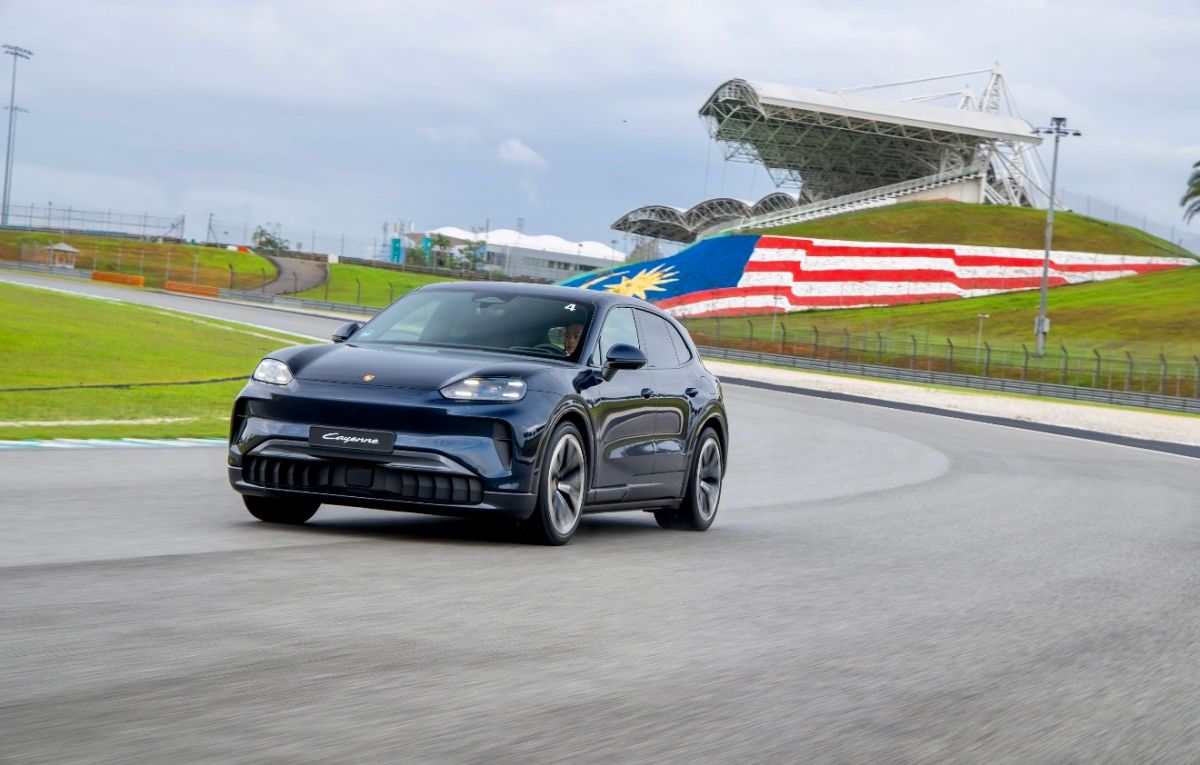
Legends aren’t born; they’re forged. Such is the history associated with the Cayenne, a model that’s historically important for Porsche. After all, if not for its very existence, the German sportscar maker would have succumbed to financial trouble in the early 2000s. Ultimately, its popularity—more than 1.5 million examples have been sold across three generations—was the wind that Porsche’s sails needed to produce the sportscars they produce today. Now, the Cayenne’s role has embarked on a dramatic transformation. As it enters its fourth generation, it takes a leap into the full electric era. In the process, it becomes a venerable technical tour-de-force.
With 36 percent of its global sales now electrified, the Cayenne Electric complements the existing third-generation combustion-engined and plug-in hybrid models which will co-exist with this all-new fourth-generation one.
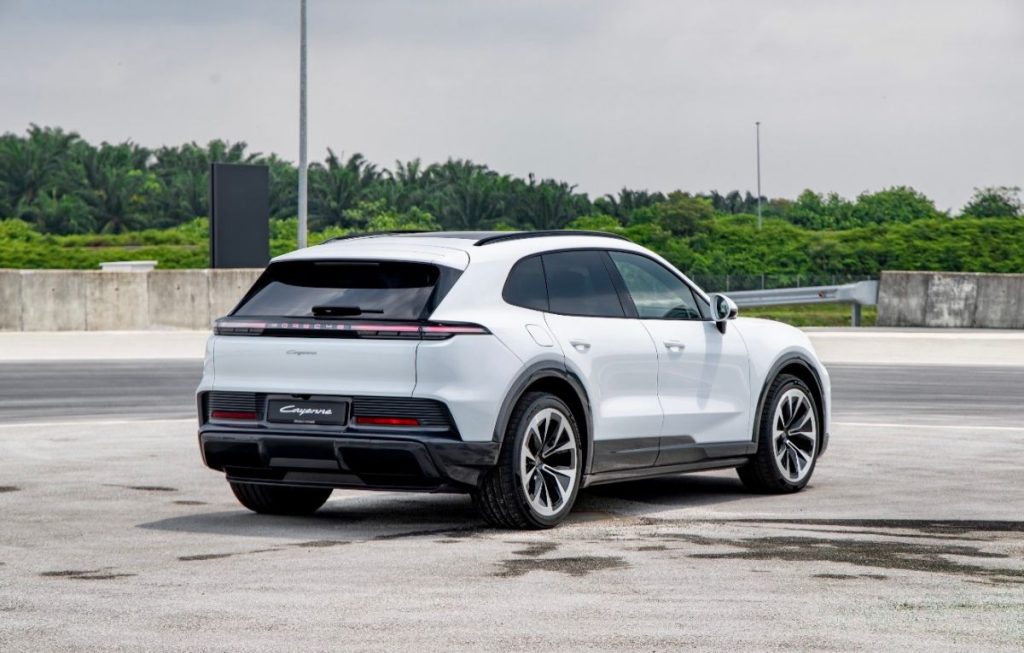
Built from the ground up as a battery electric vehicle, the Cayenne Electric comes in three forms, all sporting dual motors with a 113-kWh lithium-ion battery. The range starts out with the “base” Cayenne which already offers 408 horsepower (442 horsepower with Launch Control). Then, there’s the mid-grade Cayenne S which has 543 horsepower (666 horsepower with Launch Control). And finally, there’s the Cayenne Turbo Electric. With 857 horsepower (1,156 horsepower with Lauch Control), it’s the most powerful production Porsche of all time. It also is one of the quickest, dispatching 100 km/h from a standstill in just 2.5 seconds.
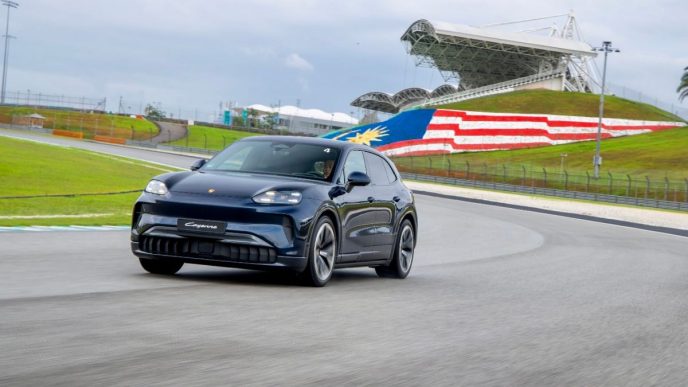
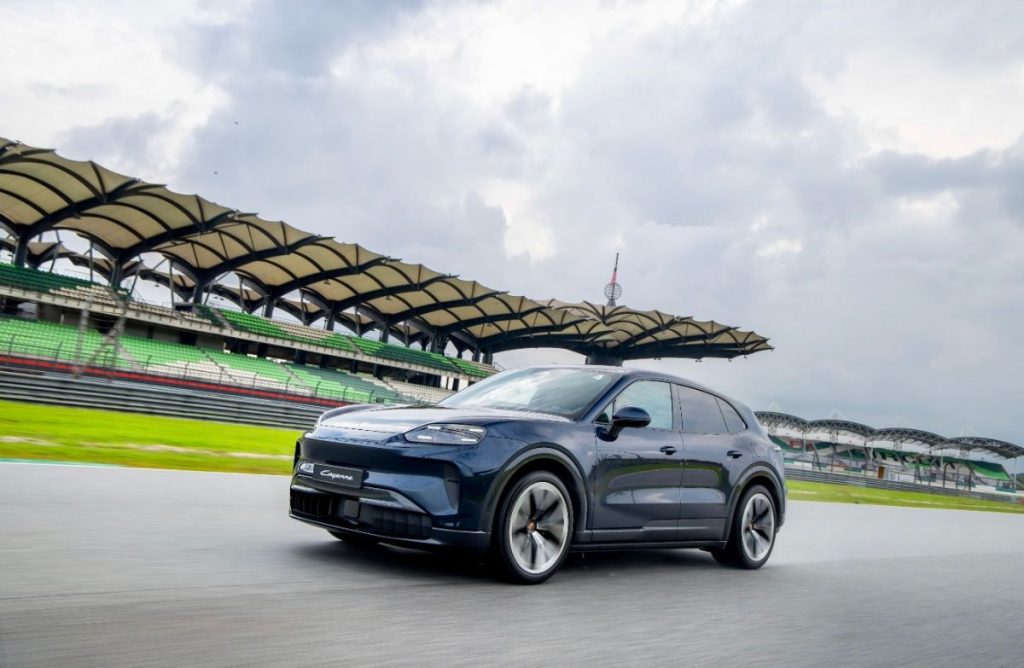
More than just raw power, the Cayenne Turbo Electric debuts several new, exclusive technologies. For example, there’s direct oil cooling of the electric motor. The dielectric oil co-developed by Porsche partner Mobil, ensures high continuous output and efficiency, an innovation borne straight from motorsport. True enough, repeated 2.5-second 0 to 100 km/h times across 8 days—the length of the regional launch program—at the Sepang International Circuit was doable.
Another innovation drawn straight from Porsche’s participation in Formula E is its leading energy recovery figures. With a peak 600 kW of power recaptured by the motor and fed to the lithium-ion battery, about 97 percent of all everyday braking operations can be handled by the electric motors. In case the mechanical (friction) brakes need to intervene, Porsche Ceramic Composite Brakes (PCCB) can be specified for the first time in a Porsche SUV.
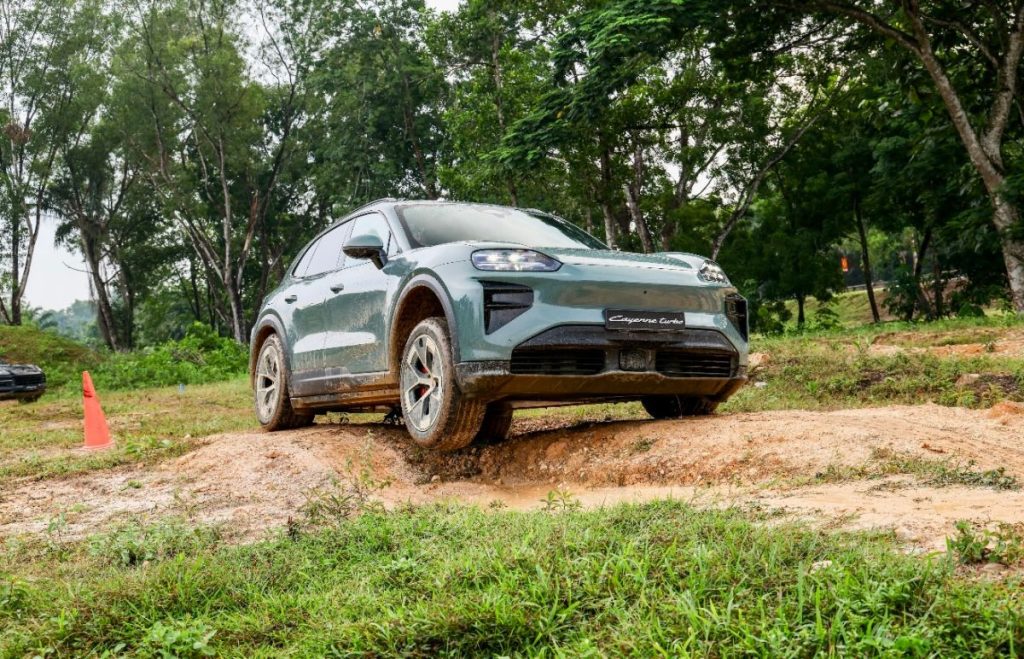
Putting all that power to the pavement, adaptive air suspension is now fitted as standard equipment with the Cayenne Turbo Electric adding active suspension, torque vectoring, and a limited-slip rear differential. In this guise most especially, it makes short work of Sepang’s flowing corners, belittling the SUV’s 2.5-ton mass around the 5.5-kilometer track. Even more impressive, because the suspension is able to make minute adjustments in real-time, it means being to plow through a makeshift off-road course at 100 km/h or tackle a challenging trail without transmitting any unwanted shock or discomfort into the cabin. Both models can be equipped with rear-axle steering, which steers the rear wheels by up to five degrees, reducing its turning radius to a sub-compact-like 5.1 meters.
The battery of the Cayenne itself features double-sided cooling and optimized thermal management. This results in a combined range of up to 643 kilometers for the Cayenne Electric and up to 624 kilometers for the Cayenne Turbo Electric. Thanks to its 800-volt technology, it charges at up to 400 kW increasing the state of charge from 10 to 80 percent in less than 16 minutes. A range of up to 325 kilometers can be added within 10 minutes. In cases where a 400-volt fast charger is present, it intelligently does “bank charging,” essentially splitting the battery into two to optimize its charging speed.
An optional inductive charging can also help juice up the Cayenne Electric at up to 11 kW. All that Porsche Wireless Charging requires is for the driver to park above a floor plate. The charging process then starts automatically with nothing to plug.
Design-wise, the Cayenne Electric manages to combine the proven design elements of the SUV with the most up-to-date Porsche styling language. Highlights include the low hood with slim Matrix LED headlights. These emphasize the width of the vehicle and combine all lighting functions into one module. Meanwhile, the side is characterized by frameless doors and a striking crease in the door surface. The side skirts have a three-dimensional design and are painted in Volcanic Grey Metallic and, on the Cayenne Turbo Electric, in high-gloss black. At the rear, it features a light strip with animated graphics and an illuminated Porsche lettering. Of course, the Cayenne Turbo Electric features numerous contrasting elements in the exclusive Turbonite color.
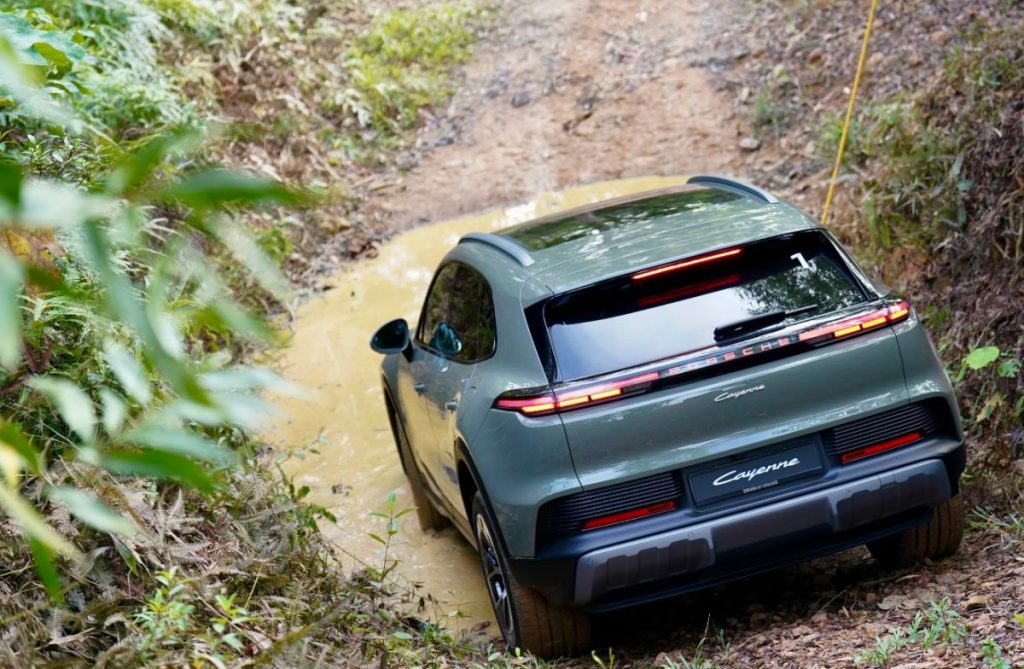
The Cayenne Electric is also one of the most aerodynamic SUVs, with a co-efficient of drag at just 0.25. Key to that is the Porsche Active Aerodynamics (PAA) system that precisely adapts the car’s aerodynamic properties. The active aerodynamic elements include movable cooling air flaps in the nose, an adaptive roof spoiler and the innovative, active aeroblades at the rear. Other aerodynamic measures include air curtains in the front bodywork, an almost completely enclosed underbody, special aero wheels, and a diffuser at the back.
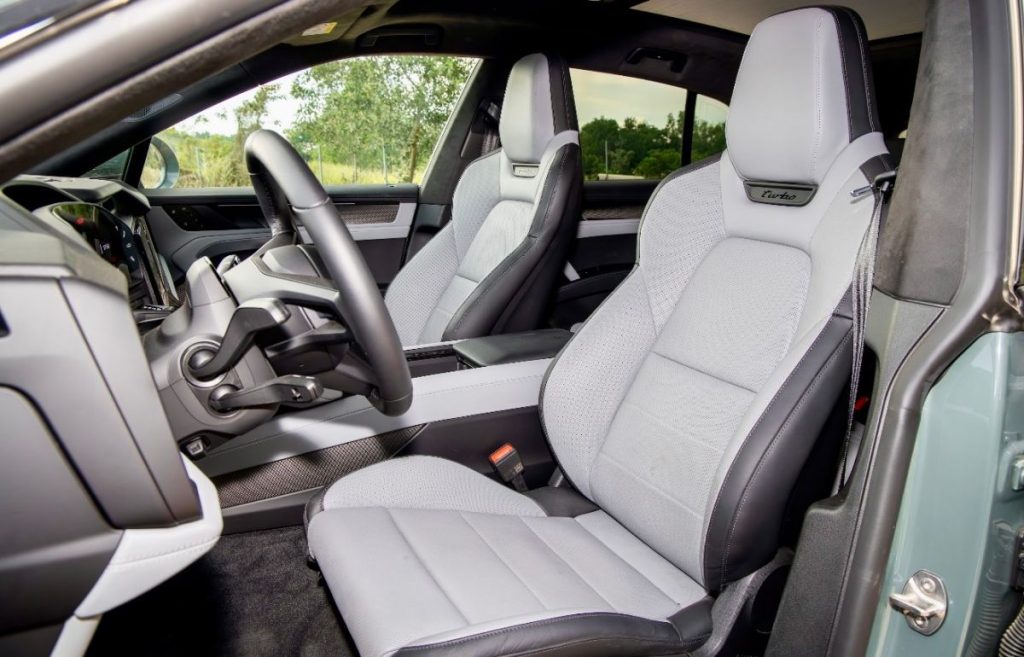
Dimensionally, the new Cayenne Electric is 55 mm longer than the combustion-engined model, but the greatest difference is in the wheelbase. At 3,023 mm, it’s an increase of almost 130 mm equating to more rear legroom. The rear seat system is electrically adjustable as standard and offers flexible adjustment options from a comfort position to a cargo one. Luggage capacity is 781 to 1,588 liters, plus there’s a 90-liter front luggage compartment.
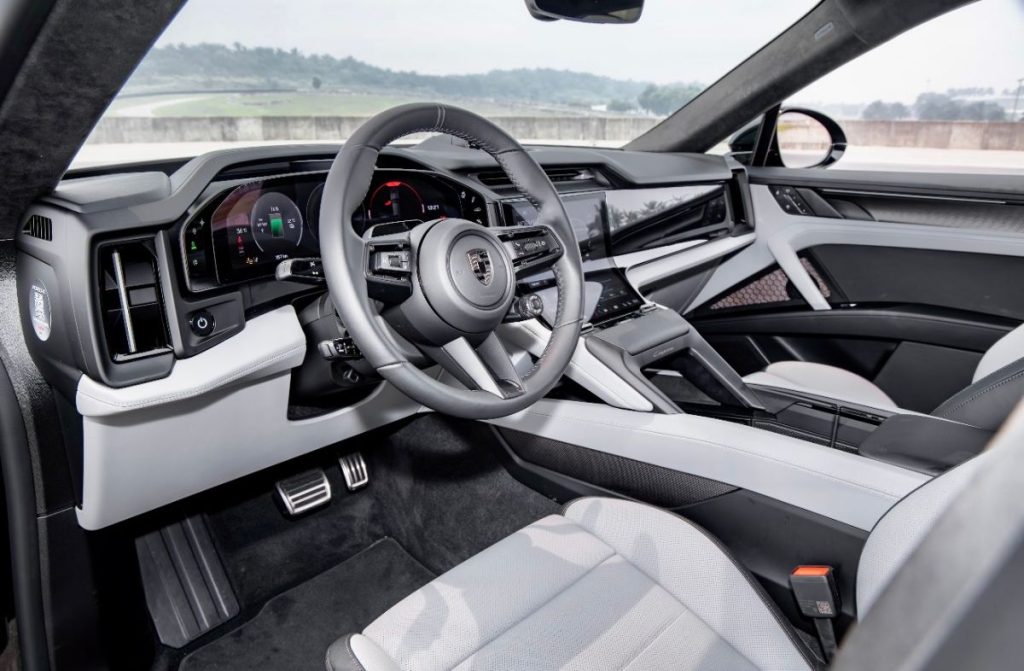
Inside, the Cayenne Electric features a newly-developed Flow Display—a curved OLED panel that blends seamlessly into the center console and allows clear separation between the display and control areas. It is complemented by a fully digital instrument cluster with 14.25-inch OLED technology and a 14.9-inch optional passenger display. For the first time in the Cayenne, a head-up display with AR technology is also available, which visually represents an 87-inch display area 10 meters in front of the vehicle. In contrast, the buttons and controls for particularly frequently used functions, such as air conditioning and audio volume remain refreshingly analog.
Another unique feature is the Mood Modes. Depending on the selected program, the seating position, lighting mood, air conditioning, sound profile, and the display appearance change. The ambient lighting also serves as a communication light—an animated light strip that welcomes passengers as they enter the car can visualize various vehicle states, such as the charging process.
The Cayenne Electric not only marks the beginning of a new era at Porsche, but it’s a milestone in the history of the SUV as well while remaining true to its “911 sportiness” DNA. With its all-electric architecture, unbeatable performance, and uncompromising day-to-day usability, it’s without a doubt, the new standard. More than that, the fourth-generation Cayenne positions itself as a true technical pioneer; A symbol of change, if you will. It’s the continuity of the Porsche legacy; a legacy that stands for never standing still, but one of always being uncompromising, emotional, and future-oriented.