


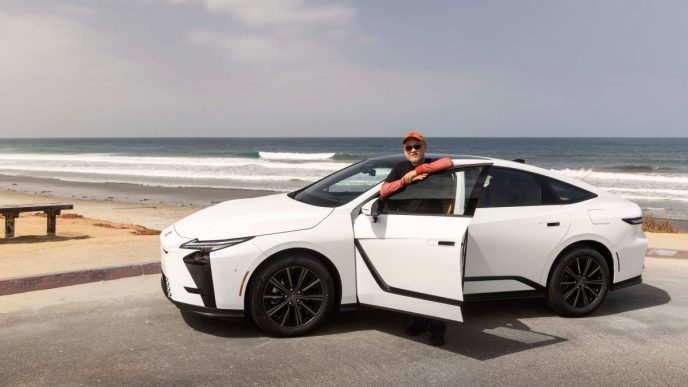
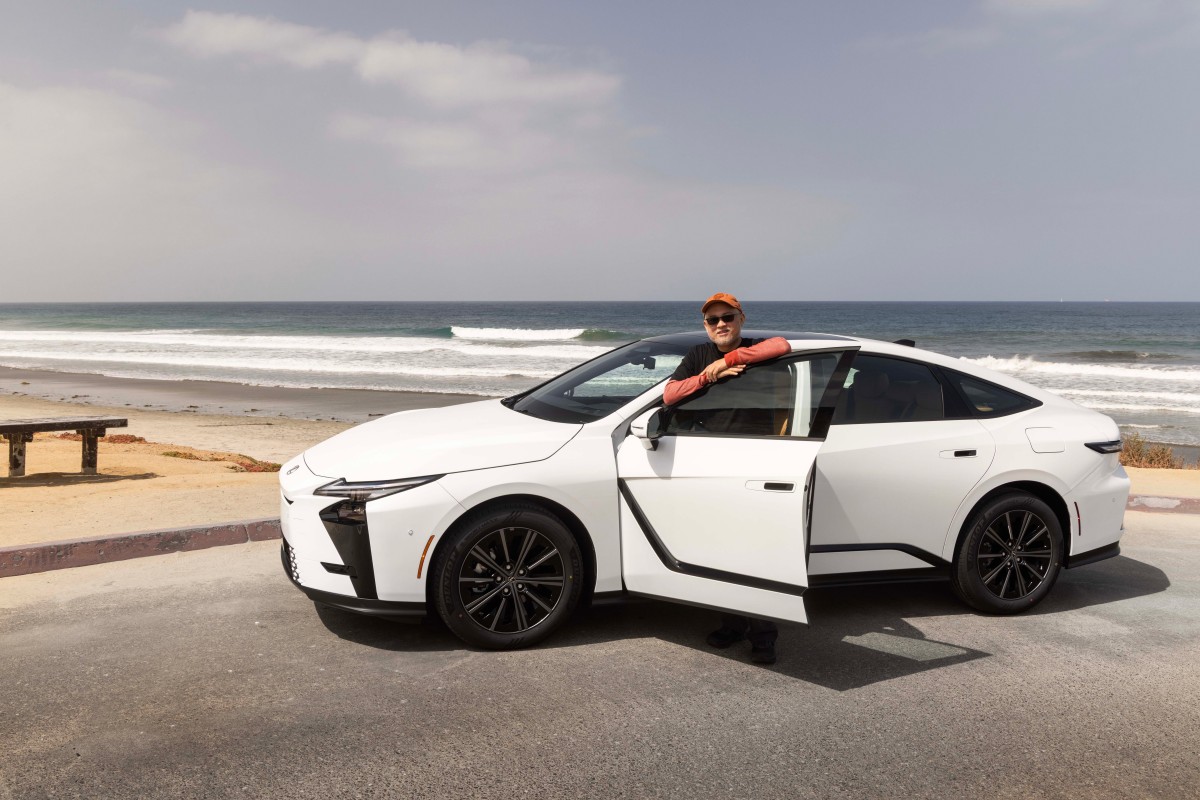
Views of the Pacific Coast unfurl outside the Lexus ES greenhouse in San Diego. This all-new version of the sedan, the eighth generation, settles into its stride with the kind of calm assurance luxury sedans are supposed to deliver – soaking up road imperfections like a sponge and giving its occupants commensurate confidence and comfort
This is the first time Lexus has opened this iteration of the ES to international media in such a setting. San Diego’s spacious freeway and winding passes are the perfect backdrop/proving ground for a car that now appears to shoulder more responsibility than ever within the brand’s sedan lineup.
Whether Lexus says it outright or not, there is arguably more pressure on the ES these days. With the larger and more opulent LS nameplate effectively out of the picture, the sedan roster of Lexus has been trimmed to two: the smaller IS and the once-middle-child ES. That change alone might alter the way one looks at this car. The ES has always embodied a sort of sensible luxury. Now it wears more polish, more confidence, and considerably more presence.
Is Lexus intentionally moving the ES upmarket to court those who might otherwise have considered the LS? Standing beside the car and later riding in it, the thought does not feel far-fetched. The premium materials, the design, the technology, and quite everything about it suggests it.
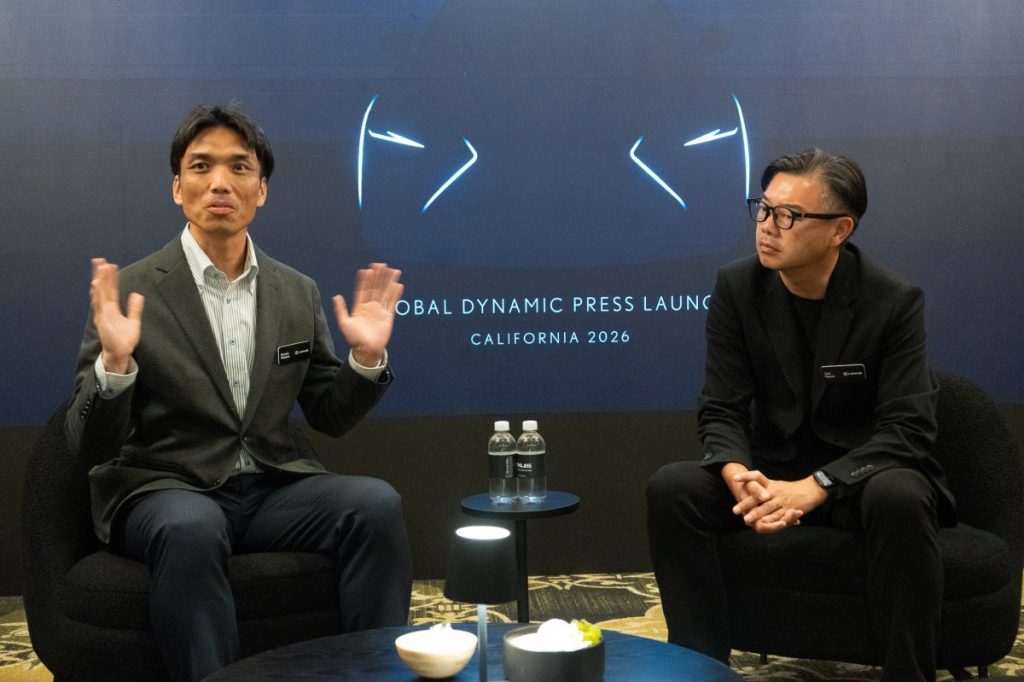
Lexus International Assistant Chief Engineer Noritaka Nakajima, speaking through translator Toshi Hayama, begs to disagree but seems pleased with the question: “Did we look to appeal to the LS customer? The answer would be no,” he says. The LS, he stresses, is/was the summit of the brand in terms of status, equipment, and overall positioning. If the ES feels more luxurious now, that is less about encroaching on flagship territory and more about elevating comfort and deepening the relationship between car and driver. In Mr. Nakajima’s telling, the ES is “a car that grows with you,” one that inspires confidence and matures alongside its owner.
That philosophy also ties neatly into the brand’s long-running commitment to electrification. Long before hybrid mobility became a fashionable talking point, Lexus had already been steadily building a reputation around it, including in the Philippines. While other premium brands were only beginning to explore the space in earnest, Lexus had already made hybrids a central and deliberate part of its product strategy.
The design brief for the new ES is “Clean Tech and Elegance,” and the car largely succeeds in translating that into sheet metal and execution. There are visible influences from the LF-ZC Concept shown at the 2023 Japan Mobility Show, though there are also hints of the RX. The result is minimalist without being sterile, sleek without trying too hard, and recognizably Lexus even as it evolves away from some of the brand’s older visual signatures.
Compared with the outgoing car, the new ES is larger in every meaningful direction. It is longer, wider, taller, and riding on a substantially stretched wheelbase. Those numbers matter not just for presence, but for cabin room and proportion. Up front is what Lexus calls an “accentuated resolute look,” an evolved interpretation of the spindle theme that extends beyond the face and into the body itself. A sharply angled nose, active grille shutters, and cleaner surfacing all contribute to better aerodynamic efficiency, whether in hybrid or battery-electric form.
Is Lexus intentionally moving the ES upmarket to court those who might otherwise have considered the LS? The thought does not feel far-fetched. The premium materials, the design, the technology, and quite everything about it suggests it.
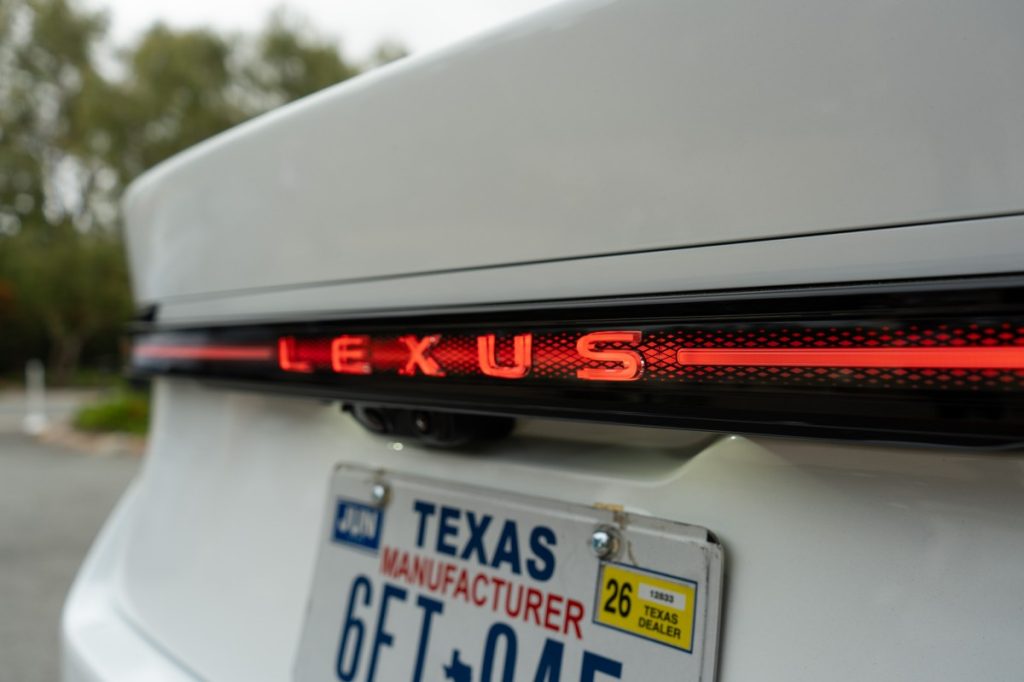
In profile, the ES adopts what Lexus describes as a “single-motion silhouette,” emphasizing a low center of gravity and a graceful, fastback-like tail. An S-shaped black character line along the body visually lowers the car further, a subtle but effective trick, Mr. Nakajima posits. At the rear, a full-width lighting strip with illuminated Lexus typography replaces the traditional emblem, helping the sedan look wider and more contemporary. Even the trunk space has been optimized with everyday luxury use in mind, down to class-leading luggage capacity claims.
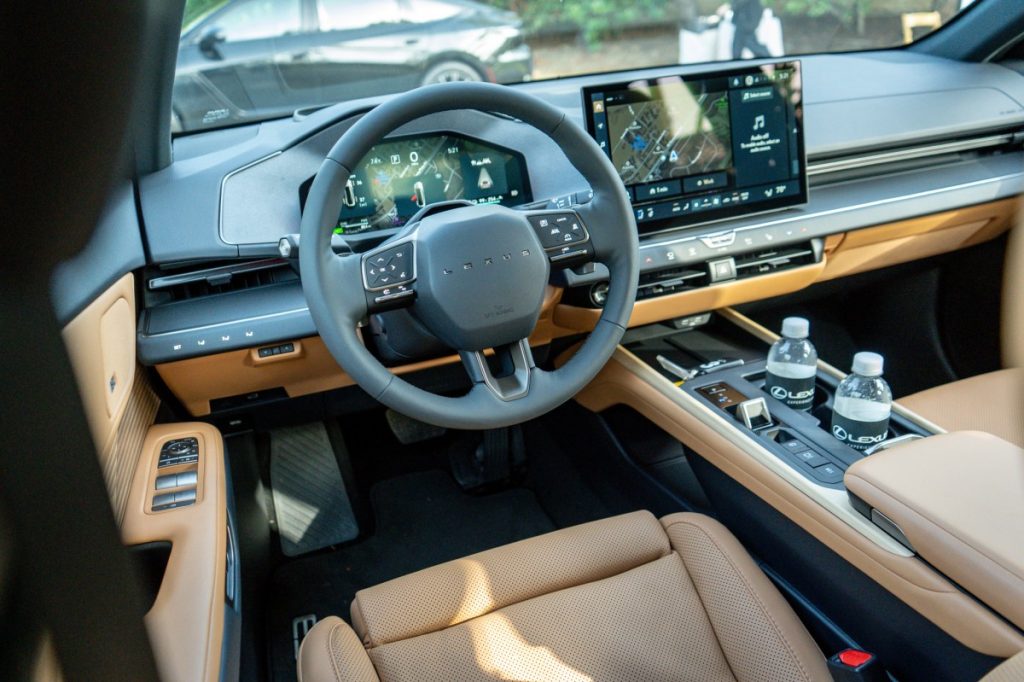
Inside, the ES leans into Lexus’s familiar Tazuna philosophy, using technology not as decoration but to create a more intuitive relationship between driver and machine. The cabin aims for something close to living-room comfort, while being mindful of usability and sensibility. There is a new 14-inch touchscreen, a crisp 12.3-inch instrument cluster with multiple layouts, updated LexusConnect processing power, and premium audio options that include a 17-speaker Mark Levinson system with illuminated grilles.
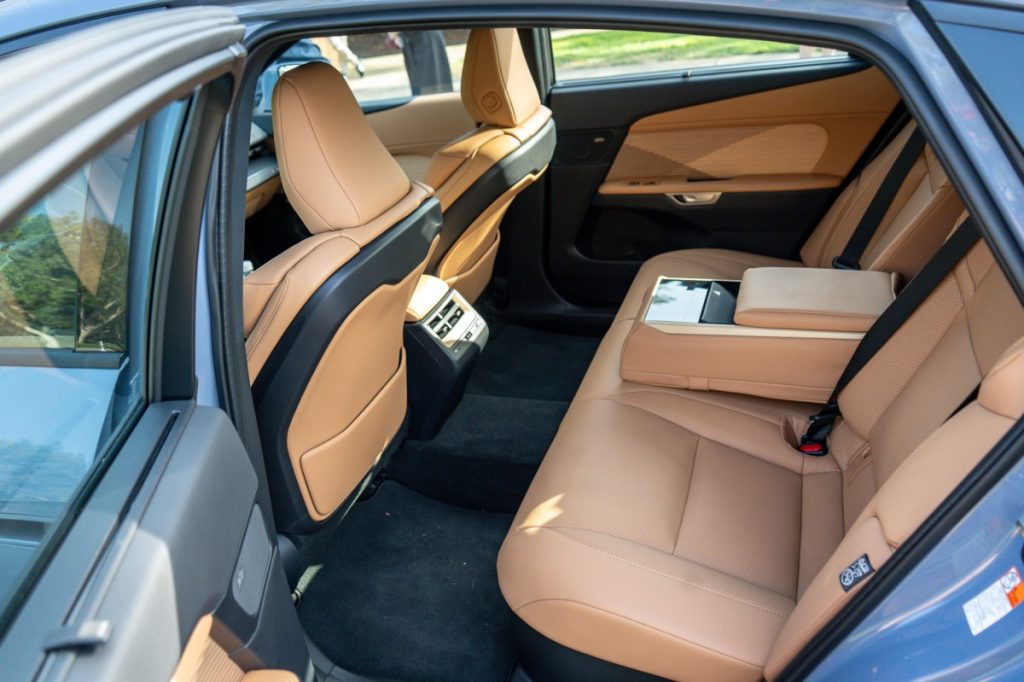
Climate controls remain readily accessible, and Lexus’s new Responsive Hidden Switches provide tactile confirmation when needed before “disappearing” back into the panel. It is a clever bit of theater, yes, but also a functional one. The seats themselves have been reworked for easier ingress and egress, better shoulder support, and a more natural relationship to the steering wheel. Meanwhile, rear passengers benefit from improved space, lower NVH (noise, vibration, and harshness), and the sort of quiet that reminds you how seriously Lexus takes refinement. Ambient lighting, multi-sensory cabin detailing, and available premium touches add drama without tipping into excess.
Yet the real headline may be what lies beneath. For the first time, the ES will be offered as both a hybrid and a full battery electric vehicle. The Philippines is confirmed to receive the hybrid ES 350h, pairing a 2.5-liter four-cylinder engine with an electrified setup for a combined 247hp.
Other territories will get the ES 350e and the more potent ES 500e, extending the model’s reach into full-EV territory without abandoning the hybrid formula that helped define Lexus in the first place. The 350e carries a 77kWh battery and is clearly tuned for range, with a quoted driving distance of 530 kilometers. The 500e, meanwhile, leans more toward performance, pairing a 75kWh battery with a still-impressive 480 kilometers of range. From rest to 100kph, the 350e does the job in 8.2 seconds; the 500e dispatches the sprint to speed in a far brisker 5.7 ticks.
Despite its size, the ES carries itself with agility and composure. Drive modes alter its demeanor with useful clarity, and the low-noise promise is not marketing fluff; on the freeway, the cabin remains impressively hushed. The hybrid powertrain is smooth and satisfying, while the electric variants improve further on NVH, and add a stronger layer of immediacy and playfulness without compromising the car’s essential civility. The ES 500e, especially, has real punch, but never at the expense of grace.
Lexus developed a bamboo-inspired layering technique to accentuate the ES cabin using Japanese 3D-printed Viscotecs technology, completing the sensorial experience within through lighting, sound, and even fragrances. At night, we were shown the light show the ES can put on – a mesmerizing, psychedelic experience worthy of a rave (or disco) party.
The rear seating, on the other hand, shows an area where the ES shines brightest — low NVH levels. The vehicle soaks up much of road imperfections and mutes the communication to your behind. Lexus does this in a number of ways such as simplifying the front pillar construction, thicker paneling around the front- and rear-seat footwells for less vibrations, “optimized construction and materials of (the) dash panel,” additional seats at the rear, advanced seal construction around the doors’ windows, soundproofing, vent duct noise barrier, thicker rear glass, and wheelhouse sound-absorbing material. Sound and vibration damping have been improved as well, as in the engine compartment cover.
The ES employs an easy-to-use Electro-shiftmatic shift-by-wire system, which also prevents inadvertent changes, while the Lexus Climate Concierge orchestrates air-conditioning and seat heating or ventilation for an optimal, consistent experience.
Though by no means a small sedan, the ES often feels more manageable than its dimensions suggest, thanks to its agility and easygoing nature. A whole suite of technology works quietly in the background to make the experience feel effortless, allowing the driver to focus on the car’s comfort, composure, and unmistakably luxurious character.
Selectable drive modes — Normal, Eco, Sport, Range (for the BEV only), and Custom — allow the ES to shift character quickly depending on the driver’s mood. Each setting brings a distinct calibration for the powertrain, steering, suspension, and other dynamic elements, giving the sedan a pleasing breadth of personality.
Out on the road, the ES further validates the thinking behind its design and engineering. It is handsome enough to turn heads, but more important is how composed it feels at speed. On the freeway, the sedan gathers pace with ease, and Lexus’s claims of low NVH are proven.
In an increasingly crowded premium landscape, Lexus’s response appears characteristically measured. As Mr. Nakajima puts it, this is less about beating rivals than about building the right car for the right customer. Judged on that basis, the new ES makes a compelling case for itself. It is more modern, more spacious, more ambitious, and more complete than before — not a stand-in for the LS, but perhaps the clearest expression yet of what a contemporary Lexus sedan can be.