




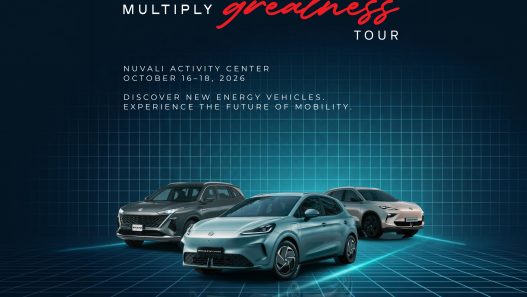

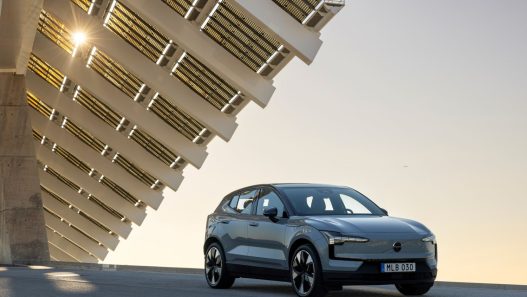

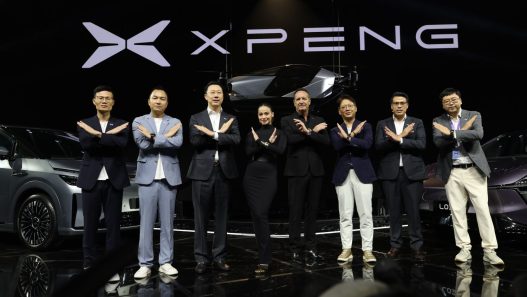


The Philippine automotive industry is, if we go by official projections of executives and observers, is set to breach overall sales of 500,000 units this year. This target was expected to have been met years before (specifically 2020), until the COVID-19 pandemic derailed what had been a yearly uptrend. The disruption and deleterious effects of the pandemic were well-documented – culminating in a sharp 40-percent decline in sales when 2020 was said and done.
But thankfully, just like many industries, the automotive sector rebounded very quickly. Displaying resilience, buyers simply picked up right where they left off. The latest consolidated report compiled by the Chamber of Automotive Manufacturers of the Philippines, Inc. (CAMPI) and the Truck Manufacturers Association (TMA) revealed a year-to-date combined sales figure of member companies reaching 190,429 units as of last May. While this reflects a “modest” 1.7-percent growth compared to last year’s 187,191 units over the same period, an accompanying press release from CAMPI asserted that “the market has been gaining momentum.”
The sales figure is more impressive when viewed through a month-on-month lens – growing 18.4 percent from 33,580 units in April to 39,775 units in May. Versus May 2024 performance though, there’s actually a slight dip from 40,271 vehicles moved last year. Still, you could make a case that things are going swimmingly for things automotive. CAMPI President Atty. Rommel Gutierrez said as much: “We are encouraged by the industry’s sustained growth, especially with commercial vehicles driving overall performance. This reaffirms the significant role of the automotive sector in supporting the country’s economic activities.”
Once we breach that psychological barrier of half a million, it will, according to GT Capital Auto and Mobility, Inc. Chairman (and BusinessWorld columnist) Vince Socco, “put the Philippines in the same league as Thailand, Indonesia, and Malaysia” in terms of auto sales.
Aside from bragging rights, this is good news not only because it means mobility for more, but jobs for more as well. Socco wrote in a recent piece that, “Interestingly, auto sales in the Philippines directly correlate to the movement in the country’s per-capita gross domestic product (GDP) that has grown by an average of 5.2 percent over the past four years since the pandemic. So, as the economy continues in its trajectory toward making ours an upper-middle-income country by 2027, it is expected that auto sales will continue to rise.”
These are very interesting times for motoring. I keep harping on how we’ve never had this many automotive marques in our history – more than 50, with around half accounted for by Chinese brands. This ascendancy of China in motoring is by no means a surprise or a unique occurrence in the Philippines, although it’s a bit more logical and easy to set up shop here because we drive on the same side of the road, and we are geographically so near.
It’s temptingly easy to appropriate The Philippine STAR’s theme of “regeneration” to the motoring industry. It doesn’t only describe the renewed resurgence of the sector but even its no-longer-nascent electrification. Electric is here, now. Maybe we’ll just quibble on its exact form, or whatever is most appealing to us: mild hybrid, plug-in hybrid, range extender, traditional hybrid, or battery electric.
In the early days of electrification, it was viewed as a novelty. Toyota Motor Philippines introduced the Prius in 2009, but that was clearly way ahead of its time. The technology was also new, and the price premium for going electrified was pretty steep. You could probably argue that it was the same case for Nissan Philippines and the Leaf, which was officially launched in 2021 but was already being displayed in earlier editions of the Electric Vehicle Summit (EVS) by the Electric Vehicle Association of the Philippines.
Not surprisingly, the premium sector was quicker to adapt to fully electrified powertrains. PGA Cars said it got good interest – and business – when it launched the Porsche Taycan (2020) and Audi e-tron (2022). Remember that this was in the throes of the pandemic. While it indeed disrupted our daily life and basically confined us to our homes, it veritably made us look elsewhere and anywhere to quell our homebound anxieties. As people were suddenly unable to travel or go on holiday here and abroad, they diverted the usual budget to luxury spending. A lot of people suddenly got into watches, luxury goods, and, yes, premium vehicles – including EVs.
Those of us who mercifully came out of the pandemic got right back into the business of living, even as we learned indelible lessons from the once-in-a-lifetime event. For the auto industry, not only did COVID-19 hasten its digitalization, but seemingly its electrification as well. In concert with a more widespread chorus of voices championing sustainability and looking after the planet, moving away from a finite supply of fossil fuel made a lot of sense. The fight against climate change suddenly had its poster boy: the electric vehicle.
To our north, China was already proving to be a stalwart in electrified vehicles – even outpacing the development of the powertrain compared to more established rivals from other continents and territories. The popularity of so-called new energy vehicles was being supported by government and local policies to hasten the population’s transition to them. Before legacy brands knew it, many Chinese brands were already ticking more boxes than they were in their price points. We’re in a buyer’s market now, and it should prove to be to our advantage. There are just so many Chinese brands here, filling up various price points and, yes, even powertrain options.
I guess the question for now – and I’ve received this from friends making a first, tentative look at electrified vehicles – is, how ready are we for full-electrics? Would I recommend this to the average car buyer/browser? The answer, if you ask me, depends on two things: your use of the aforementioned vehicle, and whether or not you can install a home charger.
If you want a daily driver to work, and work is not that far away, then a pure-electric should serve your needs most nicely. Range and battery capacities are improving all the time, and you can reasonably space out your charging sessions, if you don’t have a home charger. However, the deal-breaker here is if you will solely rely on public charging stations (mostly free of charge for now). It’s not early days anymore for the BEV, and when I get a chance to test-drive electric vehicles, I often experience that finding a vacant charging point at the mall isn’t that easy anymore. It’s best to have a charger installed in your own garage so you don’t have to stress over planning trips.
If you’re still not confident about our country’s charging infrastructure (yes, it’s improving, but not as quickly as we’d like) and you don’t have an option to set up your own charger – as in many condominiums – then hybrids offer range-anxiety-free ownership. You don’t even have to worry about traditional hybrids at all (save for fuel); while plug-in and range extender examples offer an introduction to the charging habit even as you don’t have to stress over draining the battery. What we’re continuing to see is that battery electric vehicles are usually the second or even third car for a family or household. It’s probably not a stretch to surmise that the ICE-powered vehicle will be pulled for duty when there’s a long trip to be made. For now, the internal combustion engine is here to stay, and it’s not a bad deal at all. Car manufacturers are making more efficient, clean-burning engines while intergrating the benefits of electrification.
Still, Socco wrote that the share of electrified vehicles in the market “has increased from five percent last year to eight percent in the first trimester of 2025. The recent addition of plug-in hybrids PHEVs to the suite of electrified product offerings has activated a new segment of buyers, accounting for 42 percent of the EV market this year. Hybrid electric vehicles, on the other hand, account for a larger 52 percent of the segment while battery electric vehicles make up the remaining eight percent.”
I see no rush to go electric if the conditions aren’t conducive for it yet, but the pendulum has definitely swung away from the monopoly of the internal combustion engine onto the inevitability of electrification. It’s a matter of time – and charging infrastructure.


