









You are looking at one of the most controversial new cars to come out in quite a while. It’s managed to cause quite a stir for one thing: the name. Ford’s marketing team thought it brilliant to use the Mustang name—an iconic nameplate with a long and storied history—for its first fully-fledged battery electric vehicle. What they didn’t realize would be the amount of backlash they got afterward.

For sixty years, the Mustang has epitomized the spirit of rebellion—a spirit of not giving a hoot because it knows exactly what it is and what it stands for. Its recipe for success is so simple, so unchanged that every enthusiast knows it by heart: macho two-door styling, a big, powerful engine (V8 preferred), and a no nonsense rear-wheel drive layout. It’s this formula that the Mustang Mach-E has upended by being a four-door SUV with two electric motors and all-wheel drive. It’s basically an anti-Mustang Mustang.
Strip away the baggage brought on by the name, the styling, and all this “Mustang DNA” spiel, and the Mach-E is a solid EV and deserves a solid B+. Built on a dedicated platform, it’s a wonderfully playful car to drive. The steering may be a tad inconsistent in terms of weighting at times, but it’s nonetheless sharp and responsive. The chassis too, has some magic sprinkled in as it’s agile and tossable even through bends despite the 2.2-ton curb weight. It rides firmly, but can still eat away the miles with little to no complaints from everyone else aboard.

Powering the Mach-E is a pair of electric motors that put out a combined 394 horsepower and 676 Nm of torque. Yet, despite these stonking figures, it’s an easy beast to tame. Tap the monostable gear shifter down, and you’re ready to go. Keep the right foot pressure controlled, and Ms. Daisy will find it perfect for her grocery runs. Have a kid or three? It’s smooth, quiet, and refined—the Mustang for suburban soccer moms, then. Yet, dig down on the accelerator and there’s some good shove hidden beneath all this civility. At full beans, it doesn’t deliver power as unrelentingly as you might think, but there’s pace whenever it’s called for.
Ford has also put in three drive modes here—Active, Whisper, and Untamed. However, take note that these modes don’t fundamentally change the handling, ride, or power. Rather, it adjusts other parameters electronically like the throttle, brakes, sound generator, steering, and interior ambient lighting. So, Whisper, although no quieter than any other mode, means the pedals need more of a prod before anything happens, the steering is lighter, and the Propulsion Sound is switched off. On the other hand, switch over to Untamed and you end up with sharper steering and a throttle pedal that’s had too much caffeine. The Propulsion Sound also lets out a muted V8-like rumble.

From the inside, it’s clear that Ford is treading a narrow path in wanting the Mach-E to be as practical as possible, but as sporty as it can possibly be. The materials used inside are par for the course and despite being made up of an eclectic mix of leather, padded plastic, fabric, and faux carbon fiber, work well to give a racy, yet upscale vibe. Meanwhile, the driving position is comfy, and thanks to the high door cut and center console, it gives a cockpit-like feel. However, peer to the side or to the back, and you’ll notice the abundance of space.


The Mach-E’s user interface and switchgear is mix of both traditional and digital. Some—like the column stalks and power window switches—come straight from the Ford’s parts bin and they’ve been used here to great effect. They’re solid, well-wearing, and can be operated by tactile feel alone. Meanwhile, the general interface of the large 15.5-inch portrait-style screen isn’t too foreign to current Ranger or Everest owners. Driving information, meanwhile, escapes that center screen and is shown instead on a separate 10.2-inch display behind the steering wheel. It isn’t configurable, but it’s easy enough to read nonetheless. There’s also a wireless charger and a deep cubbyhole beneath the center armrest that can accommodate a handbag or fanny pack.
Perhaps the most controversial aspect of the interior is the door handles which have been replaced by small levers by the door grip. There are no door handles on the outside, either. These have been replaced by small circular buttons to improve aerodynamics. Good luck teaching the technologically challenged then to open the Mach-E’s door handles with no assistance.

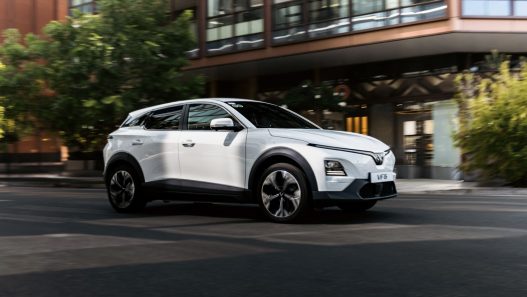
And about the exterior, this is perhaps the most Mustang part of the entire Mustang Mach-E. The proportions—with its long hood, sloping roofline, and strong rear haunches all hark back to the classic Mustang. And of course, you have the unmistakable graphics like the sharp headlights, tri-bar taillamps, and the galloping horse logos all around. The family resemblance is so strong that passersby will immediately know what it is, even from a distance. It also helps it escape the jellybean styling so prevalent in aero obsessed EVs—deliberate says Ford.
Sadly, the styling also creates the Mustang Mach-E’s greatest conundrum. Although the design hints hard at what buyers may expect, it’s far from what traditionalists expect from a Mustang.
In the short-term, the move is reasonable: repurpose a cool badge and there’s little need to spend for market awareness. Yet, it puts Ford in a dangerous position for the future. Ford is making its first steps towards electrification, but just how will everything tie into the Mach-E and its position as Ford’s flagship battery electric vehicle? And what does this mean for Mustang as a nameplate?

There’s no doubt that the Mustang Mach-E is, fundamentally, a very well executed machine. It balances the act of being a versatile family vehicle, while still offering hints of dynamism to categorize it as an engaging drive. Just don’t be misled by the Mustang badge. It isn’t one yet. On this occasion, Ford made far too many changes to the formula that to think of the Mach-E as a Mustang would be misleading. Instead, look at it as an electric crossover, and it’s a mighty good one at that.