




There are cars that reveal themselves quickly, and there are those that take their time. The Mitsubishi Destinator belongs in the second category – not because it hides its purpose, but because it behaves differently the longer you drive it.
At first, the Destinator seems like a straightforward 7-seat SUV aimed at families moving up from a compact crossover. But after a full day of exploring Mitsubishi’s Okazaki R&D Center in Japan, putting the Destinator through mud, gravel, inclines, and the occasional flood test, the SUV started to show traits that don’t quite match its modest positioning or its sub-P1.3-million introductory price.
What becomes clear is that the Destinator isn’t trying to impress with spec sheet fireworks. Mitsubishi didn’t package it as an off-road renegade or a revival of its hardcore rally heritage. Instead, the vehicle feels like a project where engineers quietly over-delivered – dialing in responses, calibrating systems, and layering small, thoughtful improvements until the SUV ends up doing things you wouldn’t expect from something in this class – or after reading the brochure.
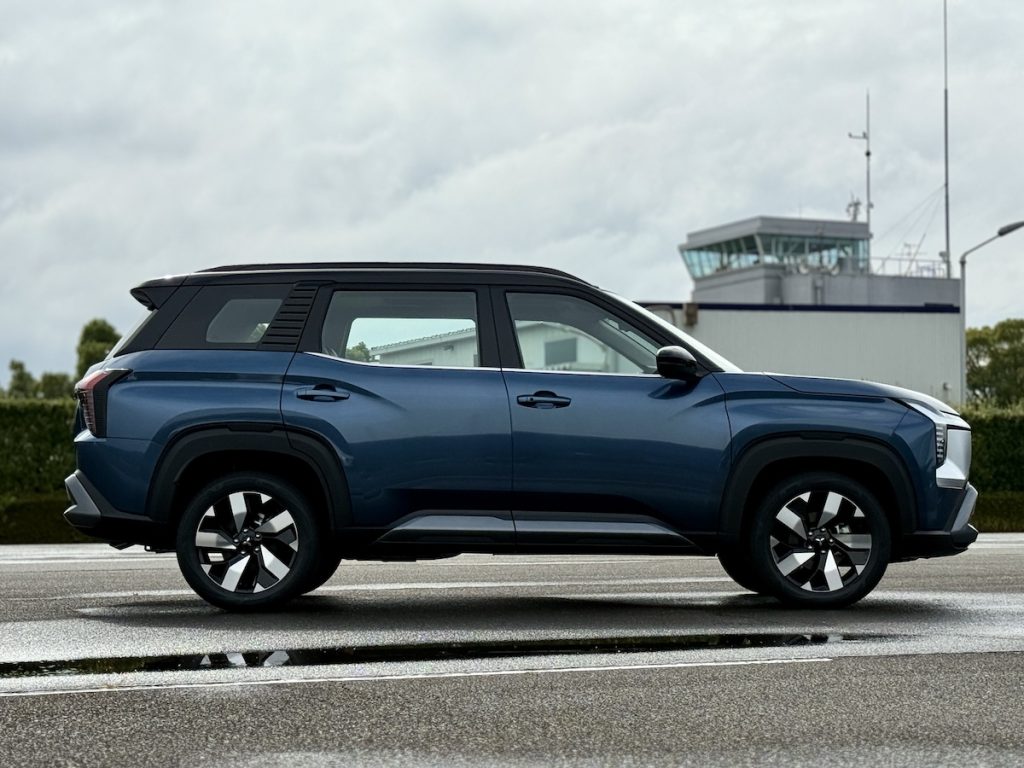
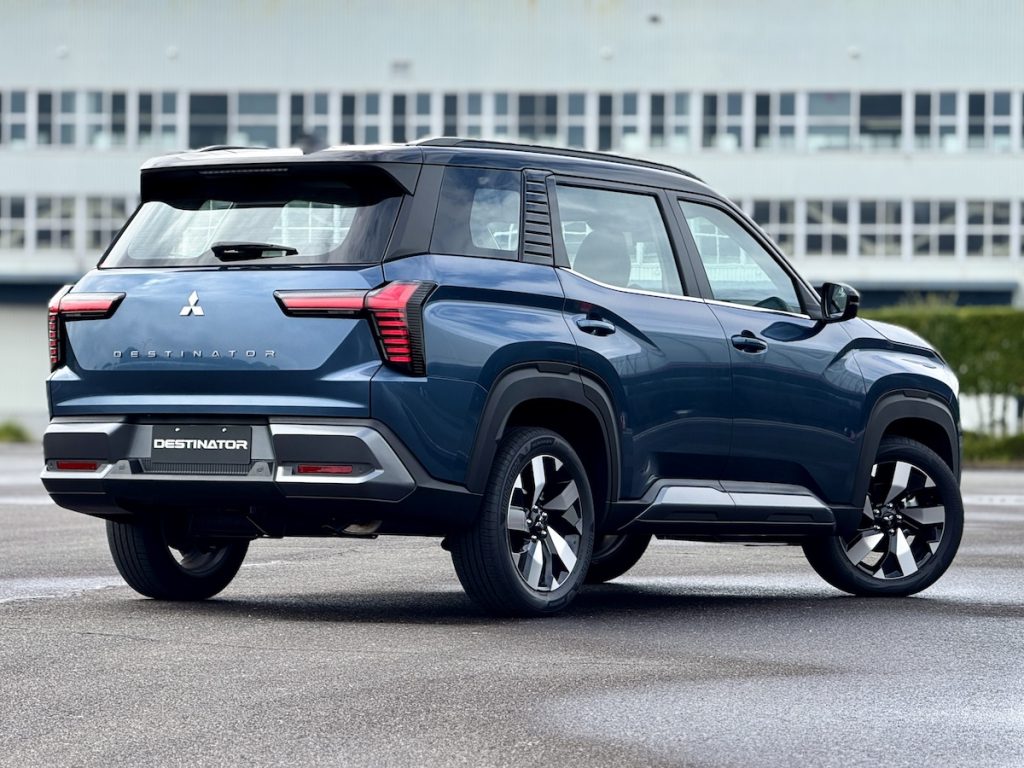
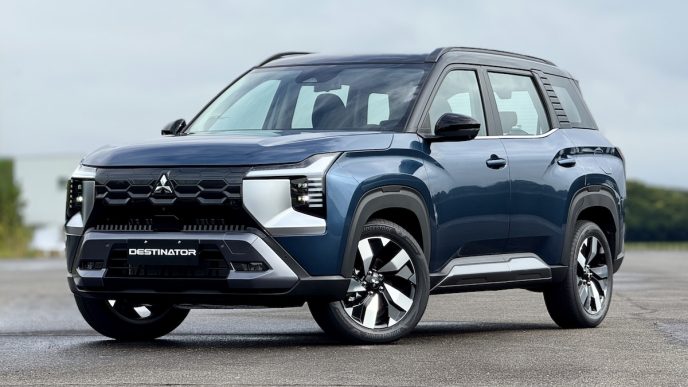
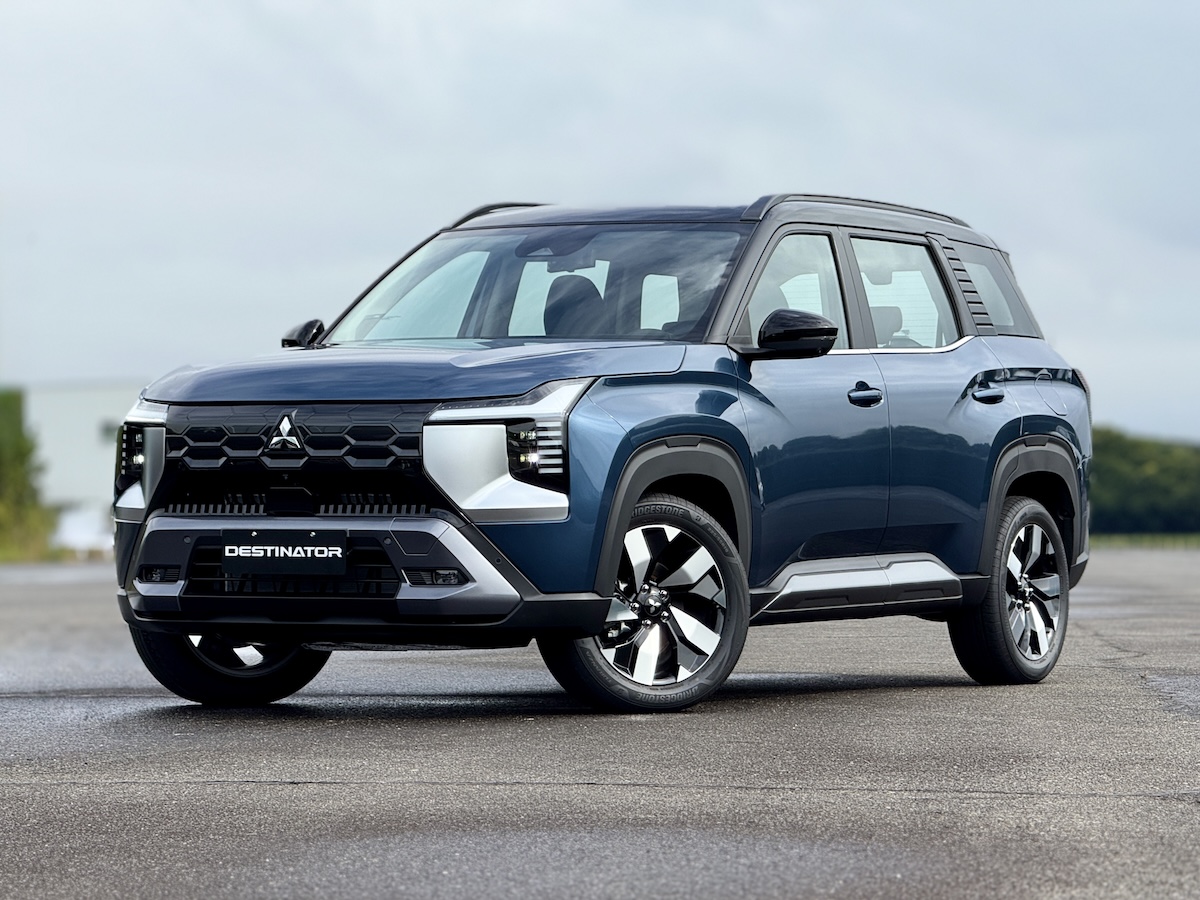
Before getting into what makes it drive the way it does, it’s worth looking at the design that frames all that engineering. The exterior carries a mix of solidity and motion, anchored in Mitsubishi’s “Gravitas & Dynamism” theme.
Gravitas gives the Destinator its presence: a stable stance, blacked-out pillars, and a sleek horizontal nose that suggests width and calm confidence rather than aggression. There’s an obvious effort to make the SUV look grounded, almost as if it’s braced for uneven terrain even while parked. The acrylic grille is a standout detail – layered, three-dimensional, and a nice touch of modern luxury for a vehicle positioned at this price point.

Dynamism shows up along the sides, where the sculpted fender flares and 18-inch wheels communicate capability without shouting it. The proportions flow well for a three-row SUV, and the Hexaguard Horizon motif at the rear – a callback to the Pajero’s iconic spare tire shape – adds just enough rugged character without becoming retro. The wide T-shaped LED lights help complete the look. Taken together, the design doesn’t chase shock value, but it feels deliberate and grounded, almost like an honest representation of what the SUV can actually do.
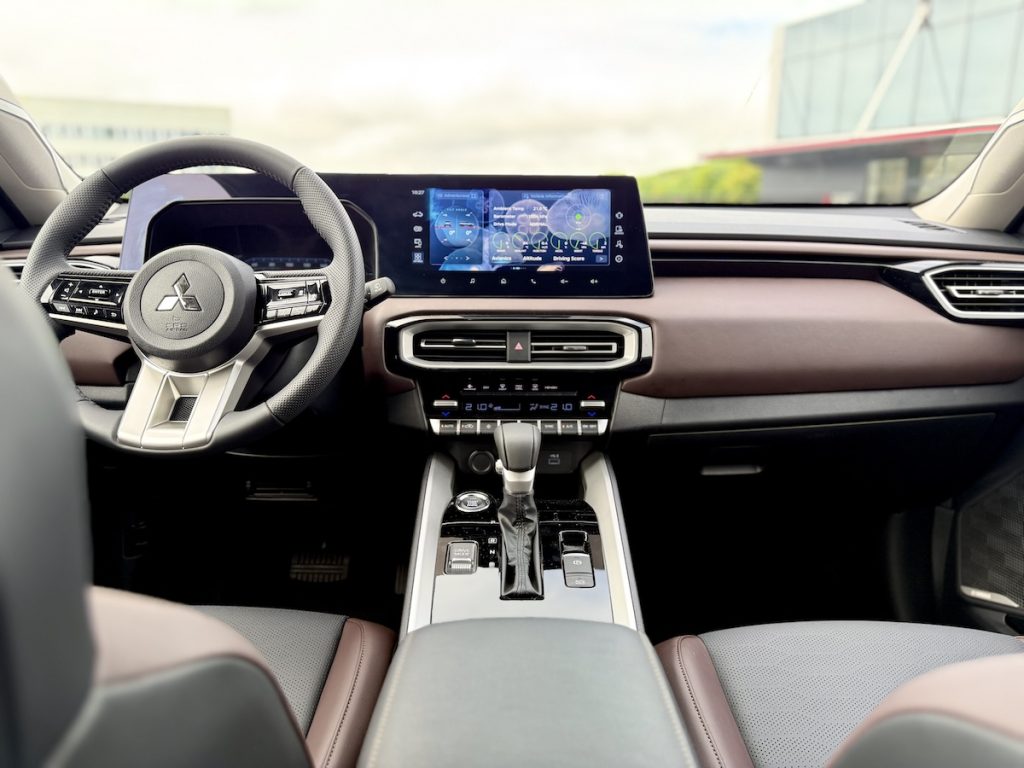
The cabin continues that theme of honest competence. It’s roomy across the front and second rows, with generous headroom and soft, premium materials where hands and elbows usually land. The third-row space, as expected, isn’t as cavernous, though it’s enough for small adults and kids, especially with the second row slid forward.
The panoramic sunroof and 64-color ambient lighting help elevate the mood, particularly at night, while the 12.3-inch Smartphone-link Display Audio system anchors the tech package with clean graphics and easy menus. Third-row passengers even get their own vents, which is still oddly rare among seven-seaters at this level. There are thoughtful storage solutions throughout – drink holders, seatback pockets, folding tables, and USB ports for every row – plus a surprisingly usable cargo area with a secret under-floor compartment, even with all seats up.
Peak Mitsubishi engineering
But the interior isn’t the main story, and neither is the design. The Destinator’s strongest impression comes from the way it was engineered – traits that only show up once you start driving it in conditions far beyond what an average owner encounters. Mitsubishi didn’t hype these traits – only mentioned in passing during official briefings. Yet they’re the reason the vehicle behaves the way it does, and they shift the narrative from “another family SUV” to something more quietly capable.
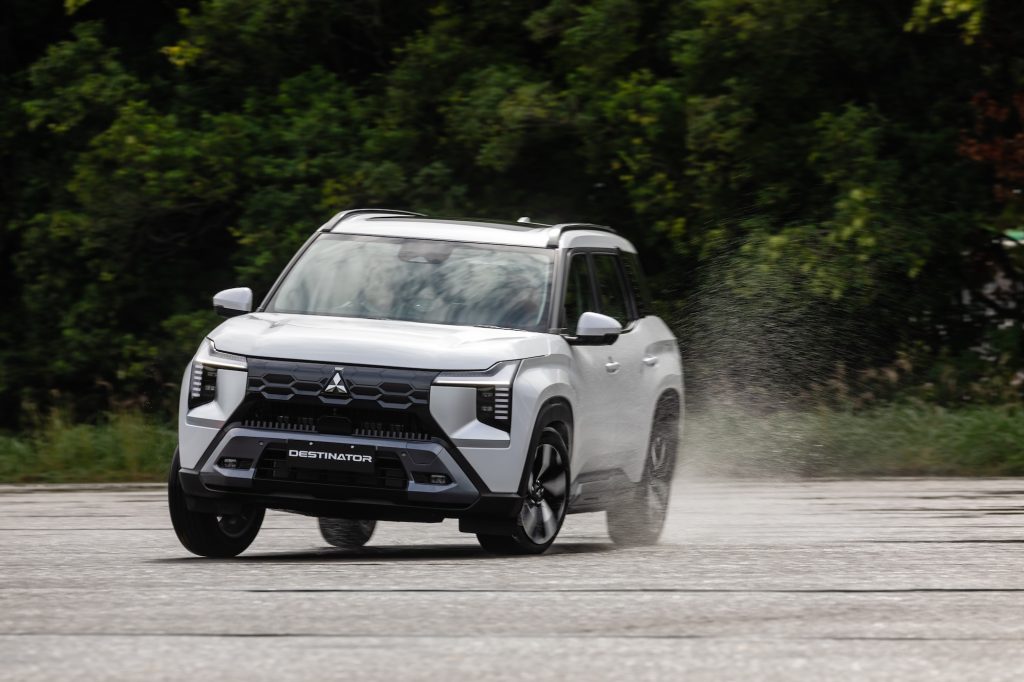
Active Yaw Control, for example, has been around long enough that most people glaze over when they hear about it. But it plays a very real role in how the Destinator feels in tight corners or on unpredictable surfaces. When we pushed harder during low-grip situations in Okazaki, AYC didn’t intervene in a dramatic or intrusive way – it simply settled the car, straightening the line of travel and eliminating the kind of oversteer that catches everyday drivers off guard. It’s the sort of technology that doesn’t ask you to change how you drive. It just steps in when your hands or instincts fall short.
Ground clearance is another story that’s more interesting than the spec sheet suggests. Officially, the Destinator sits at 214 mm, which is slightly lower than the Montero Sport’s 218 mm. But Mitsubishi engineers revealed that the platform was originally designed to sit at 244 mm. The lower number is simply the result of an aerodynamic engine shield that was added after wind tunnel testing to help improve efficiency. The true clearance didn’t disappear – it’s just not advertised. And after watching the SUV take on rougher sections at the Okazaki test facility, that extra potential height makes sense.
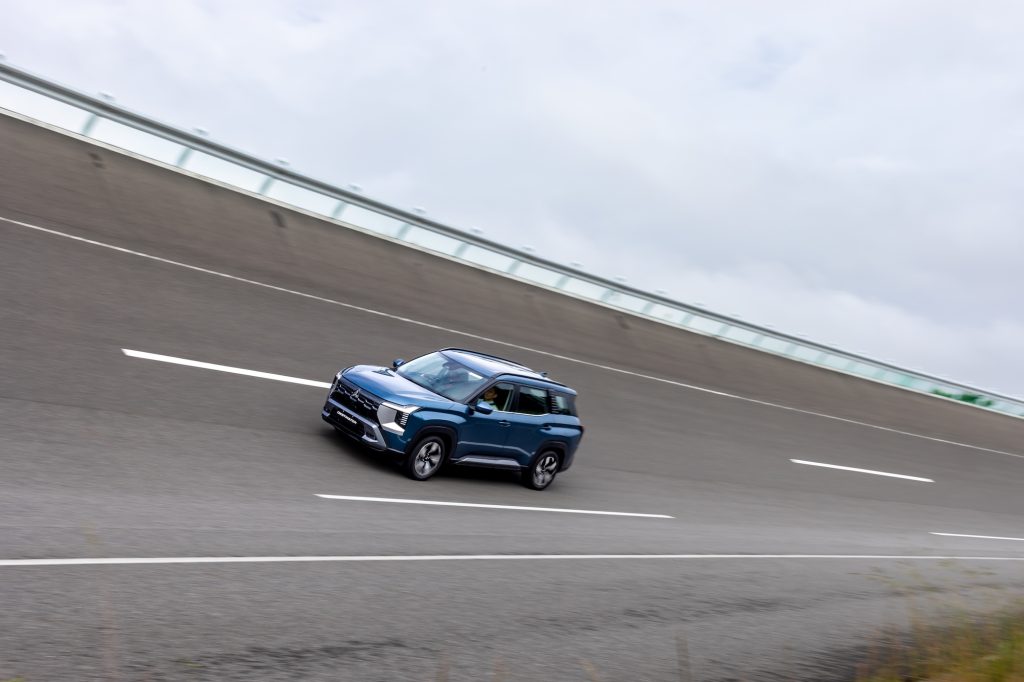
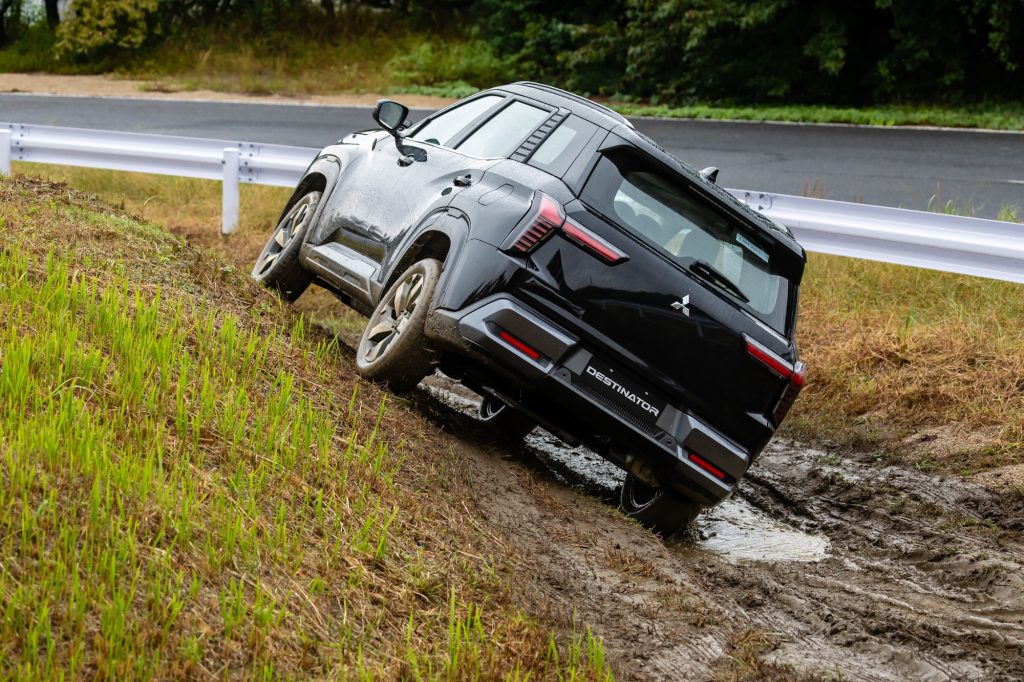
Then there’s the part people are most skeptical about: off-road ability on a front-wheel-drive, unibody SUV. On paper, that combination draws skepticism. But during mud tests, the Destinator didn’t behave like a typical FWD crossover. Its Mud mode transforms the way traction is managed. On a steep, slippery incline, modulating the accelerator manually failed on the first attempt. Letting Mud mode take over and flooring the throttle allowed the system to adjust wheel slip by itself, pulling the SUV up a muddy curve with surprising confidence. There was also a side-incline test where Mitsubishi demonstrated a 37-degree traverse. During our attempt, we overshot it to 45 degrees – confirmed by the onboard clinometer – and the Destinator managed it cleanly.
It wasn’t theatrics. The SUV simply had the grip and composure to get it done. I just wish one of my male passengers also had the grip on his high-pitched scream.
Powering all this is Mitsubishi’s updated 1.5-liter turbo engine, making 163 hp and 250 Nm. The numbers don’t shock anyone, and the CVT gearbox won’t get performance fans excited, but the surprising part is how responsive it feels. Mitsubishi redesigned the air-water intercooler to be shorter, reducing the distance intake air travels. Less travel means less lag, and the result is an engine that feels alert in daily driving. Switch the vehicle to Tarmac mode – a name that should ring familiar to Evo fans – and throttle response tightens to the point where you momentarily forget you’re working with a CVT. For an SUV in this class, the tuning feels unexpectedly well thought out.
On gravel, the tuning becomes even more evident. Mitsubishi had us do rally-style runs on loose surfaces back-to-back with competitor SUVs. The Destinator stayed composed where the others got nervous. You didn’t have to countersteer or brace for sudden slips; the SUV simply followed the intended path with the stability you’d expect from a brand that spent decades in rallying. Choosing Gravel mode didn’t require any explanation – the vehicle felt like it understood the surface better than the driver.
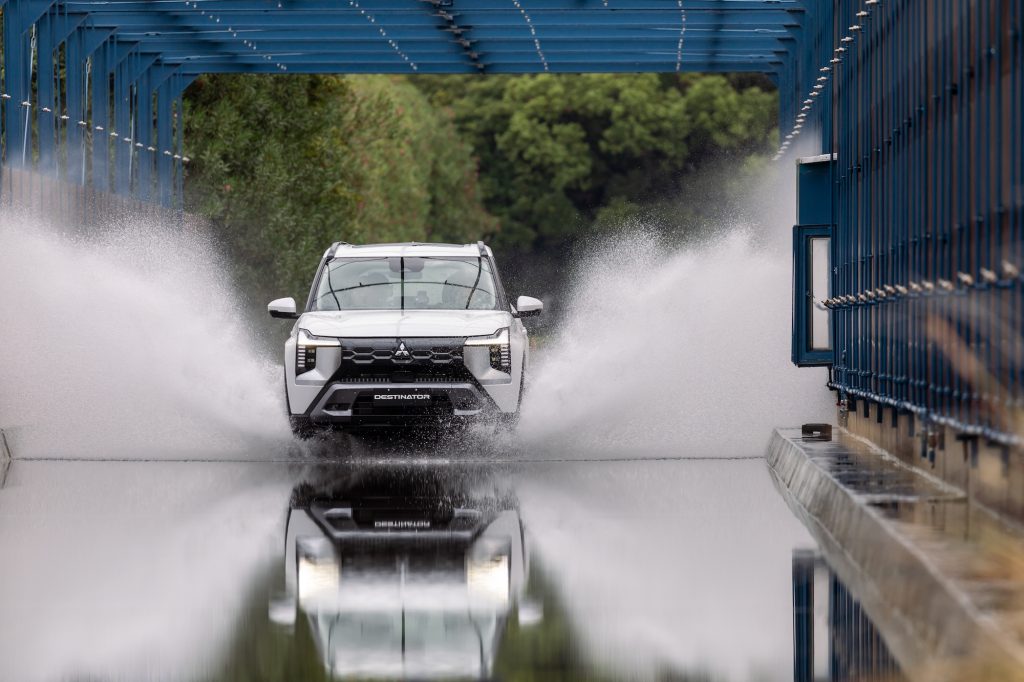
One of the quirks we didn’t expect was how the SUV behaves during flood-wading tests. Mitsubishi shaped the lower front bumper in a way that pushes water outward instead of up onto the windshield. Even when entering standing water quickly, visibility stayed surprisingly clear. It’s a tiny detail, but one that shows the level of engineering attention this vehicle received.
After a full day of exploring everything Mitsubishi allowed us to try – from controlled slides to muddy climbs to deep water – it was hard not to feel that the Destinator was designed with more intent than its marketing suggests. It doesn’t scream for attention. It doesn’t lean on nostalgia. Instead, it functions like a quiet showcase of what the brand’s history in motorsports and engineering can offer when applied to an everyday family SUV.
The Mitsubishi Destinator feels over-engineered, but in the most pleasant and useful way possible. It behaves better than expected, handles terrain you wouldn’t think it should tackle, and reveals layers of engineering effort the more you drive it. For families who want something comfortable with surprising depth, this SUV might be one of Mitsubishi’s most interesting releases in years.