



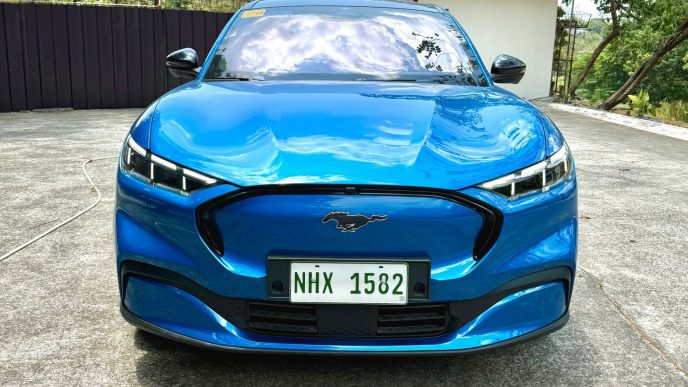
Let’s play a little word association game.
Mustang.
“Horse!”
“Fast!”
“Powerful!”
“Muscle car!”
Three of four replies refer to a thoroughbred animal.
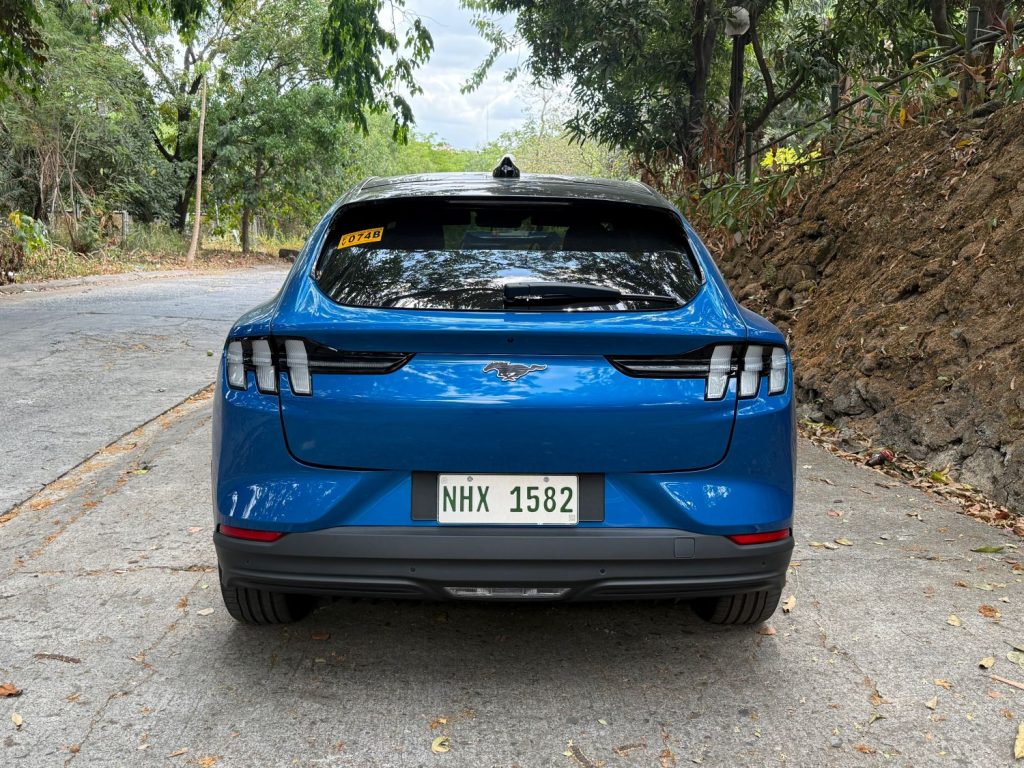
Three of those same responses also refer to a thoroughbred car.
That’s how strong the legacy of the Ford Mustang is. It’s an American icon that’s become an integral aspect of car culture all over the world. Since its inception in 1965, the Mustang has become synonymous with affordable performance — a car that can go toe to toe with Europe’s best and fastest at a fraction of the price. It was brash, loud, and flashy, and with the right driver and some key modifications, can race door to door with vastly more expensive and more exotic machinery.
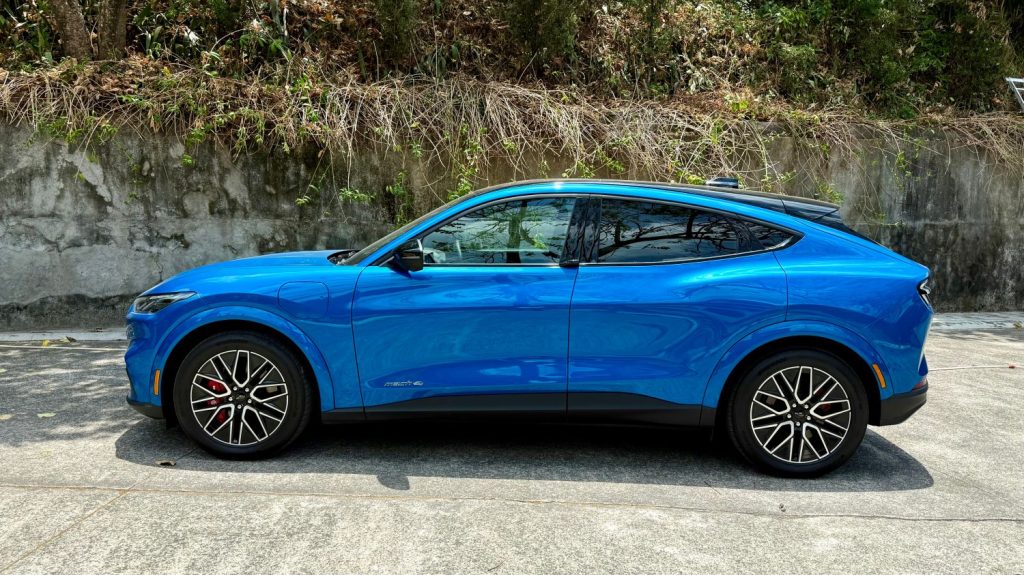
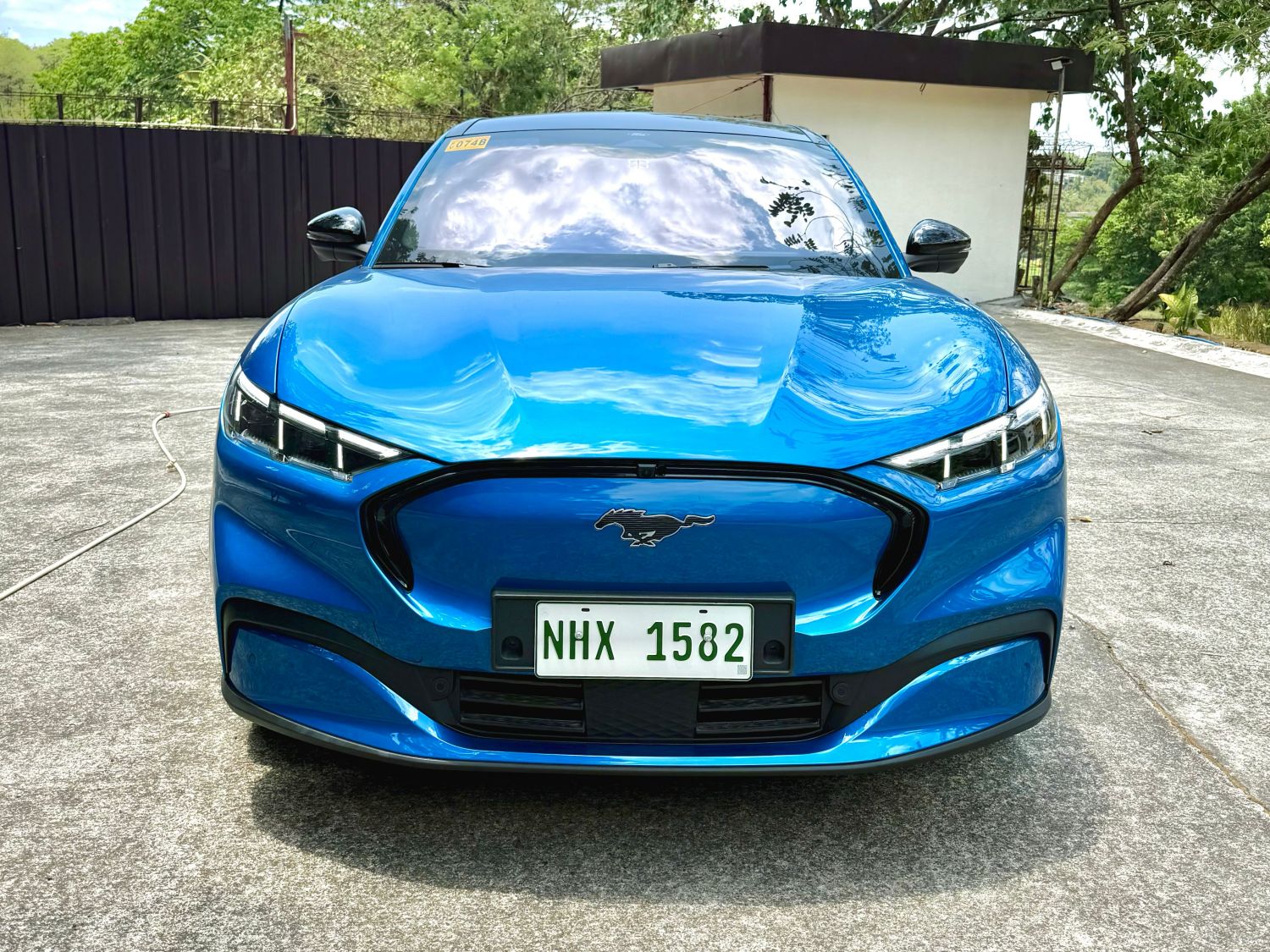
But times change and the world is now into SUVs and electric vehicles. Which is why Ford combined those two genres into one car: the all-electric Mustang Mach-E SUV.
Needless to say, the Mustang purists were up in arms.
“It’s not a sports car!”
“It’s not even a coupe!”
“Where’s the V8?”
To put the Mustang Mach-E in perspective, it helps to see what other iconic sports car brands have done to evolve with the sports car-SUV-EV conundrum.
When Porsche announced the Cayenne SUV back in 2002, 911 purists were dismayed. For diehards that refused to accept the front-engined V8-powered 928 as a replacement for the 911 (wrong engine layout, wrong cooling medium, wrong engine location) back in 1977, the Cayenne was simply sacrilegious.
Still, the Cayenne set record sales. From 54,000 cars sold globally in 2001, Porsche sold almost 77,000 cars in 2003 — the first full year of Cayenne sales. After being in financial dire straits in the late 90s, Porsche’s bottom line suddenly became as robust as the V8 engine under the Cayenne’s hood. And now, 24 years later, Porsche has introduced the fully electric Cayenne.
Then there’s Ferrari with the much-maligned Luce pure-electric sedan. A silent, soulless sedan from Prancing Horse seemed improbable, but Maranello rolled it out anyway — replete with a decidedly uncurvaceous styling.
The Ferrari example is perhaps the clearest reminder that even the most tradition-bound performance brands understand one inescapable truth: Heritage is only valuable if it has a future. Every legendary marque eventually reaches a point where it must decide whether to preserve its past or reinterpret it for a new generation.
Ford faced exactly that crossroads with the Mustang. The easier route would have been to build just another electric crossover with an anonymous alphanumeric name. It probably would have sold reasonably well. It also would have been forgotten almost as quickly as it arrived.
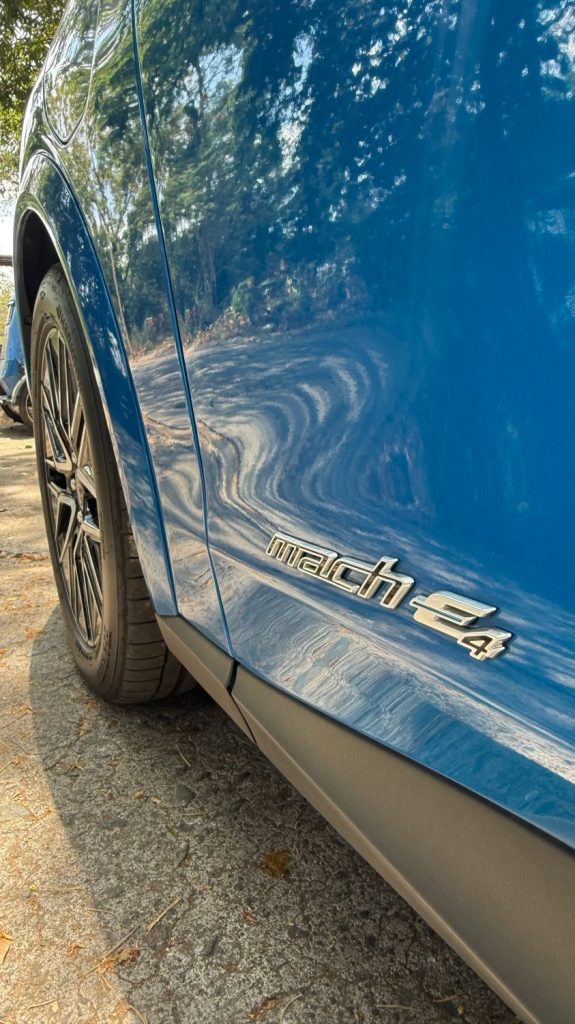
Instead, Ford made a far riskier decision. It put one of the most recognizable names in automotive history on the tailgate of an electric SUV.
That single act sparked outrage. But perhaps it also sparked something more important — a conversation about what actually makes a Mustang a Mustang. Is it the number of doors? The shape of the roofline? The presence of a big V8 rumbling under the hood?
Or is it something less tangible? Because if the essence of the Mustang has always been accessible performance, emotional design, and the ability to make ordinary drivers feel extraordinary, then perhaps those qualities are not exclusive to a petrol-fed car.
Spend some time behind the wheel of the Mustang Mach-E and the existential debate begins to fade. The immediate surge of electric torque is unlike anything even a V8 Mustang can deliver from a standstill. There is no waiting for revs to build, no downshift before overtaking. Press the accelerator and the response is instantaneous, pushing you back into your seat with effortless, electric acceleration.
The low-mounted battery pack also transforms the way the Mach-E behaves through corners. Despite its SUV proportions, its center of gravity sits remarkably low, allowing it to corner with confidence and composure that belie its height. The steering is precise, body roll is well controlled, and there remains an eagerness that encourages spirited driving rather than merely transporting passengers from point A to point B. It even belies its sports car aspirations by being comfortable to ride in; again much like its muscle car forebear.
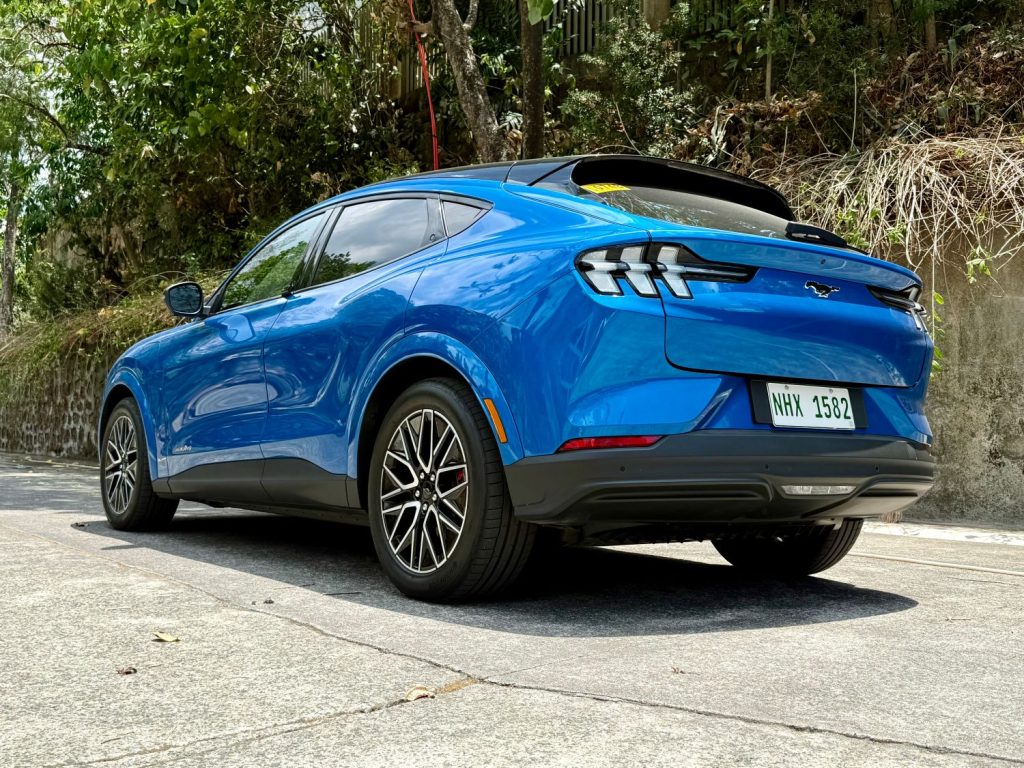
No, it doesn’t soundtrack your journey with the thunderous roar of a V8. But neither did the original Mustang succeed purely because of its exhaust note. It succeeded because it democratized performance. It made excitement attainable. It made people smile every time they found an empty stretch of road.
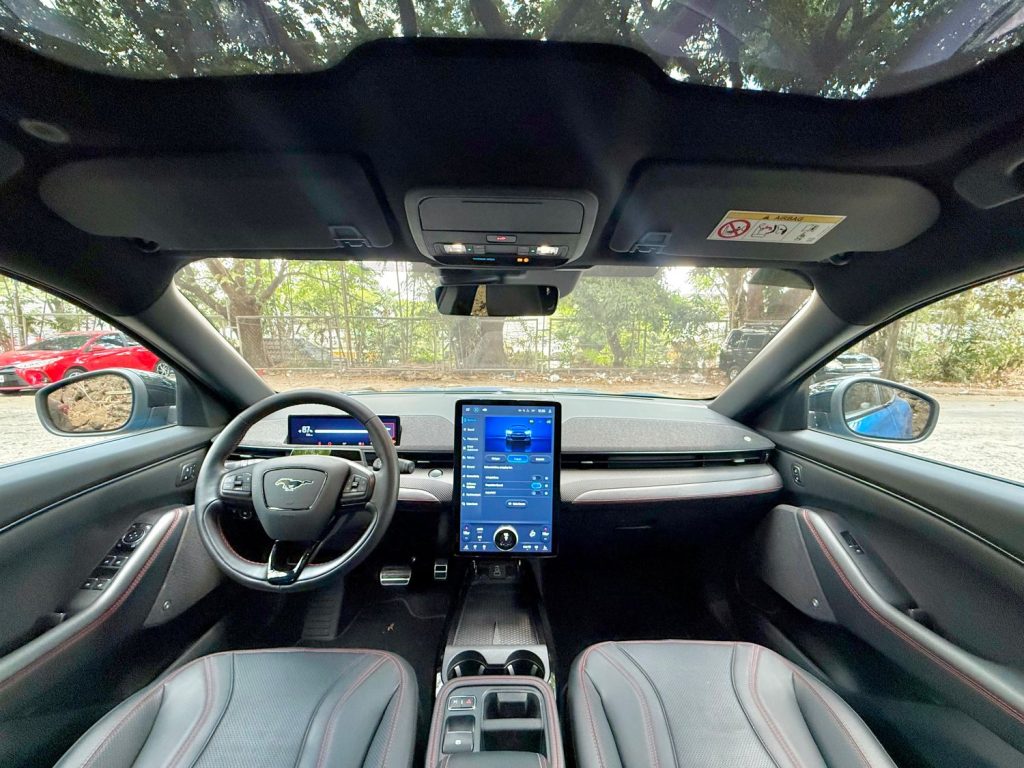
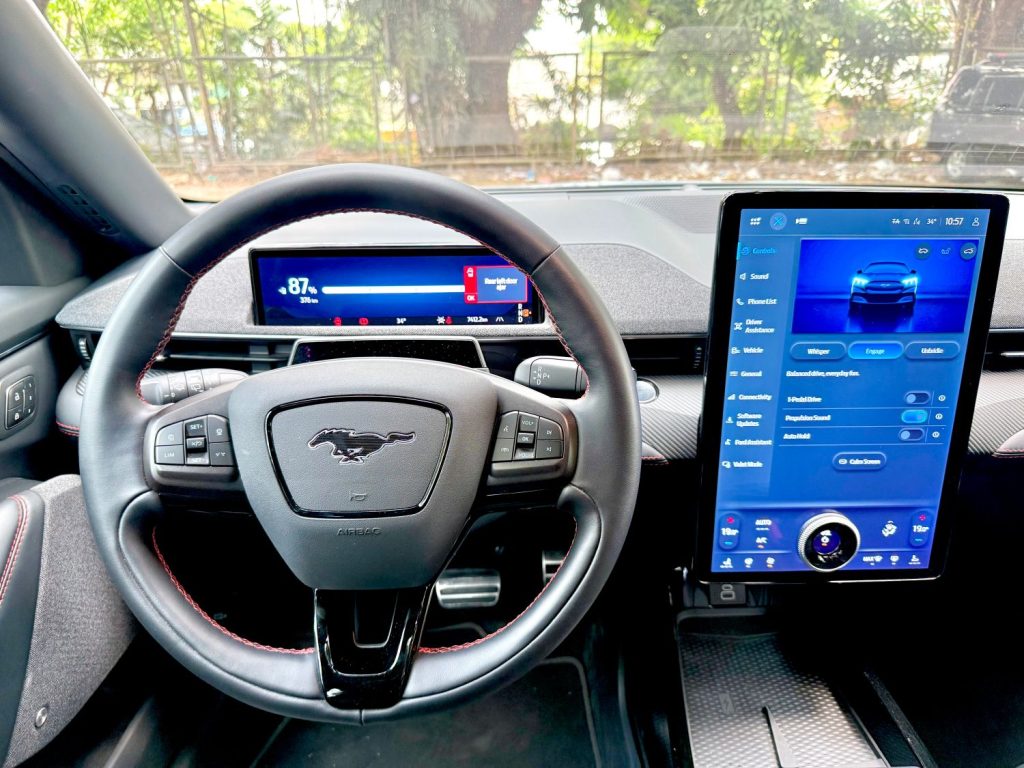
The Php 3,199,000 Mach-E (Php3,499,000 for AWD) simply achieves those same objectives through different engineering. Its cabin also reflects how performance itself has evolved. Instead of rows of analog gauges and chrome switches, you’re greeted by a clean digital interface centered around a large touchscreen. Advanced driver assistance systems, over-the-air software updates, intelligent navigation, and seamless connectivity are no longer luxuries — they’re expectations. The Mach-E embraces them without losing the sense that you’re driving something special.
Ironically, many of the criticisms directed at the Mach-E echo those heard throughout Mustang history. The original 60s Mustang wasn’t considered a “real sports car” by European standards. The 70s Mustang II was criticized for abandoning performance. The 80s through 90s Fox-body cars were dismissed for being too ordinary. The 2000s modular V8 era was criticized for lacking the character of the old pushrod engines. Every generation has been accused of betraying the Mustang formula.
But every generation eventually found its audience. Perhaps that’s because the Mustang has never been frozen in time. It has always adapted to changing regulations, changing technologies, changing customer tastes, and changing definitions of performance.
The Mach-E isn’t trying to replace the V8 Mustang any more than the Cayenne replaced the 911. Both continue to exist because they serve different purposes while expanding what their brands can be.
This is where Existentialism and the Ford Mustang Mach-E begins to make sense. Existentialist philosophers argue that existence precedes essence — that identity is not predetermined but continually shaped by choices and actions.
Maybe cars are no different. A Mustang is not defined solely by what spins its tires. Its identity is built upon the experiences it creates, the emotions it evokes, and the freedom it represents. The Mach-E challenges enthusiasts to separate essence from tradition. It asks whether performance must always smell of gasoline. Whether excitement must always arrive with eight cylinders. Whether progress and heritage can occupy the same garage.
There may never be unanimous agreement. Some enthusiasts will forever insist that a Mustang can only be a two-door coupe with a V8 under its long hood. Others will happily embrace electrification if it means quicker acceleration, cleaner mobility, and technology that keeps the Mustang relevant for decades to come.
Perhaps both perspectives are valid. After all, icons don’t survive by refusing to change.
They survive by remaining recognizable while continually reinventing themselves for a different world. The Ford Mustang Mach-E may not be the Mustang everyone wanted. But it may well be the Mustang this era needed.