






Anything besides fuel is alternative mobility. For Fuso trucks, this isn’t limited to just hybrid and battery-electric means. Their pursuit of greener power for heavy-duty applications landed them on something new – at least for them. They launched their pursuit of hydrogen power at the 2025 Japan Mobility Show. This resulted in the all-new H2IC and H2FC, two long-haulers that are meant to go farther and cleaner.
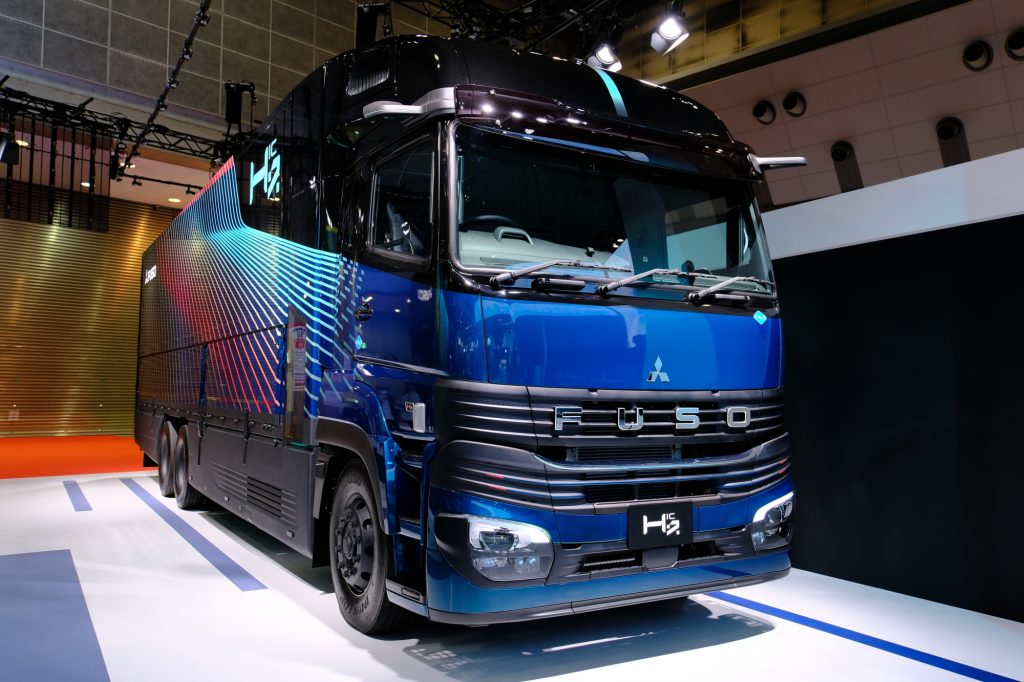
The H2IC is closer to a diesel truck in that it still has an internal combustion engine. Only this was modified to accept hydrogen instead. This allowed the company to use 80% of the engine components so that the additional price for this greener truck is minimal. It can go up to 700 kilometers without much compromise on power. It’s still a prototype but it’s closer to production, given the thriving hydrogen fuel landscape in Japan.
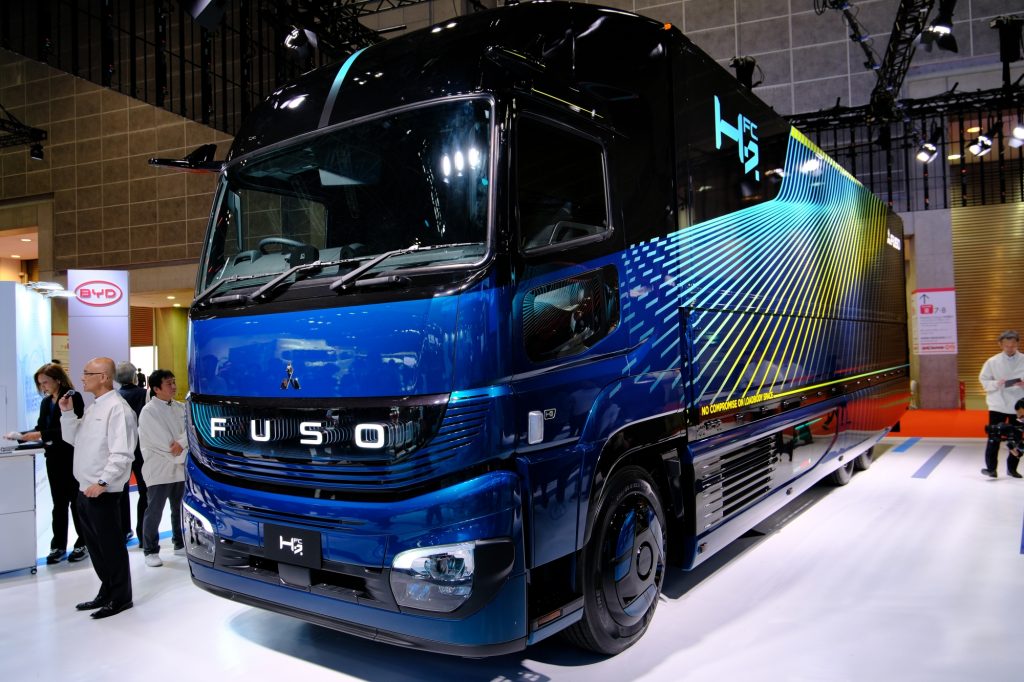
Meanwhile the H2FC is a hydrogen fuel-cell truck that is said to have higher efficiency while lowering running cost. It can go up to 1,200 km in a single go and can be filled up in 15 minutes which is very close to a typical diesel truck with a large tank.
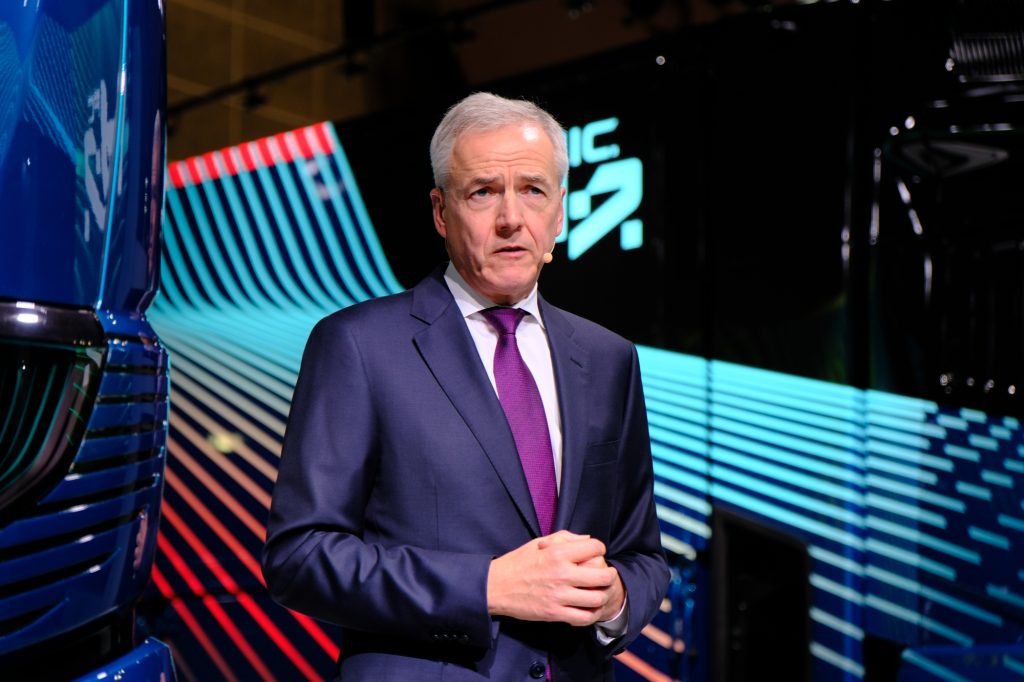
In an interview with Karl Deppen, CEO of Mitsubishi Fuso Trucks and Buses, he said that hydrogen was chosen because it doesn’t impede a truck’s capabilities.
“The batteries for a heavy-duty truck are very heavy so on the weight you lose payload,” Deppen said. “But you can see here with the hydrogen solution like this you can safeguard the payload, you can safeguard the space on the truck, and you can get a higher range, has fast refueling. So you can see a lot of advantages and practical uses.”
Fuso doesn’t have a timeline yet on when these two hydrogen trucks would officially be available for purchase. They will still test it with customers and other partners for further improvements but there are already interest mainly from New Zealand and Australia.
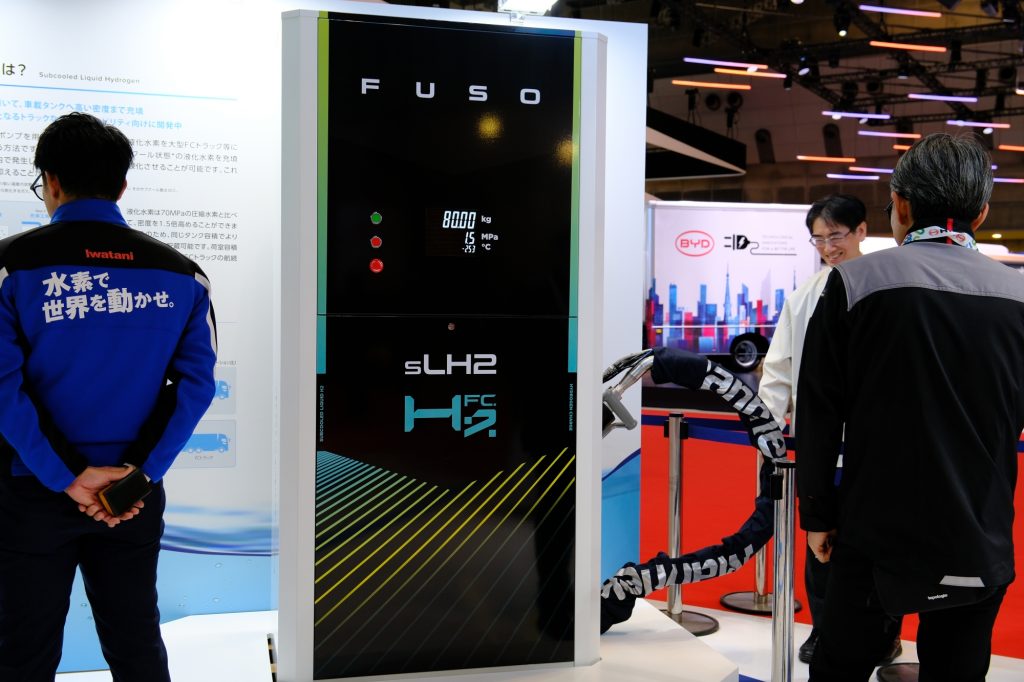
Along with the H2FC truck is the debut of Fuso’s sLH2 or “sub-cooled liquid hydrogen” fuel. It was developed with Iwatani Corporation for use specifically with commercial vehicles. The benefit of sub-cooled liquid hydrogen is the boiled-off gas would be re-liquified so there’s no need to vent it. Since it keeps its liquid form and sub-cooled, it will lead to more storage density, longer driving range, and faster refueling times.
Deppen said they have good confidence in its viability, but calls on the industry to work with them to make it commercially available. They said it has lower investment and operational cost, as well as simpler station equipment is utilized leading to easy maintenance. They’d have to evaluate it further and build the first few stations in order to verify its benefits so for now, there’s no date for final and official launching.
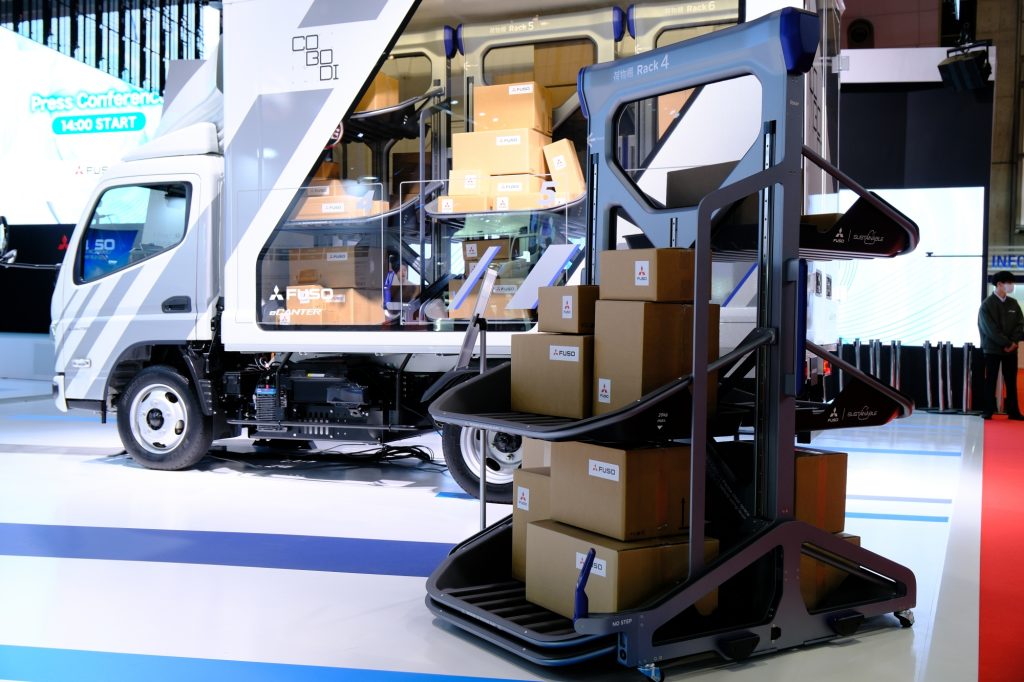
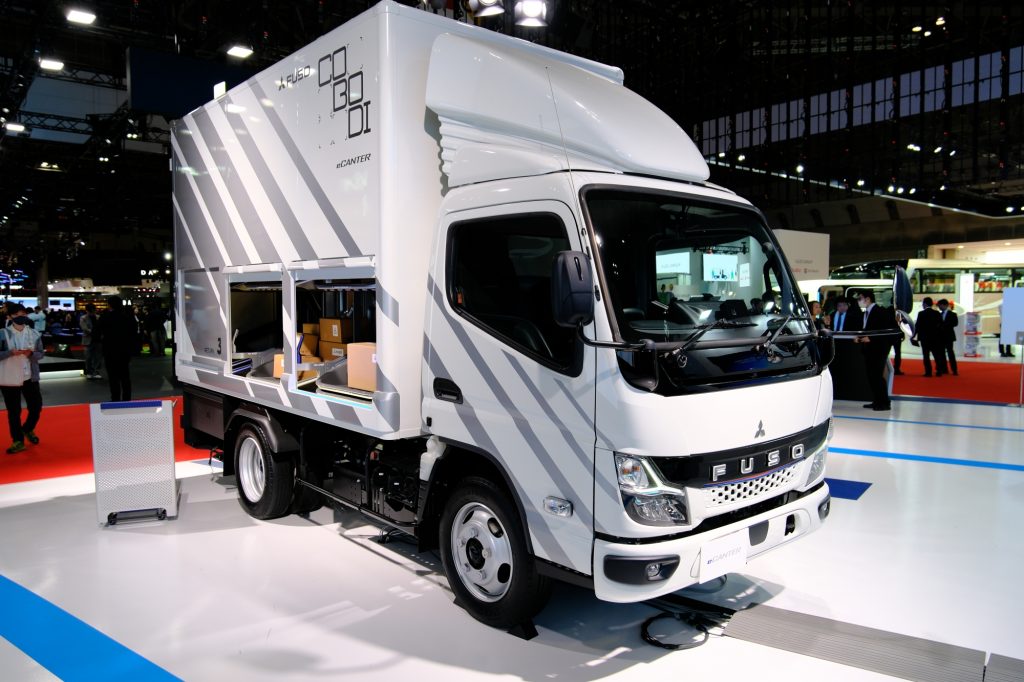
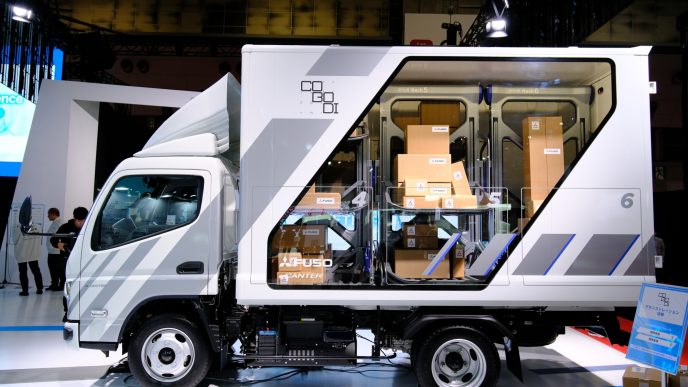
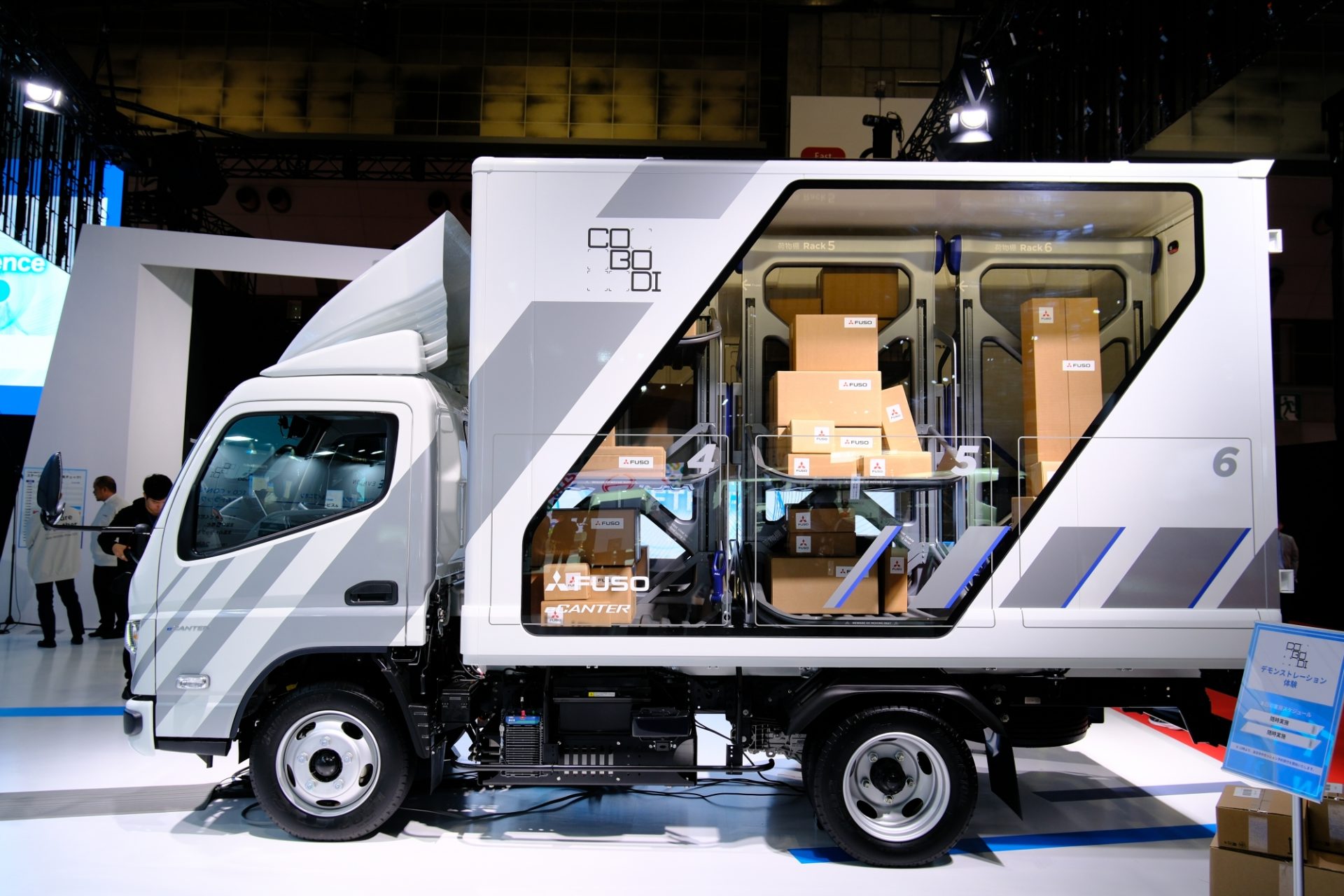
Also making an appearance in the Fuso booth this year was the eCanter, this time with a new shell. It has Fuso’s prototype for a COBODI or Connected Load Body. This allows the driver to use AI in arranging his deliveries, while a vertical platform stacks them vertically. All the person has to do is always get the parcels at the bottom section of the cargo floor, so he won’t have to rummage through boxes anymore. Its aim is to reduce the burden on the drivers, reduce work time, and improve delivery efficiency.


