



There are motorcycles that are relatively easy to understand. A few kilometers on the road, a familiar stretch of corners, perhaps a morning ride up the mountains, and you begin to get a good sense of what the machine is capable of.
The seventh-generation, 2026 Ducati Panigale V4 S is not one of those motorcycles.
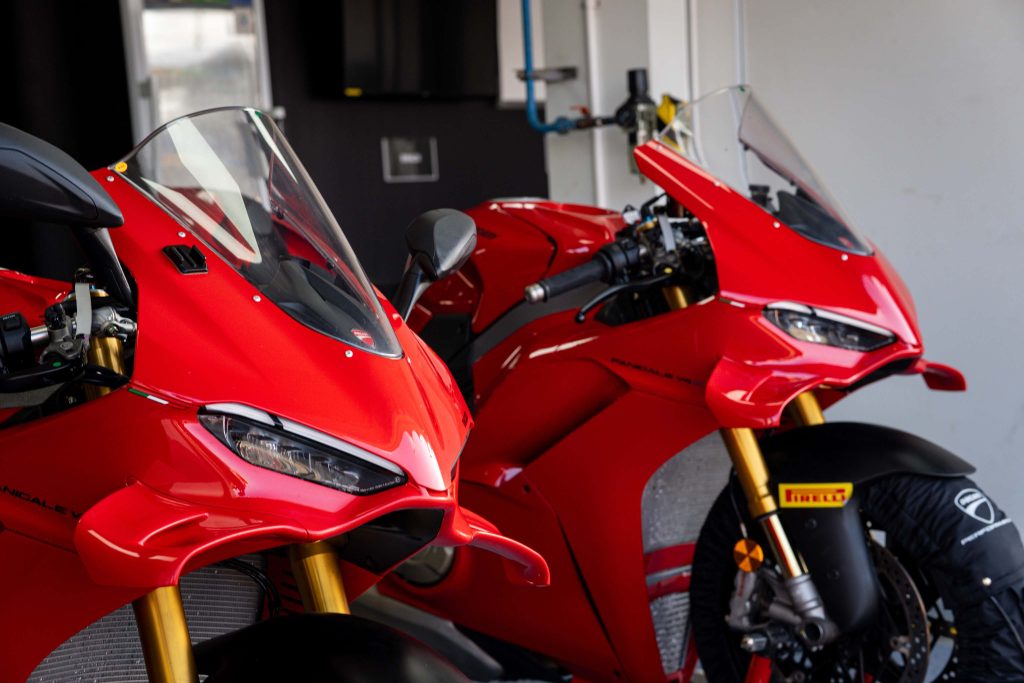
With 216 horsepower, sophisticated electronics and technology derived from Ducati’s racing program, this is a motorcycle whose true capabilities are almost impossible to explore responsibly on public roads. To properly understand it, you need a racetrack. And preferably, someone much faster than you showing you what to do.
That, essentially, is what happened during the Ducati Riding Experience, or DRE Racetrack Academy, over the weekend at one of Southeast Asia’s most spectacular venues: Indonesia’s Pertamina Mandalika International Circuit.
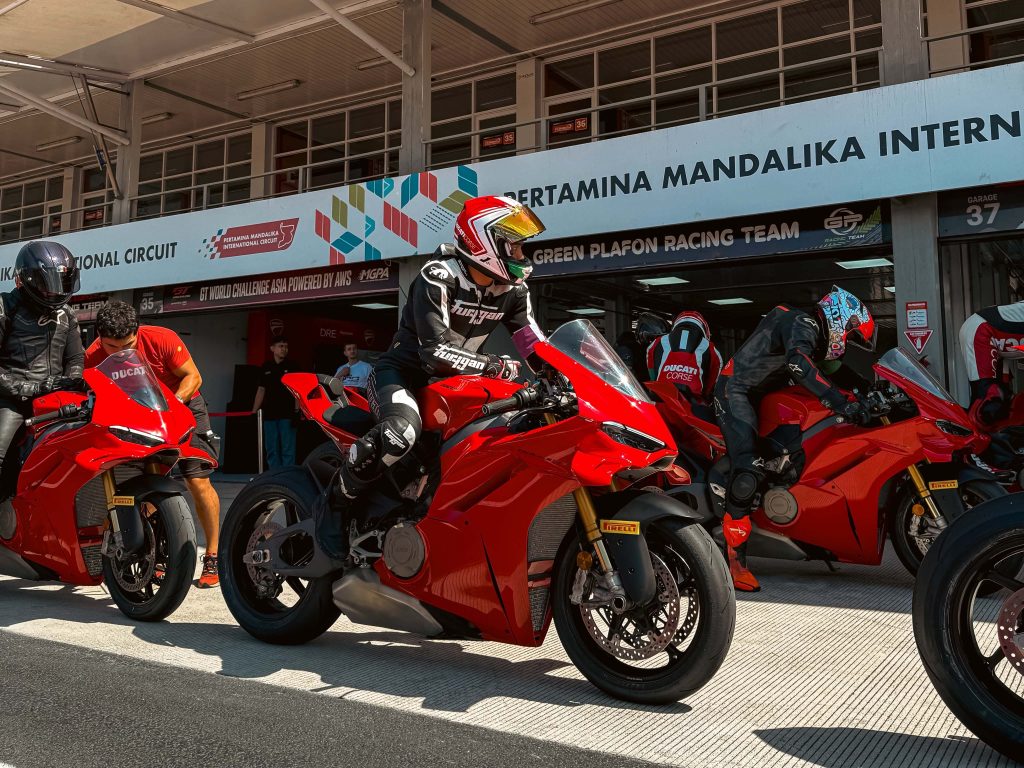
I had come to Lombok for Ducati’s DRE Holiday, but once the leathers went on and the pit lane opened, the holiday portion of the program quickly took a back seat. Because waiting inside the paddock was a row of Panigale V4 S superbikes, Ducati’s flagship machine.
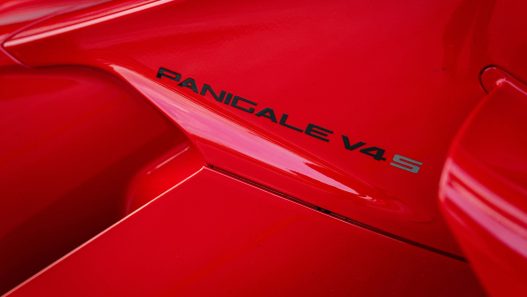
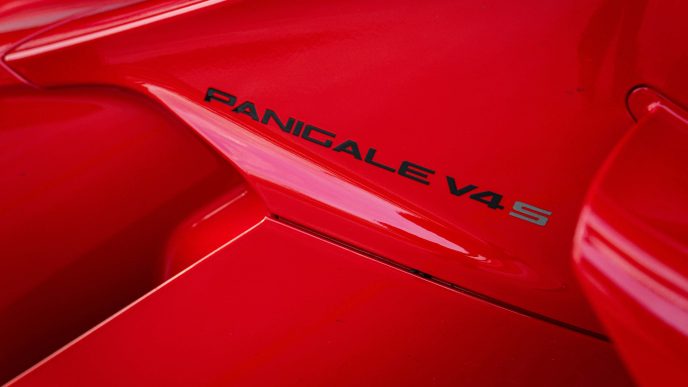
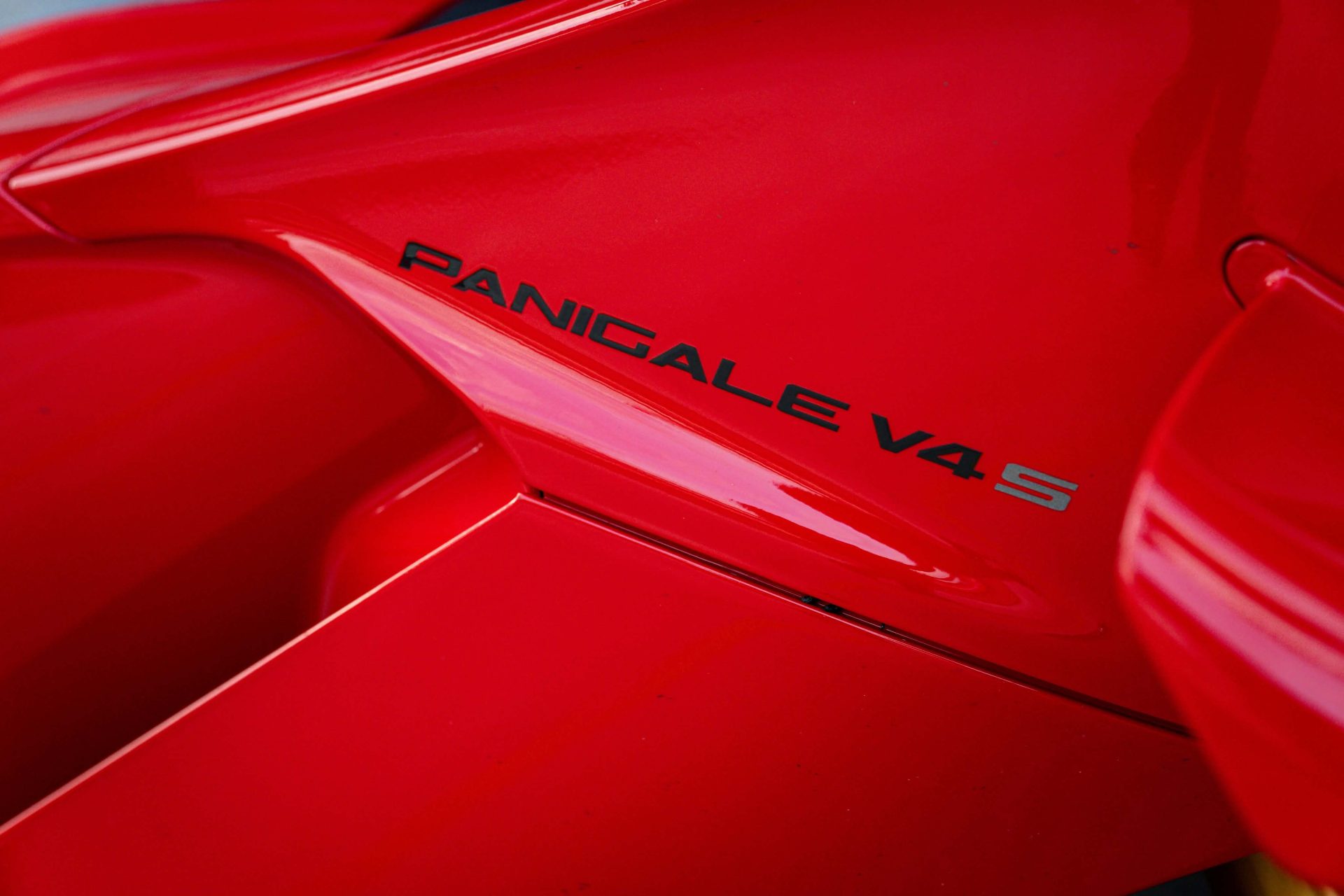
The current Panigale V4 S represents the seventh generation of Ducati’s superbike and, on paper alone, its numbers are intimidating. Its 1,103cc Desmosedici Stradale 90-degree V4 produces 216 hp at 13,500 rpm and 120.9 Nm of torque at 11,250 rpm. The V4 S weighs just 187 kg without fuel, giving it the kind of power-to-weight ratio that would have been considered exotic race-bike territory not too long ago.
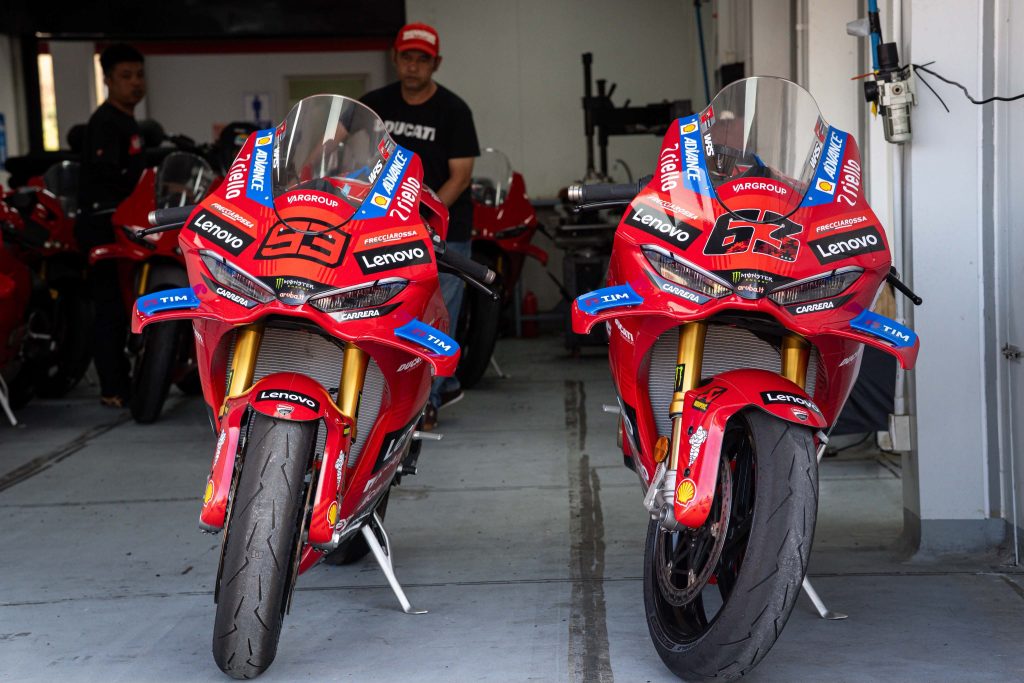
But the Panigale has evolved beyond simply adding more horsepower. The S receives electronically controlled Öhlins Smart EC 3.0 suspension, forged aluminum wheels and a lithium-ion battery, with braking handled by Brembo Hypure monobloc calipers and Ducati’s latest electronics working constantly behind the scenes.
The result is something slightly counterintuitive: this is an extraordinarily fast motorcycle, but Ducati has spent an enormous amount of engineering effort making all that performance more accessible. Mandalika is exactly the sort of place where you begin to appreciate why.
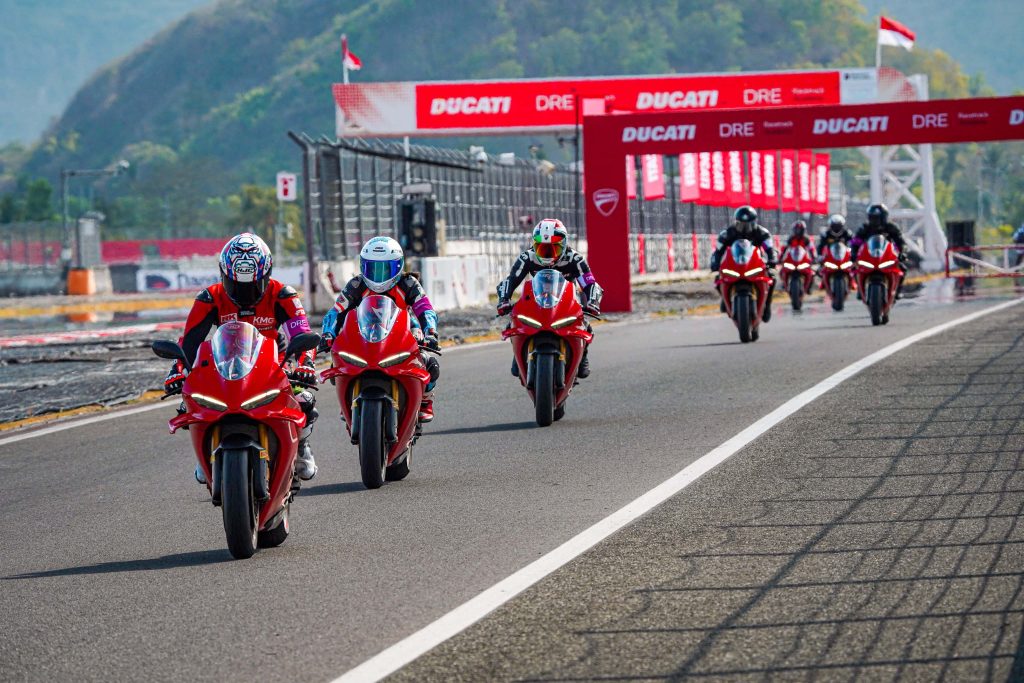
The Pertamina Mandalika International Circuit is a MotoGP venue, which immediately gives the occasion a different feel. This isn’t a small training circuit where you occasionally see fourth gear. You’re riding the same stretch of asphalt where MotoGP machinery competes, surrounded by the rolling hills and tropical coastline of southern Lombok.
There are fast sections, heavy braking zones and technical corners that force you to think about where you’re looking, how you’re positioning the motorcycle and, perhaps most importantly, how smoothly you’re doing everything.
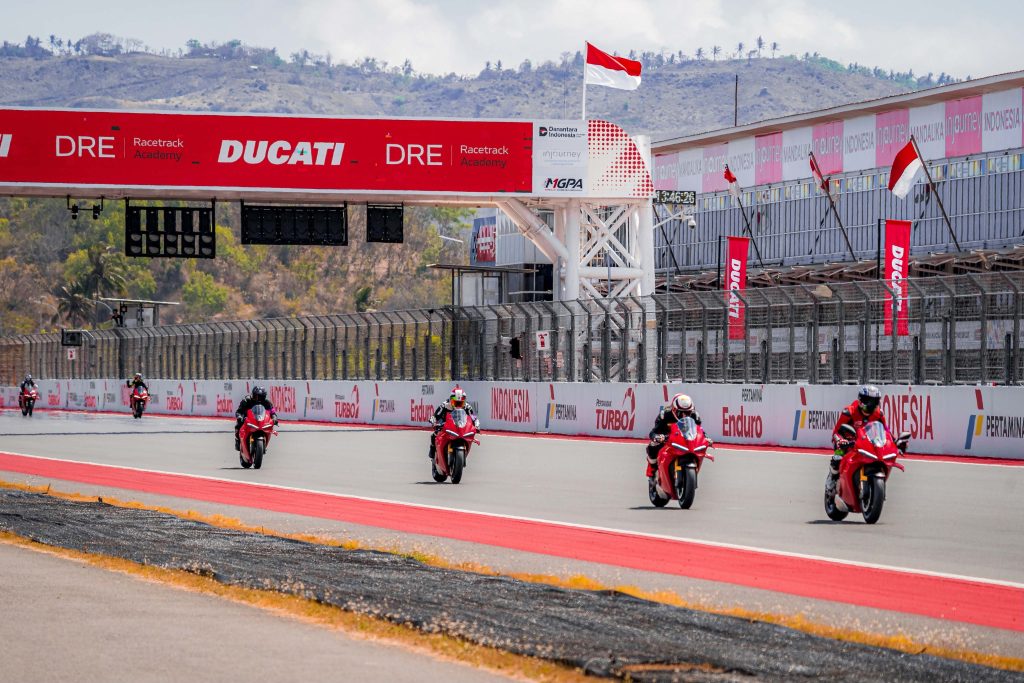
The temptation with a superbike this powerful is naturally to focus on speed. The DRE teaches almost the opposite. Speed is the result, but technique comes first.
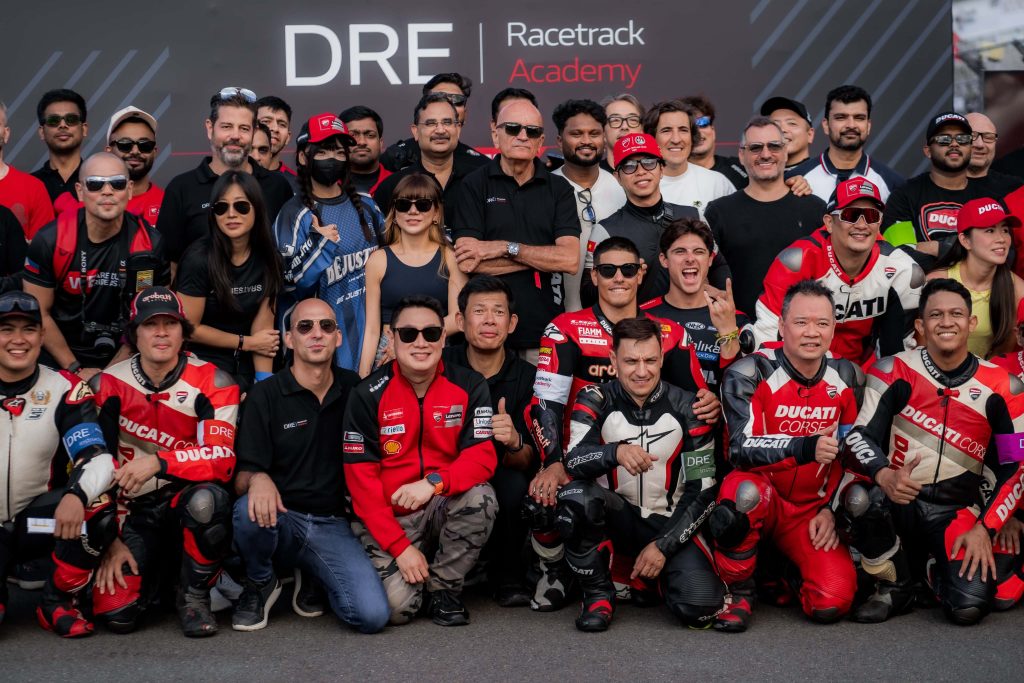
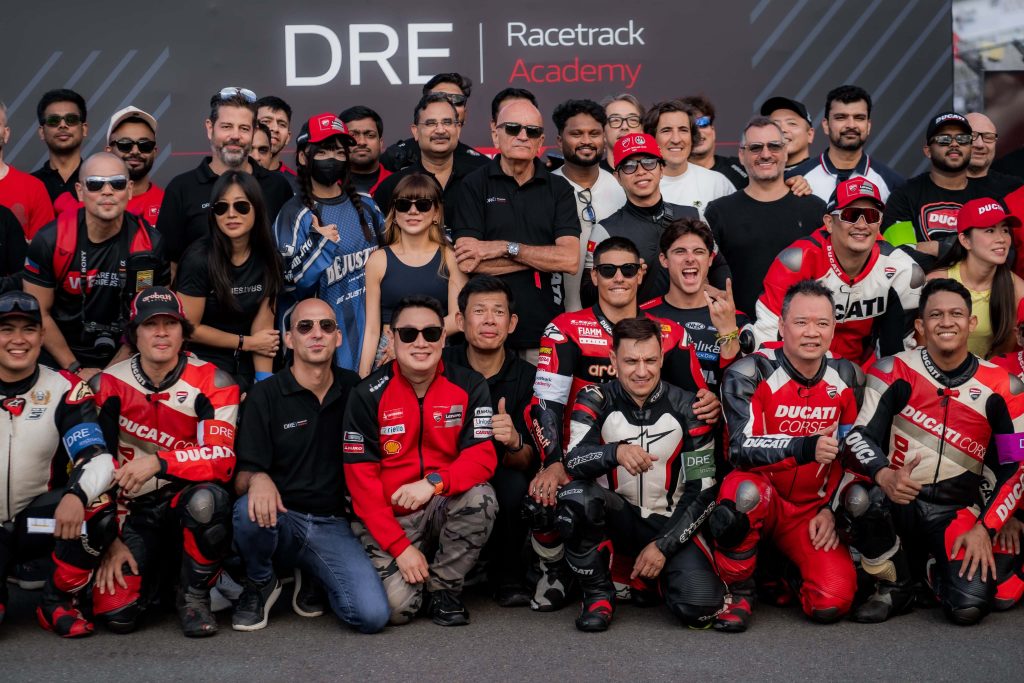
What separates the DRE from simply booking a track day is the coaching. For the Mandalika program, Ducati assembled an extraordinary instructor roster that included champion racers from different parts of the globe, including Jake Yuraja Gomez from the Philippines.
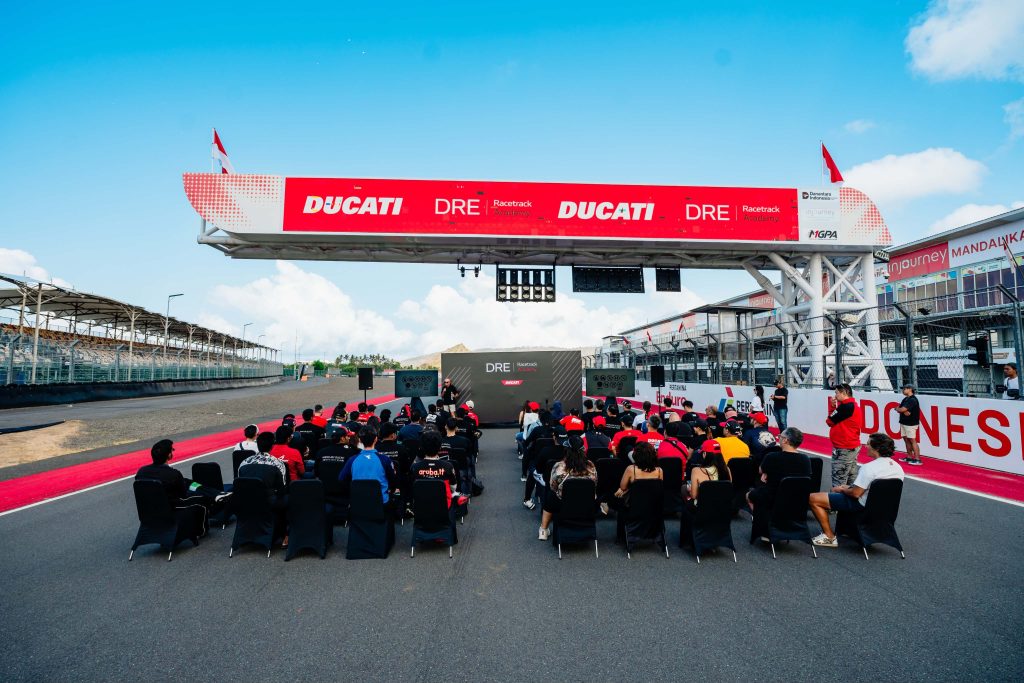
Riders were divided into categories, Track Intro and Warm Up through Evo and Master, so nobody was simply thrown onto a circuit and told to keep up. There’s a briefing in a classroom-like setting in the paddock, but much of the education happens on the motorcycle.
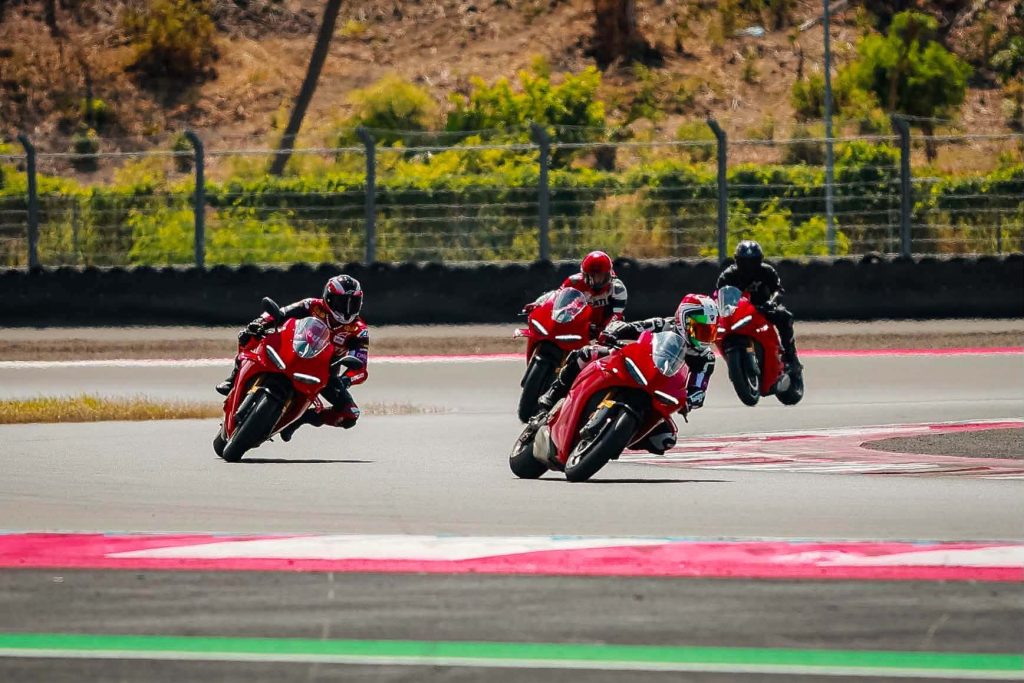
You follow the instructors around the circuit, watching their lines, braking points and body positioning. They watch you in return. After the sessions come the debriefs: where you’re turning in too early, where you’re leaving usable track on the exit, where you can brake later, where your body position needs correcting, or sometimes where you’re simply trying too hard.
That last part is important.
A motorcycle like the Panigale V4 S can convince you that going faster requires more aggression. More throttle. Harder braking. More physical effort.
Following a professional rider around a circuit quickly exposes the flaw in that thinking. The really fast guys often look almost annoyingly relaxed — including my instructor, Song, a seven-time Korean Superbike Champion who barely spoke English. Which was fine, since we all spoke “motorcycle.”
Song’s movements were deliberate, his lines clean. Nothing looked rushed. While I was still consciously thinking about braking points, body position and where I needed to be on the track, he seemed to be doing almost nothing at all. The motorcycle simply went where he wanted it to go.
That, of course, was the illusion.
What looked effortless was the product of years of racing and an understanding of the motorcycle that I was only beginning to develop. So I stopped trying to chase his speed and started trying to copy his smoothness. Gradually, session by session, the pace came with it.
It was through that process that I began appreciating the Panigale V4 S beyond its headline horsepower figure. The Desmosedici Stradale engine is ferocious when allowed to rev, but what surprised me was how manageable the motorcycle could feel underneath you, a credit to electronics that have become remarkably good at interpreting what the rider is asking for.
The chassis helps too. Ducati’s Hollow Symmetrical Swingarm and revised Front Frame, with reduced lateral stiffness, are designed to improve the bike’s behavior during the delicate phases of track riding.
You don’t necessarily think about engineering terminology while approaching a corner at speed. What you do notice is confidence.
The bike changes direction with surprisingly little effort. It feels planted under braking, yet willing to turn. And once you begin trusting the front end, you can concentrate less on managing the motorcycle and more on correcting your own riding, which, at a DRE, is precisely the point.
One of the great ironies of riding a machine this capable is realizing that the motorcycle is almost certainly not the limiting factor.
You are.
The Panigale has far more braking performance than most riders initially use. It can carry more corner speed. It can accelerate harder. Its electronics can manage situations that would have required extraordinary skill from a rider a generation ago.
DRE turns that enormous performance envelope into a teaching tool. Instead of simply handing riders the keys to a superbike, the program builds a progression, small-group instruction, coaches monitoring riders through successive sessions, and feedback between outings. At the higher levels, the program becomes increasingly analytical, incorporating action-camera footage and, in the Master course, Ducati Data Logger acquisition to examine performance in greater detail.
And that changes the nature of the experience. You’re not chasing a lap time. You’re chasing the next improvement.
Brake a little more progressively here.
Look farther through that corner.
Get your body into position earlier.
Open the throttle more smoothly.
Hit the same marker again.
Then do it again.
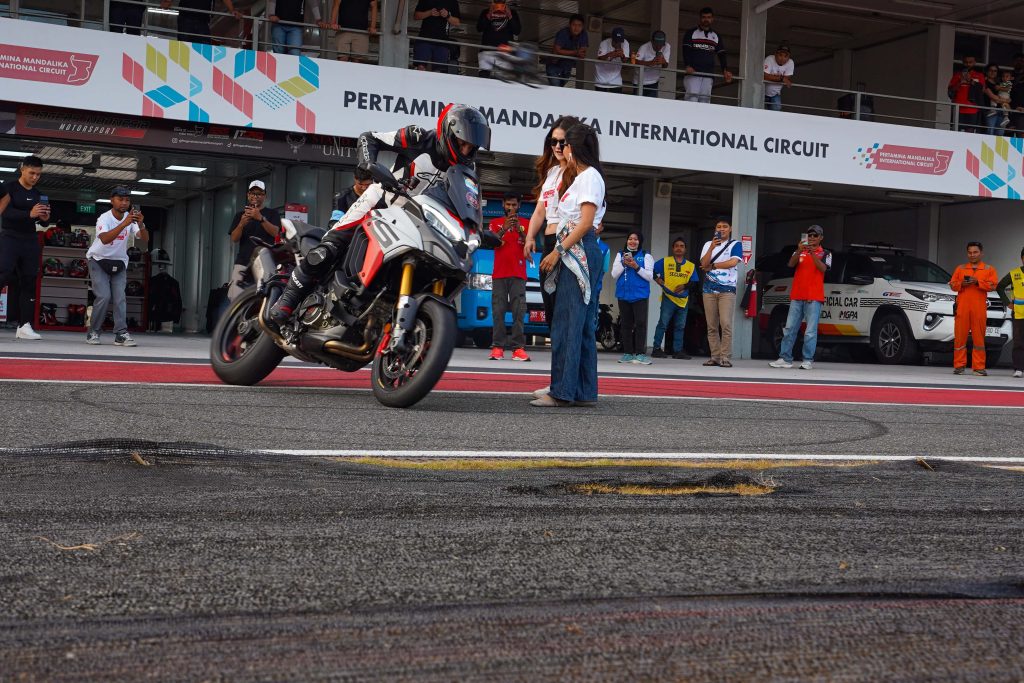
And somewhere during the day you realize you’re circulating Mandalika noticeably faster, not because the Panigale suddenly gained horsepower, but because you’re becoming smoother, more deliberate and more confident in what you’re asking the motorcycle to do.
When the engines finally went quiet, the contrast hit almost as hard as the riding had. One moment you’re tucked behind the windscreen of a Panigale V4 S, listening to a 1,103cc Desmosedici Stradale screaming toward 13,500 rpm; a few hours later, you’re looking out over a tropical coastline.
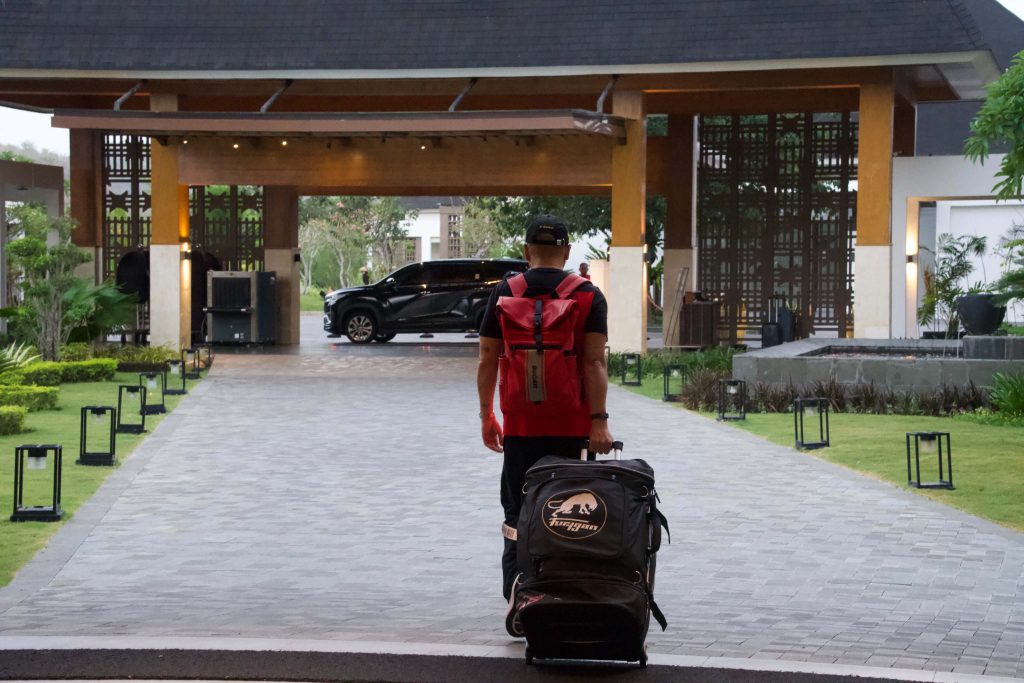
Ducati packaged the Mandalika event as a DRE Holiday, pairing the Racetrack Academy with a stay at the beachfront Pullman Lombok Merujani Mandalika Beach Resort and the landscapes, food and atmosphere of the island.
Mandalika is still developing as an international destination, and that perhaps makes visiting now particularly interesting. Lombok has long lived in the tourism shadow of neighboring Bali, but the combination of beaches, resorts and one of the region’s premier motorsport facilities gives this part of the island a character of its own.
For this story, though, the scenery was the bonus.
The racetrack was the reason we were here.
Motorcyclists spend enormous amounts of time thinking about upgrades, exhausts, suspension, brakes, tires, electronics, carbon fiber. After a day at DRE, you’re reminded that perhaps the most valuable component you can improve is the one sitting in the saddle.
The Ducati Panigale V4 S is a remarkable demonstration of how far the modern superbike has evolved. It combines immense performance with MotoGP-influenced engineering and electronics sophisticated enough to make performance once reserved for racers accessible to ordinary riders.
But DRE provided something the specification sheet couldn’t: perspective.
Following professional racers around a MotoGP circuit makes you understand just how much performance exists inside the Panigale, and how much more there is to learn about extracting it.
I arrived in Mandalika expecting to discover what the Panigale V4 S could do. By the end of the day, the more interesting discovery was what I could still learn to do on it.