





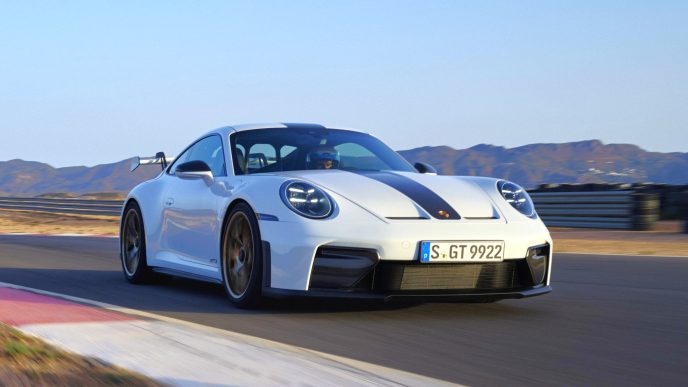
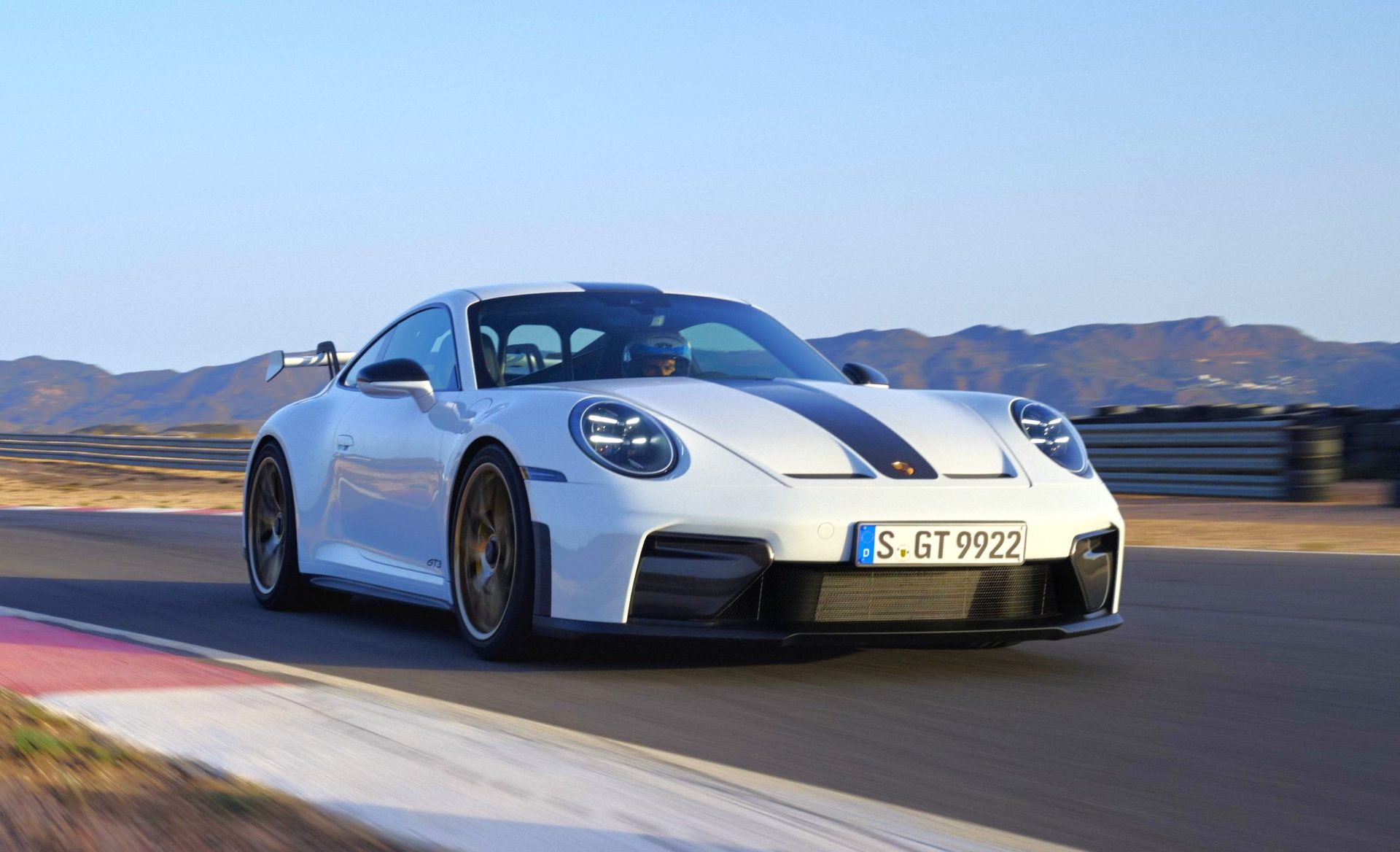
The Porsche 911 GT3 represents the purest expression of Porsche’s motorsport DNA, combining precision engineering with an unfiltered driving experience. Built with performance at its core, it delivers responsiveness, control, and emotional connection in equal measure. Five defining features highlight what makes the 911 GT3 a benchmark in the high-performance sports car segment.
At its heart is a naturally aspirated 4.0-liter flat-six engine, producing over 510 horsepower and revving up to 9,000 rpm. This high-revving engine defines the GT3 experience, delivering an unmistakable sound and immediate throttle response—an increasingly rare trait in today’s turbocharged landscape. Whether on open highways or spirited weekend drives, it offers a level of engagement that feels both raw and precise.
Inside, the GT3 reinforces its driver-focused character with lightweight sport bucket seats. Designed for support and weight reduction, the seats feature foldable backrests and removable headrests, allowing improved helmet clearance for track days—while still maintaining comfort for longer drives.
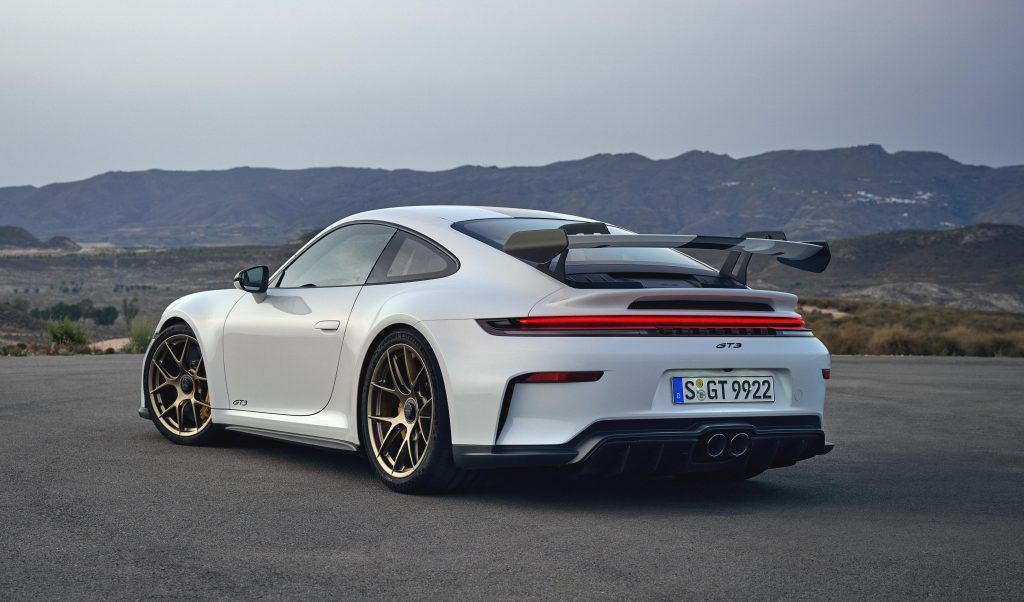
Aerodynamics play a central role in the GT3’s performance. A prominent adjustable rear wing and an equally adjustable front diffuser generate downforce that enhances stability, especially at higher speeds. Every element is shaped by function, ensuring optimal airflow, cooling, and balance—whether on smooth expressways or more demanding driving conditions.
Driving dynamics have been further refined through improvements in suspension and damping systems, along with the integration of an anti-dive system. These enhancements provide greater stability under braking and sharper front-end response, giving drivers more confidence and control in varying road conditions.
In addition, both the manual and PDK transmissions feature a final drive ratio that is 8 percent shorter than the previous model. This results in quicker acceleration and stronger mid-range power, making the car feel more responsive in everyday driving situations.
The Porsche 911 GT3 remains a benchmark for pure performance—delivering a direct and engaging connection between driver and machine, whether on the road or the track.