


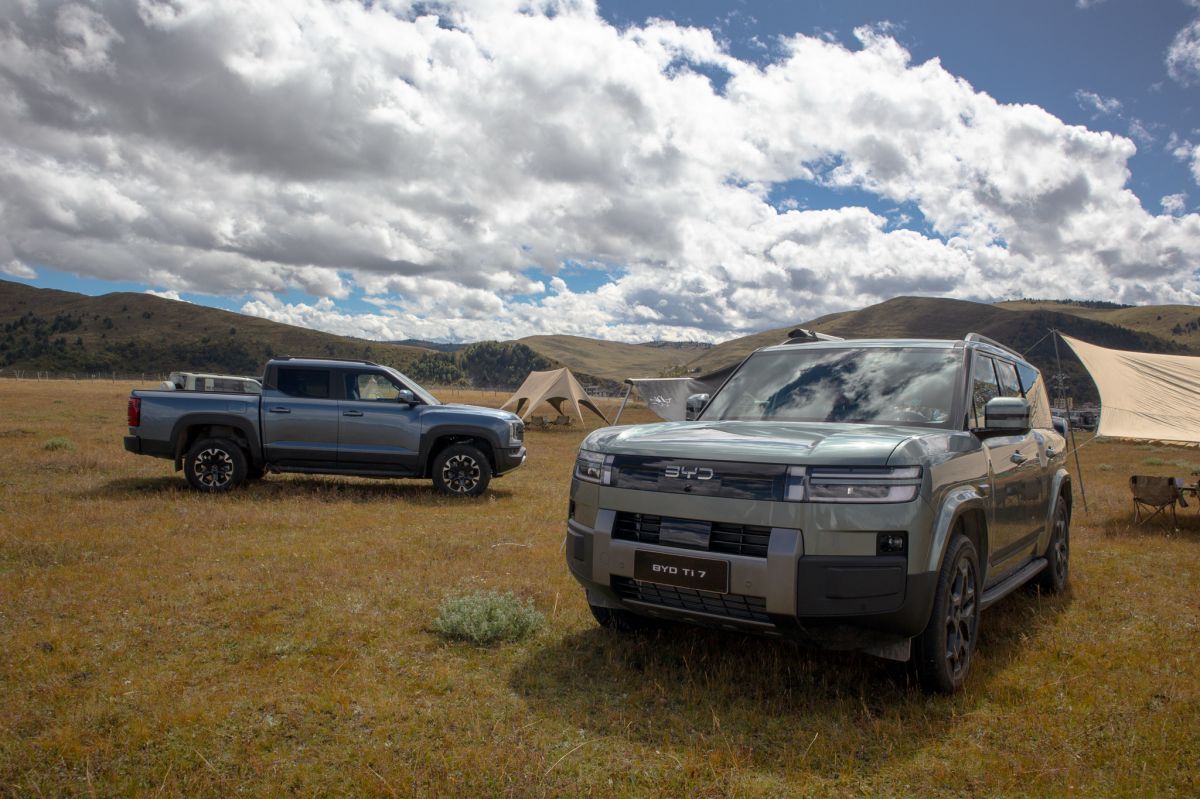
Filipinos know that global new energy mobility leader BYD also owns the Denza brand – positioned as offering more premium products. And while BYD has vastly expanded its lineup here to cover various price and product segments, Denza for its part has had an auspicious debut through its luxury multi-purpose vehicle D9 and the B5 and B8 boxy SUVs. It’s not a stretch to say that more models are coming for both.
During a recent trip to Western Sichuan, members of the media were given ride time aboard several Denza vehicles plus the BYD Shark 6 pickup. Upon closer inspection though, some didn’t have the familiar circular Denza logo – depicting “silver wings (converging) at the center, symbolizing unity and strength.” Rather, the B5 and B8 in the convoy had an emblem akin to interconnected diamond shapes.
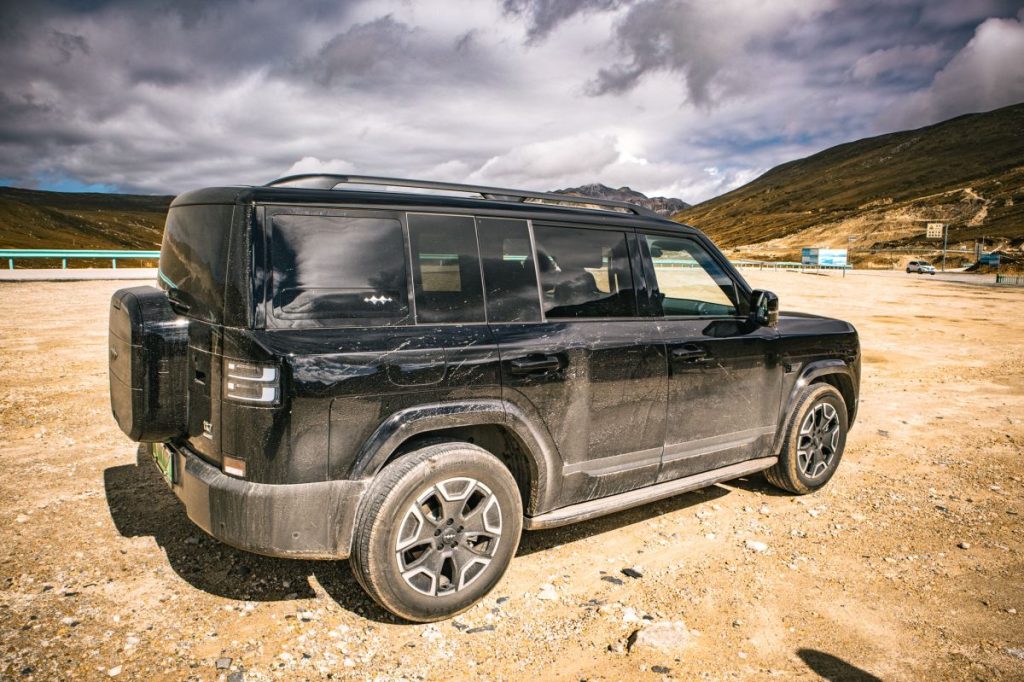
This is not a mistake; the boxy SUV models are marketed under the Fangchengbao (or, translated, Formula Leopard) brand in China. This line’s key value proposition is off-roading and heightened performance.
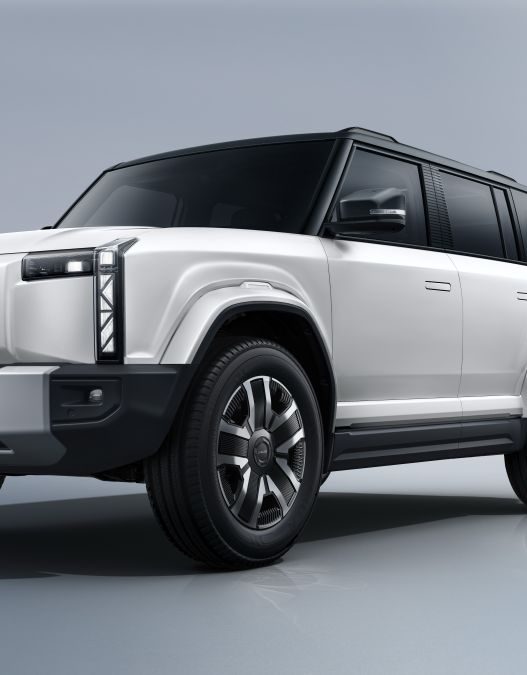
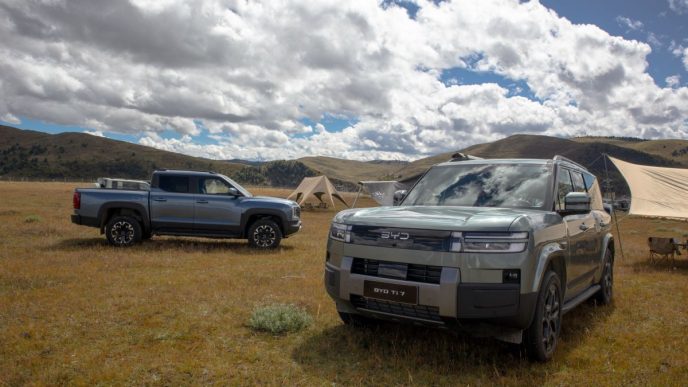
Speaking of, virtually confirmed to arrive in the Philippines next year under the BYD brand is the Ti7 SUV which is, yes, originally badged as a Fangchengbao. Already launched in Europe as a seven-seater, the Ti7 (pronounced “tie seven”) is a mid-sized plug-in hybrid SUV set to do battle in the segment where Japanese legacy brands like Toyota and Mitsubishi staked their flags many decades ago. The Ti7 stretches some five meters long, two meters wide, and is 1.865 meters tall. A wheelbase measurement of 2.92 meters will allow for a seven-seat layout (a five-seater is available as well). This will be the very first BYD boxy SUV, which is obviously a flourishing market in the country.
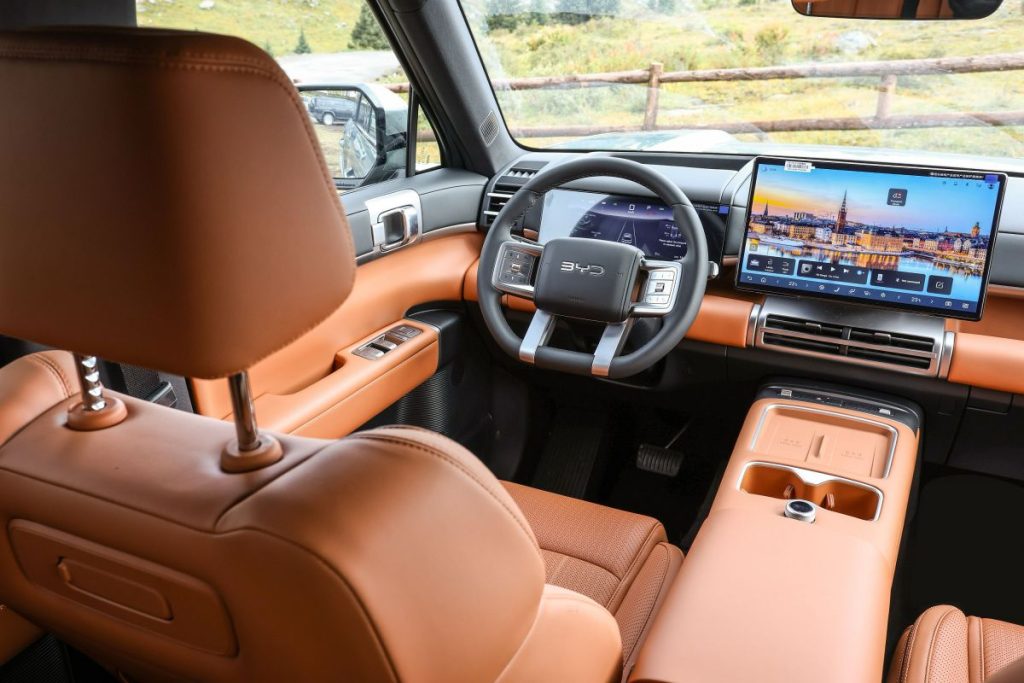
BYD shares that the Ti7 will get DiSus-C (all-wheel drive) and a DM-P plug-in hybrid system. A turbocharged 1.5-liter internal combustion engine is at the heart of the system that is said to promise sprightly acceleration (with a standstill-to-100kph time of 4.8 seconds) and a top speed of 190kph. Pure-electric range is set at 155km with a total combined range of 985km (per NEDC standard). It has various terrain settings, and is also reportedly able to make a Leopard Turn (a zero-radius tank turn).
Some of us were asked by officials including BYD and Denza Philippines President Adam Hu for our opinion on passenger capacity. I said a seven-seater may prove to be the wiser choice versus the five-seater, since Filipinos have larger families and we do love to travel in groups. Anyway, the last row may be stowed when not in use, anyway. Speaking of, with the second and third rows folded, the Ti7 boasts 1,830 liters of cargo space. Besides, it’s a Ti7, not Ti5, I added in jest.
I spent significant time in the Ti7’s second row on one leg of our Sichuan adventure. It found it spacious – allowing me to doze off in comfort or take in the breathtaking scenery through the SUV’s large greenhouse. The iteration we took, a five-seater, swallowed our pieces of luggage and more without difficulty.
We did get behind the wheel (though for a very brief stint) of the Ti7 on unpaved terrain, where it proved it can up to speed quickly and soak up road imperfections. It felt solidly built, and we appreciated the slew of safety and driver-assistive technologies that have underlined the BYD experience across its offerings. Add to these accoutrements such as an 18-speaker immersive audio system, dual 50W wireless charging pads, a refrigerator, V2L capability, and Google app system, and you get one compelling package that will surely help make the BYD Ti7 one of the eagerly awaited releases of 2027.