



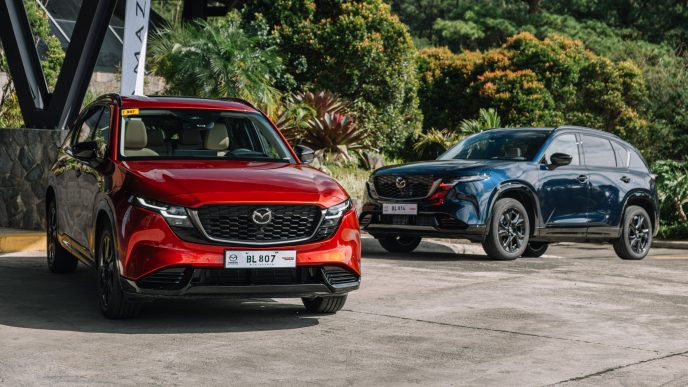
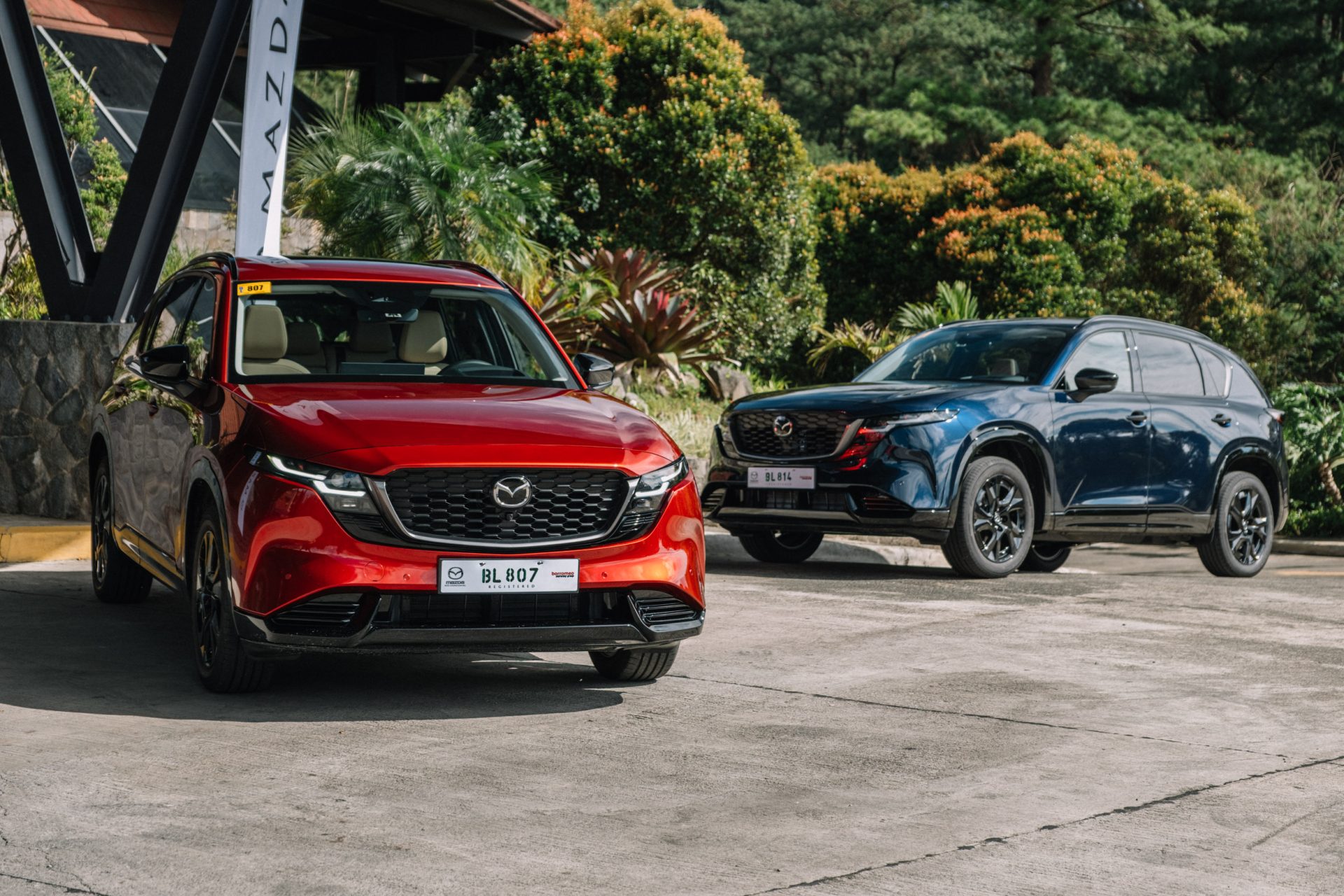
It’s been one heck of a year, with legacy Japanese automakers doing battle in the compact crossover segment— nearly updating every single model or bringing them back into the fray with an electrified twist. A lot of these nameplates are sure to elicit an emotional response as they’ve been in the market for a while, and the third-generation Mazda CX-5 is one of the contenders in this segment.
Introduced locally last August, it brings a whole slew of changes from the new design that’s inspired by the concept of “Wearable Gear” to the roomier, albeit controversial, interior update that also brings over a whole new set of ways to interact with the vehicle, all for Php 2,495,000 for the 2.5L AT AWD HEV Premium Plus variant.
Seeing how the car looks in person is one thing, but the way a vehicle drives and feels in the real world is another thing, which is what we got to experience on a drive with Mazda Philippines from Cabuyao, Laguna, to Baguio and back.
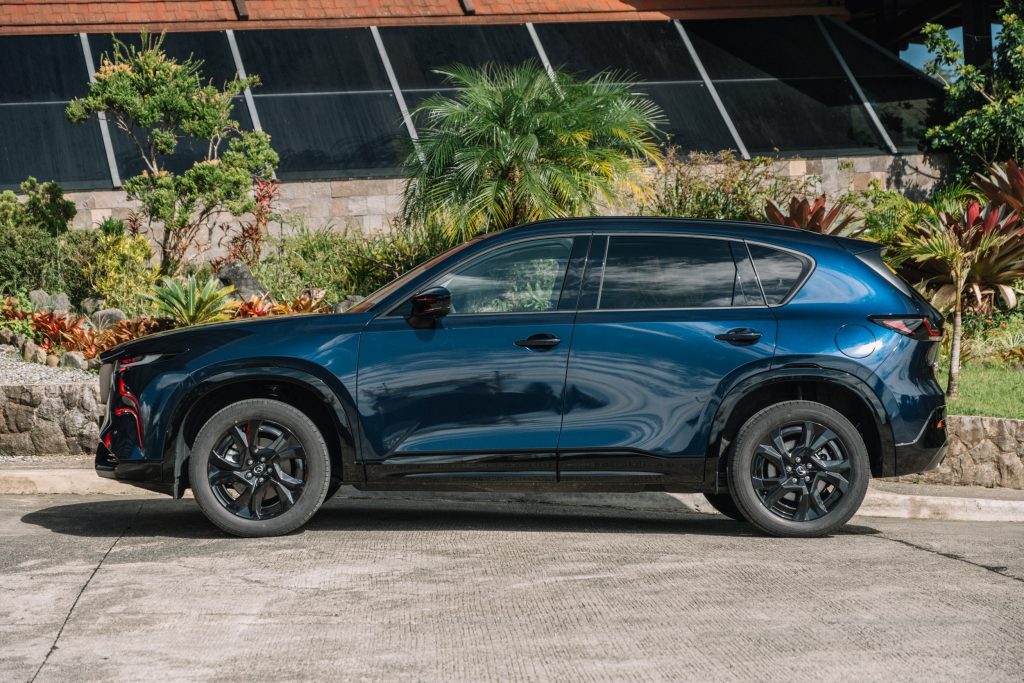
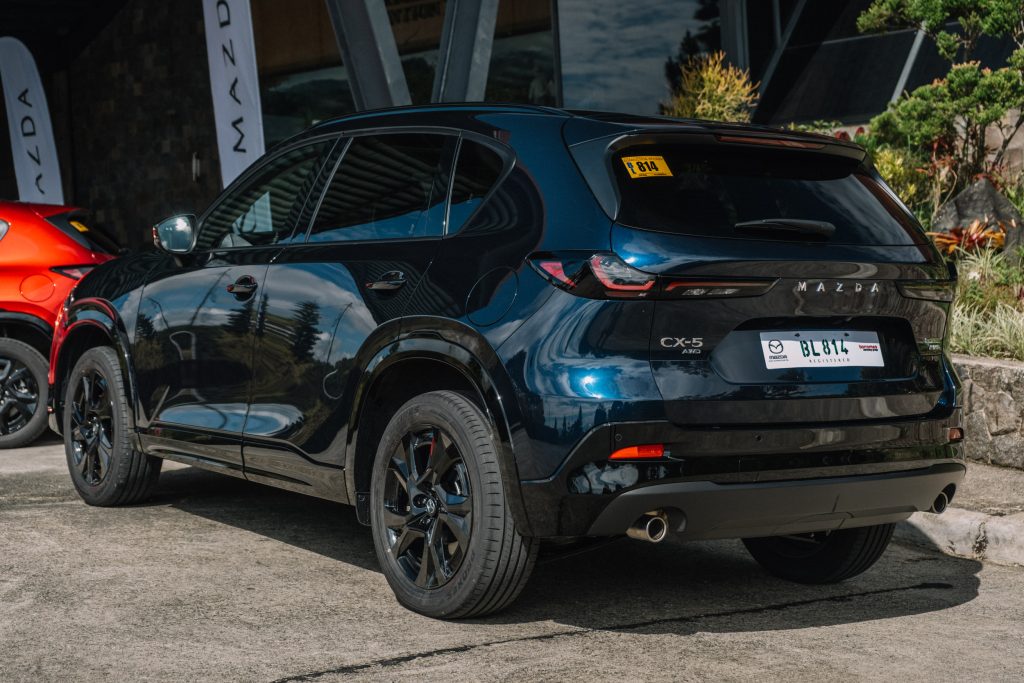
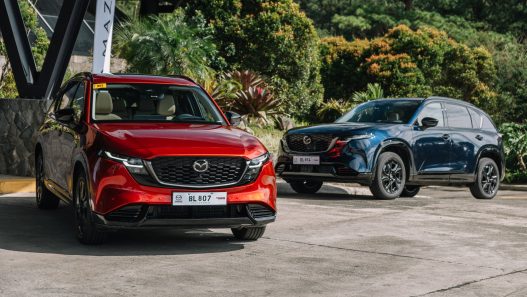
The exterior design is one point that Mazda has gotten right. The third-generation CX-5 may be more angular and aggressive compared to previous generations, but it plays well into being a very distinctive design that stands out on the road. The slimmed-down headlights, taillights, and the new Mazda wordmark play well with the longer dimensions when viewed from the side to give more road presence, though the all-black 19-inch alloy wheels can tend to look a bit smaller depending on the color you pick.
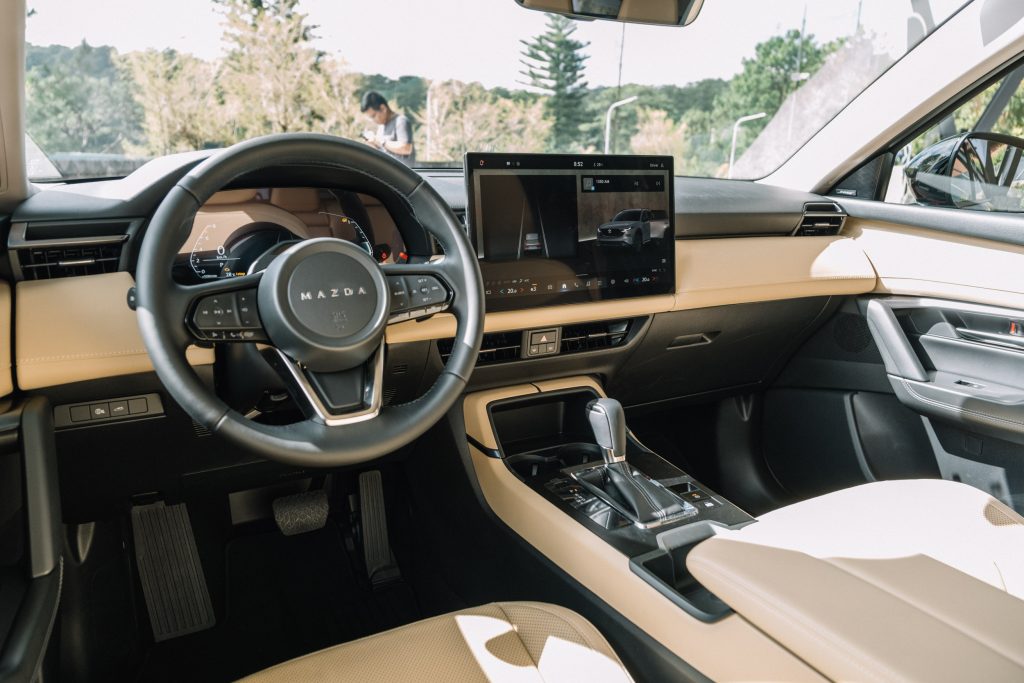
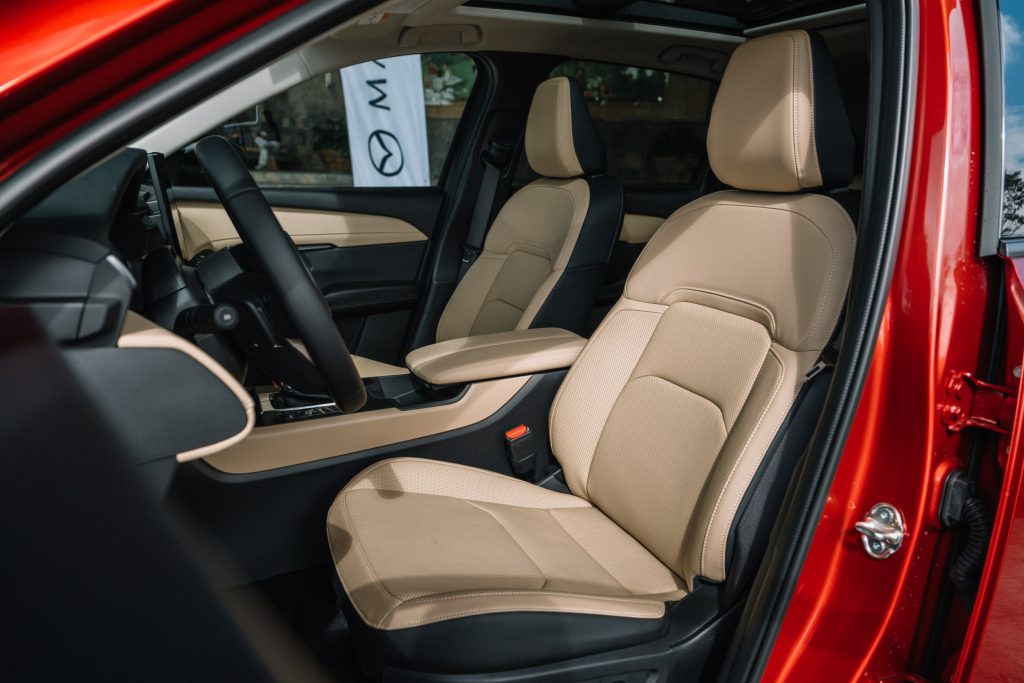
First impressions matter, and that’s one of the strengths of the interior. The two-tone tan-and-black leather-appointed cabin is attractive and easy on the eyes, with the material expanding to the door cards and dashboard. There’s a notable absence of gloss black plastic, replaced with more premium-looking matte plastics in places you’d normally expect them, but you can feel around the cabin that some parts have lost their soft-touch feel in favor of harder-wearing plastics, which does cheapen the experience a bit, especially compared to the previous-generation model.
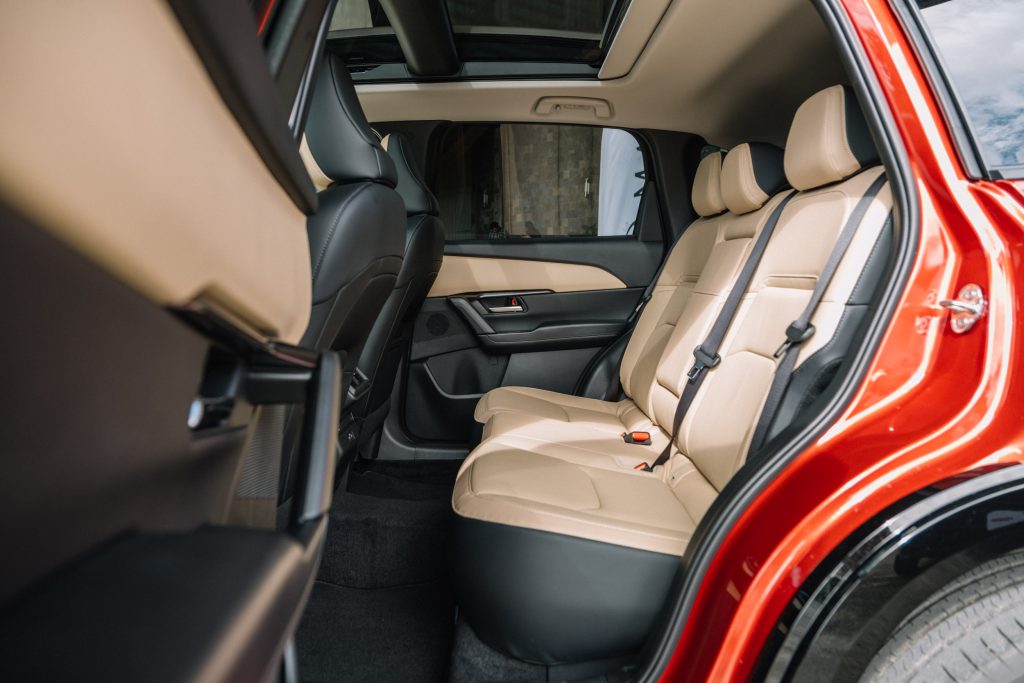
The lengthened dimensions benefit rear-seat passengers who get loads of leg and headroom, and getting in and out of the second row is a lot easier thanks to the wider opening doors, something that’s been carried over from its other CX models. Add in the more spacious cargo area, heated rear seats that can be reclined in two steps, the panoramic sunroof, and you can see where Mazda has put their efforts into making it more family-oriented.
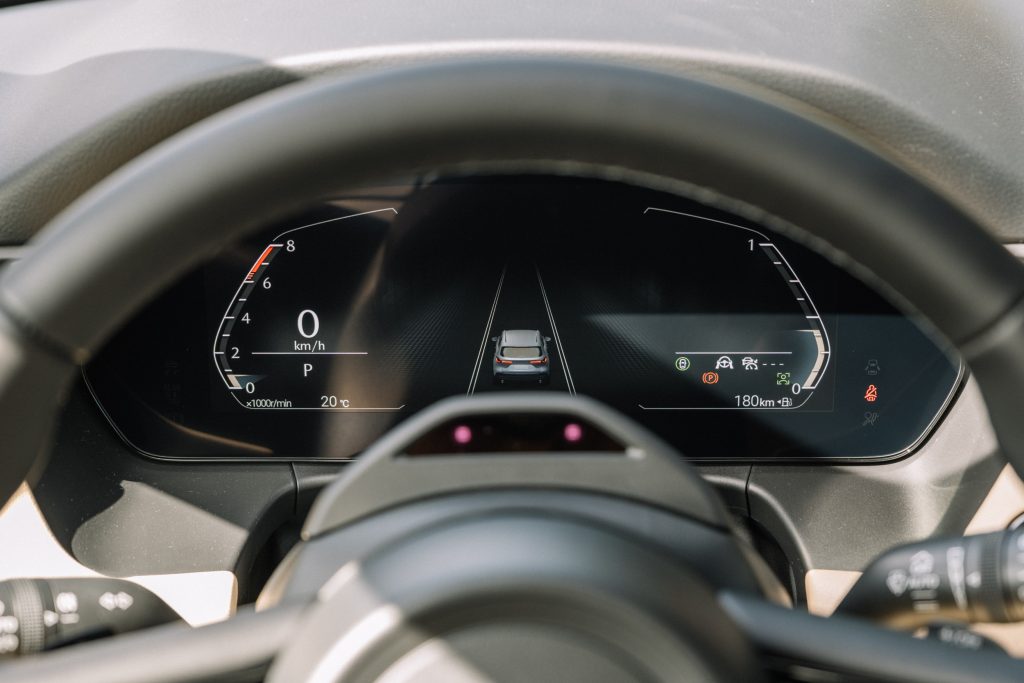
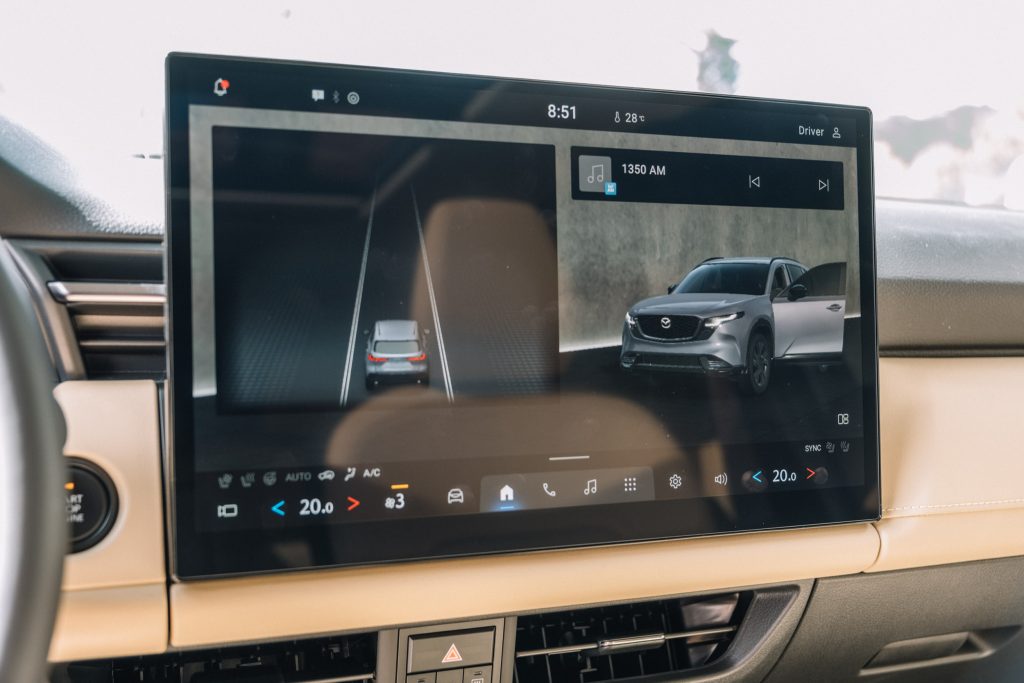
On to the most controversial aspect, which is how you interact with the CX-5’s systems. It looks and feels more like a modern car than what you’d normally expect from a Mazda, as the commander knob-operated display has been replaced with a 15.6-inch touchscreen that sits front and center.
Going with the times, a lot of the vehicle’s control systems have been migrated from physical buttons to touch targets within the Android Automotive-based operating system, which also extends to the new digital instrument cluster.
While the absolute essentials like wipers, lights, and defroster controls remain physical, a lot of other options like your memory seats, drive modes, volume, and other climate controls now reside within two or three more menus on the touchscreen. This isn’t ideal, as you would have to take your eyes off the road to hunt and peck for these functions that would normally be accessible with one press.
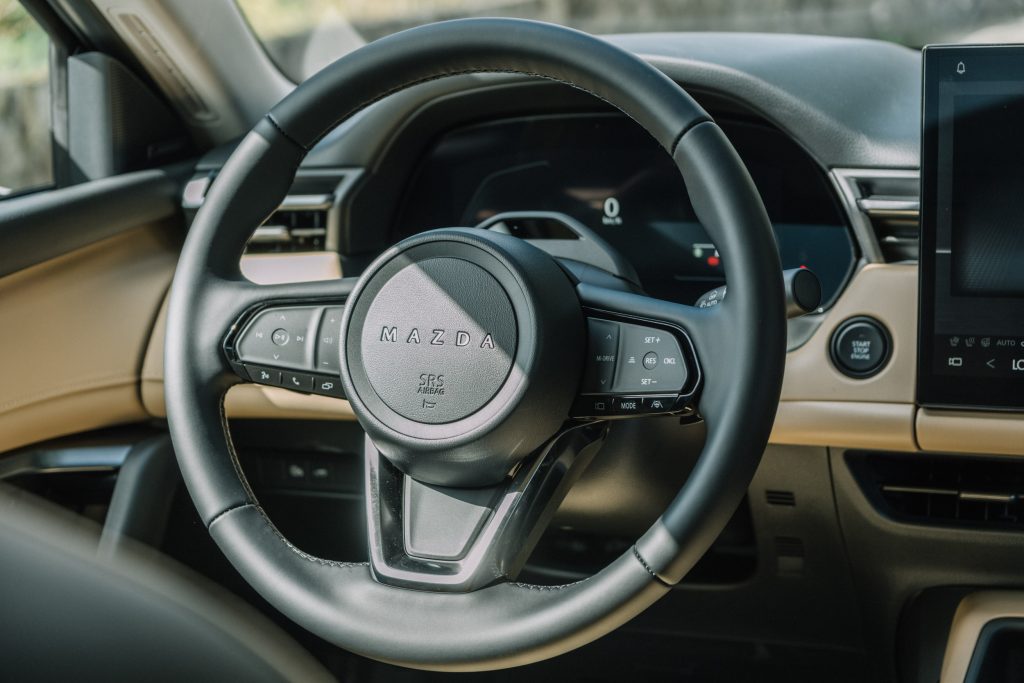
The brand-new steering wheel controls combine both physical and touch gestures, where, in lieu of separate physical buttons, the entire steering wheel control area clicks and depresses. It offers a solution for some of the missing physical controls. Volume controls, media controls, the drive mode, ADAS functionality, and a shortcut for your 360-degree camera are at your fingertips, and you can also do some swipe and flick gestures to quickly adjust volume and other options.
And do note that our local model lacks Google’s built-in functionality, with Google Maps, Gemini, and other functionality missing, meaning you’ll have to rely on Apple CarPlay and Android Auto functionality— but the saving grace is that modern software-based cars can easily be updated with new features, and these could also iron out the kinks found in the operating system, such as the low-resolution graphics and laggy frame rate of some animations.
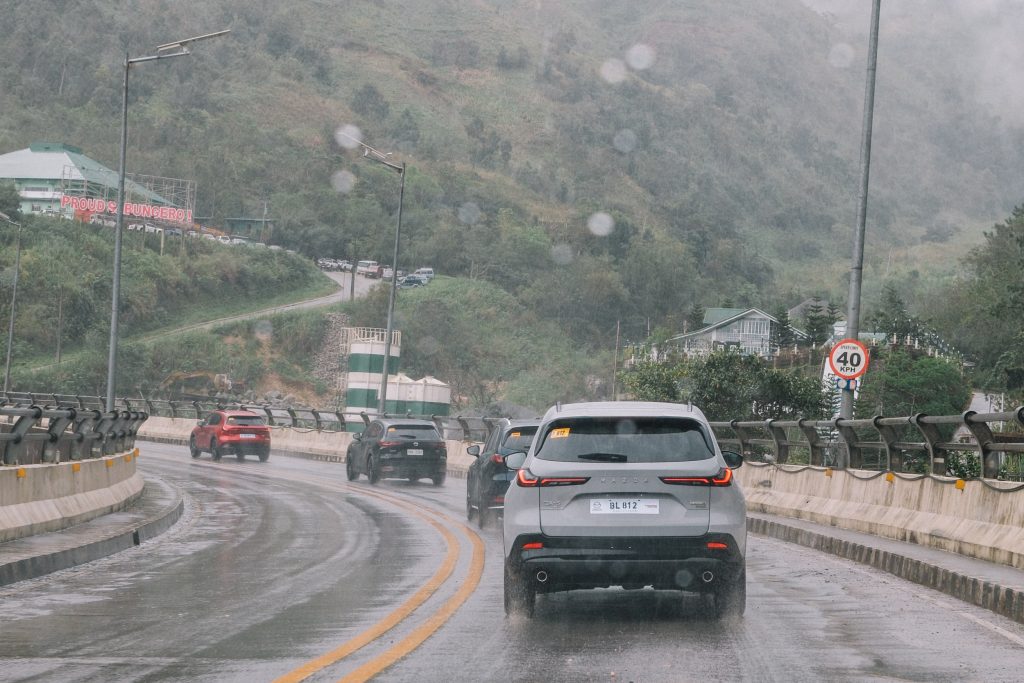
However, despite these issues, there’s one aspect that Mazda has done right and is also one of the key differentiators of this model, especially when compared to the competition, and it’s the driving dynamics. The automaker knows a thing or two about how to make great handling vehicles, and it still translates to the CX-5, with the Jinba-Ittai experience being present here.
Despite being longer, it’s a very adept and confident crossover. The steering is nicely weighted to not tire you out on longer stints, but is communicative and heavy enough to make you feel like you’re in control of the machine instead of the usual effortless, overboosted driving experience.

The suspension and chassis tuning also puts passenger comfort first, where going over undulations, bumpy roads, and anything that would unsettle the ride would be well controlled and damped properly, rarely bottoming out and even controlling motion sickness-inducing body roll well in the corners. It may still feel a little firm, but that firmness is well sorted and also adds to the confidence of this crossover on the twisty roads leading up and going down Baguio.

As for the powertrain, underneath the hood is the 2.5-liter e-Skyactiv G gasoline engine with a 24V M Hybrid system. It produces 181 horsepower and 242Nm and sends power to an all-wheel-drive drivetrain via a smooth-shifting six-speed automatic transmission. It’s a fairly respectable power output, but when taken in the context of the competition that utilizes stronger hybrid systems and turbocharging, it looks a bit underpowered.
When driving normally and on the expressway, it gets up to speed just fine without any complaints, in a smooth manner. Low-end power is assisted by the electric motor, but once you start climbing up steep inclines or need more power out of the engine, you begin to feel the lack of power as the engine begins to roar when the revs climb, and it doesn’t feel as effortless as the competition.
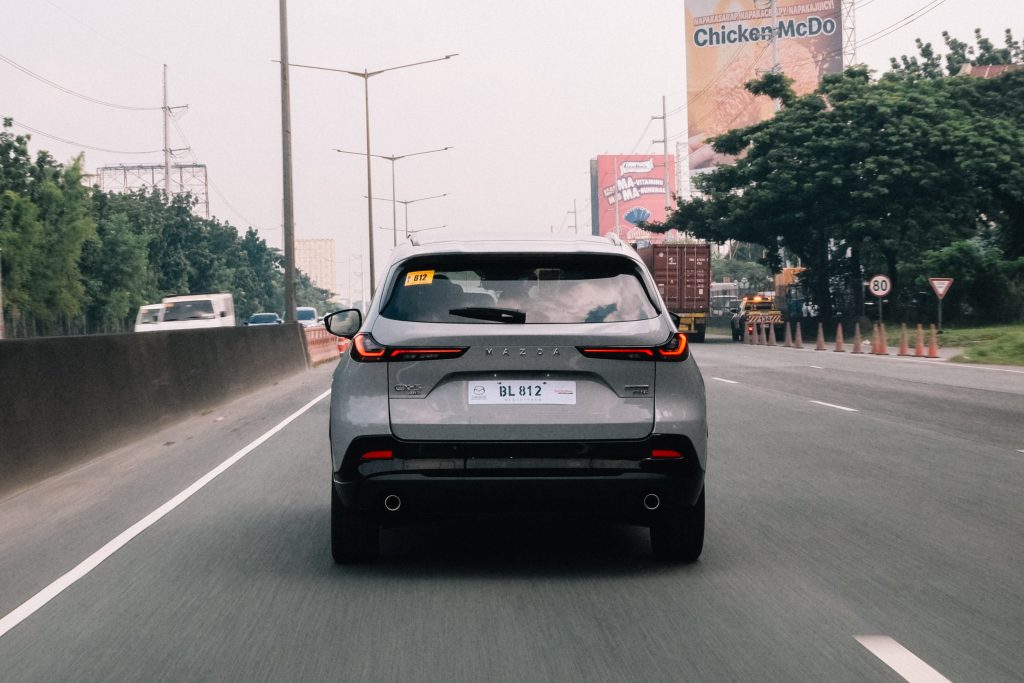
Overtakes or any maneuvers that demand more power will need to be planned, but apart from that, it’s a smooth cruiser that is also noticeably quieter than the previous-generation CX-5, especially on the rough surfaces found on TPLEX.
As for the average fuel economy, well, preliminary results (as the engine hasn’t been broken in yet) showed figures around 14km/L with three adults and luggage in the vehicle. While not as good as the competition, it’s a respectable figure for the engine displacement and drivetrain combo.
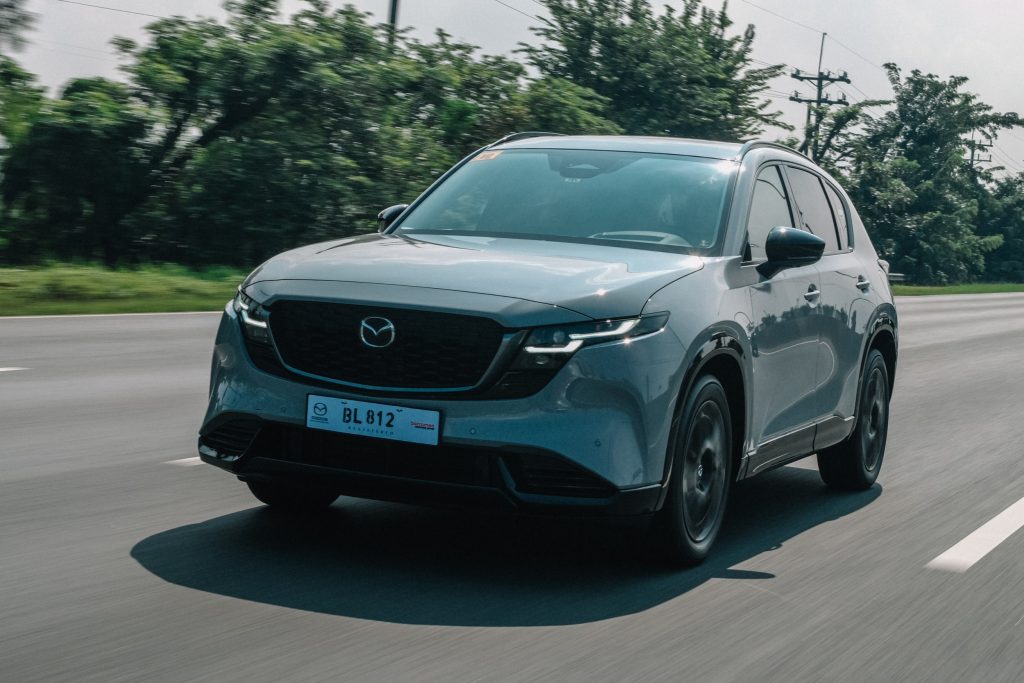
While the competition has indeed gotten more serious and is trading blows with each other, the third-generation CX-5 showcases that the crossover is still capable of standing out and hanging with the giants.
It has cemented its own identity with the driving dynamics it’s been known for, while also accommodating a more mainstream market with improvements in cabin space, ride comfort, and, controversially, its tech. Essentially, this is for drivers looking for a practical compact crossover that can provide an engaging driving experience with Mazda’s own flavor.