


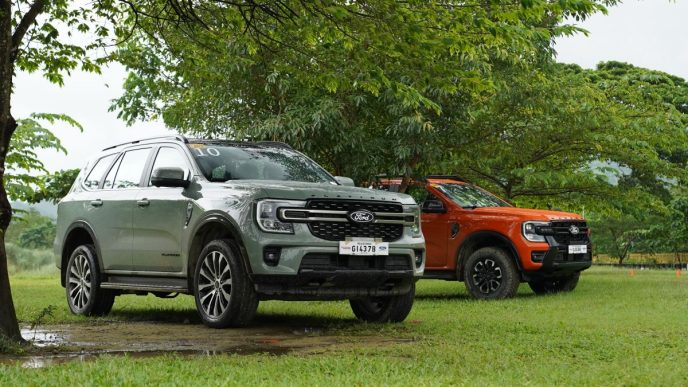
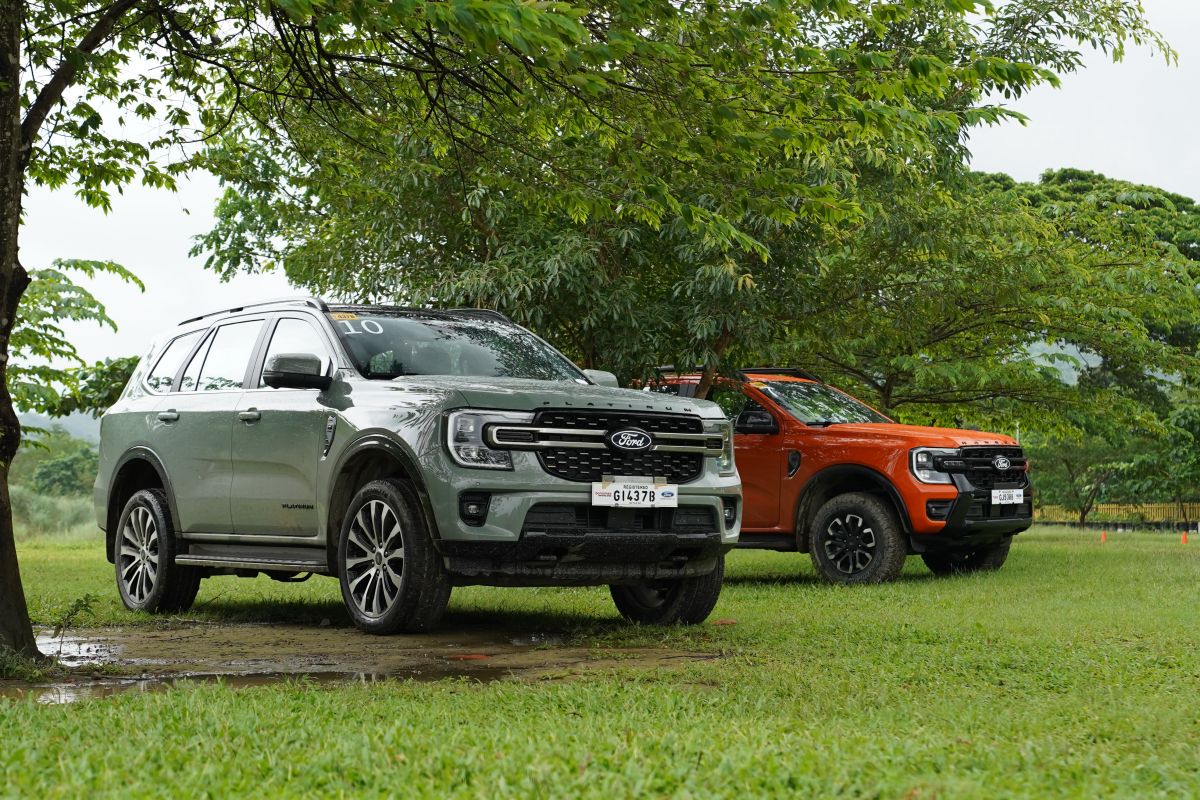
Ford, known for big cars, has finally put bigger engines under the hood. The new Everest and Ranger are now available with V6 Turbo Diesel engines – something that you’ll only see before in premium brands or more expensive cars in the lineup.
The revisions didn’t stop there. The Ranger lineup was narrowed down, there’s a new 10-speed transmission, and a new 2-liter turbo diesel for the Everest – which is weird because at the other end, all new Ranger trims have the V6 Turbo Diesel available under the hood.
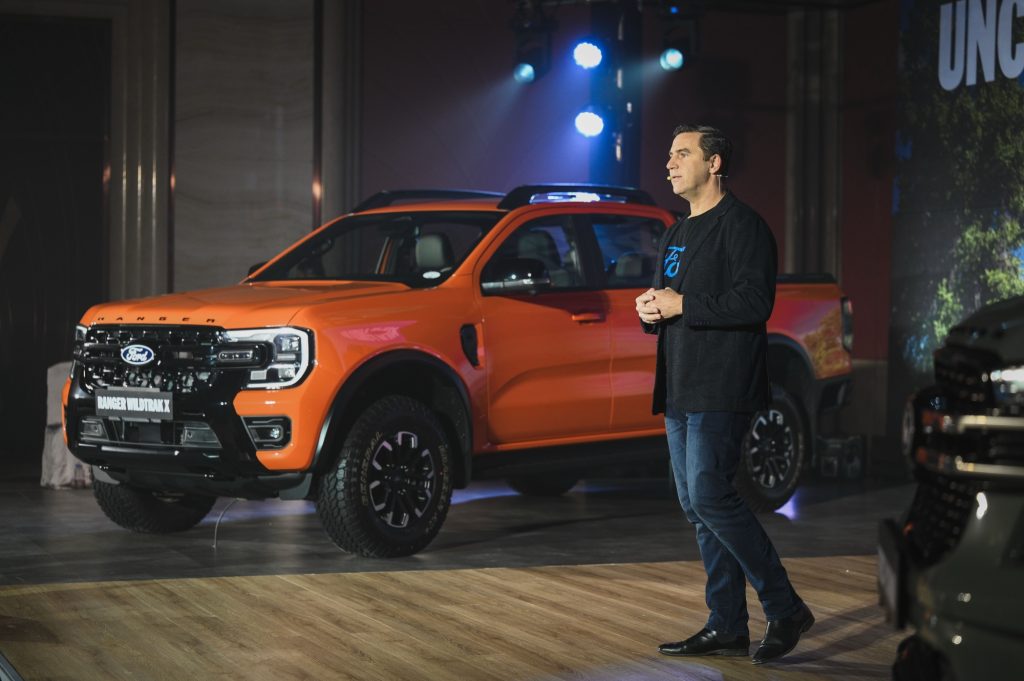
To learn more about these, I talked to Phil Millar, the Chief Program Engineer for Ranger and Everest in Cycle of Ford International Markets Group during our drive with their V6 twins.
The move to V6 Diesel engines was a surprising move, especially now that everyone was turning towards electrification. But according to Millar, this was the right thing to do for their customers at this point in time. Still, the move to bigger engines was unexpected.
“The Bi-Turbo was taken out of corporate strategy so the right thing to do was to bring this 3 liter [V6] across,” Millar said. “It’s been tried and tested across a number of different markets.”
That meant introducing the V6 while simultaneously updating the 2.0-liter diesel rather than immediately moving the Ranger and Everest toward electrification. Millar said Ford believes the combination of the 3.0-liter V6 and updated 2.0-liter engine provides the right balance for its customers. The V6 also brings a substantial jump in output. The new diesel makes 250 PS and 600 Nm, compared with the previous 2.0-liter bi-turbo’s 210 PS and 500 Nm.
As for the new 2-liter diesel engine in the more attainable trims of the Everest, Ford simply made it more robust.
“We put a new Bosch fuel injection system into it. We put new pistons in it, so steel pistons rather than the aluminum pistons it used to have. We’ve got a timing chain instead of the timing belt. We recalibrated the engine to match the transmission, the fuel injection systems, make it more refined, and give it more quality in terms of how it operates. So there’s a raft of internal changes that have gone into it, as well as electronics and software around it,” according to Millar.
Another change for the Everest and Ranger is in how the engine transfers power to the wheels. There’s a new 10-speed transmission that is paired to the V6 Diesel engines, but to the new 2-liter as well.
“It was always paired with the 3-liter,” Millar said about the 10-speed transmission. “It made the most of that engine’s characteristics. But with the updated 2-liter, it allows us to use that engine, use the capability, the engine, and keep the engine in the spot we always want to be. So the 10-speed is really a sweet match to that powertrain.”
What stands out now is the Ranger Raptor. Their off-road racer used to have the 2-liter Bi-Turbo engine, then came the more powerful gasoline V6. I was curious as to why they didn’t fit it with the V6 Diesel instead, knowing that Filipinos like their torque.
“The V6 gas really accentuates what the Raptor is about. Raptor is an off-road performance, emotional product, puts a smile on your face,” Millar shares. “It’s the type of product you want to get into. When you start it, you hear it. You put it in Baja mode, you listen to it. And we can see today, people driving the car a number of times we stopped, and people were just grabbing and listening to the car. It’s what it’s about.”
During the drive, the difference between the Ranger Raptor and Ranger Wildtrak X is unmistakable. The V6 Diesel in the Ranger Wildtrak X and Wildtrak indeed has more torque early in the throttle range, but the Raptor isn’t lagging that much behind. The overall cohesion of the parts of the Ranger Raptor also results in a gnarlier, more throaty, exhaust note that really puts a smile on my face. You’ll be eager not to shift just to reach those higher revs and hear that glorious exhaust.
Moving to local strategy, I asked a Ford Philippines executive about the variant decisions in the Everest and Ranger. It’s peculiar that the Ranger gets the V6 Diesel across but for the Everest, it’s only present in the Platinum which is the top of the line trim. The rest of the lineup had to make do with the new 2-liter diesel.
“The Ranger has a very niche audience right now. It’s not a work utility aspect anymore but more of a lifestyle because that’s where the market is, at least for Ford,” he said. “Our audience for the Everest is similar to the Territory where it’s more family oriented. Most of the time you don’t need a V6 for that, and that’s where the new 2-liter turbo diesel comes in.”
The new Ford Ranger Wildtrak X 4×4 is available for PHP 2,609,000 while the Ranger Wildtrak 4×4 is at PHP 2,469,000. Keep note one has an X. Meanwhile the Ranger Raptor with the V6 EcoBoost gasoline 4×4 can be yours for PHP 2,879,000.
As for the Everest, it starts at PHP 1,949,000 for the Active Turbo 4×2, PHP 2,219,000 for the Sport+ Turbo 4×2, with the Everest Wildtrak 2.0 Turbo 4×4 at PHP 2,669,000. The new top of the line Everest Platinum 3.0 V6 4×4 is available at PHP 2,849,000.