


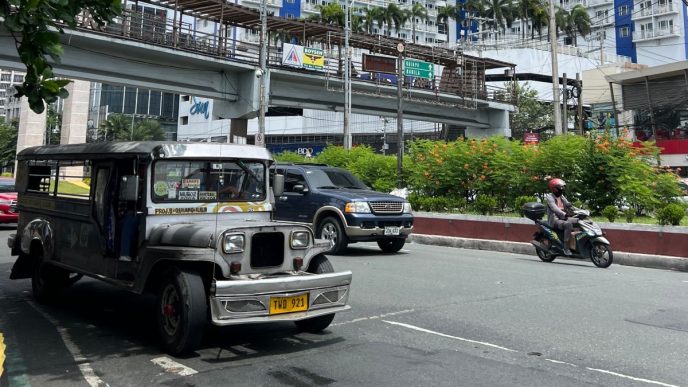
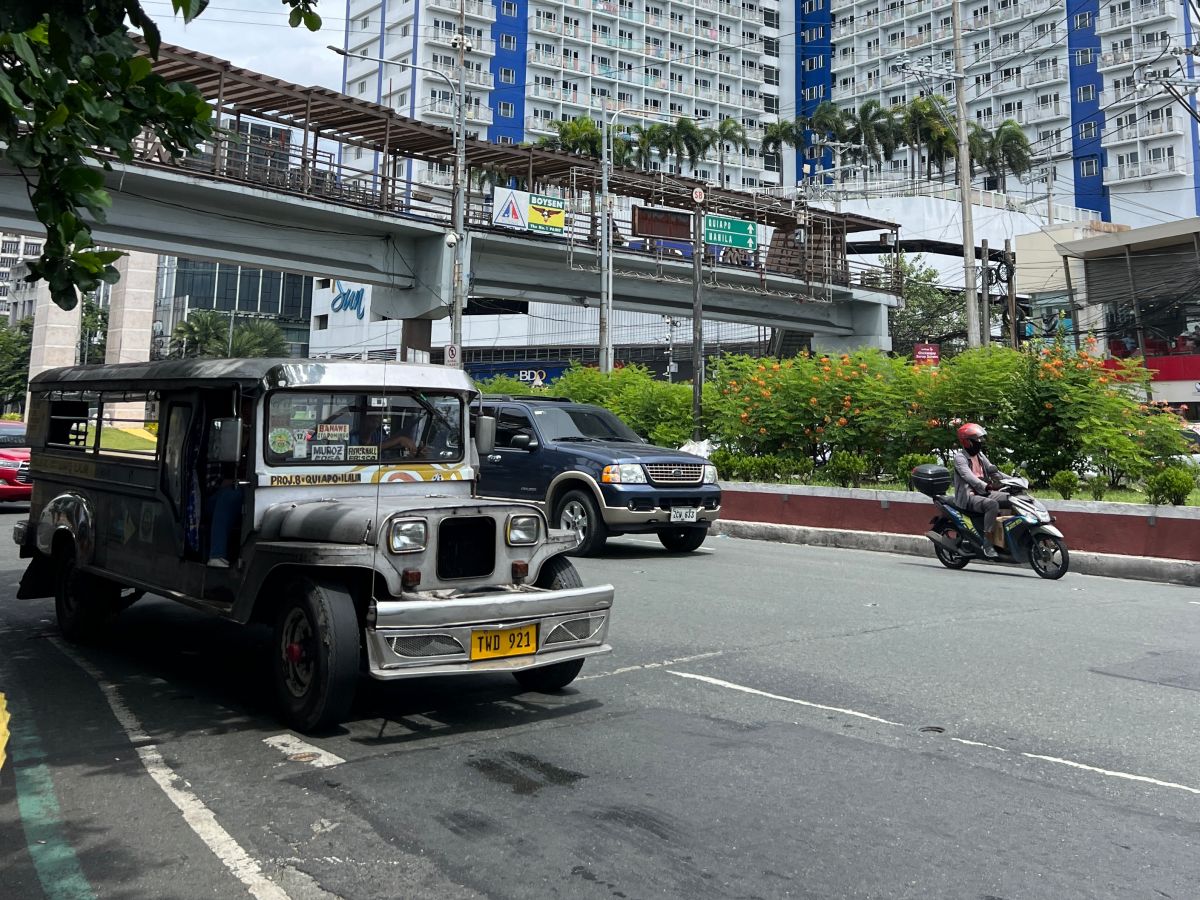
Last week, I had the opportunity to ride the public transport system again. I’m not talking about the semi-private options like Grab and Angkas. I rode the raw, raunchy, and real jeepneys. These vehicles were a daunting option back when I didn’t have a car. It’s prone to danger (and I’ve been involved in one that lost its brake while I sat in front), your travel time is unpredictable, and your scent would depend on how haggard your seatmate is.
Going back to riding a jeepney after years of only driving cars made me realize a few things. I’m sure government officials will come to the same conclusion if they do the same. That is, trains are the best answer to the traffic and mobility woes of the country.
Excluded from traffic
Jeepneys do not have exclusive lanes, and most roads do not have PUV exclusive lanes like those on Commonwealth Avenue. If you ride one, you’re bound to be stuck just like those in cars – only you’re at the mercy of the crowd in your jeep and the temperature at the time. Even the bus lane in EDSA gets cramped thanks to overwaiting buses and the occasional violators that enter.
These are all crossed out with a train. Their tracks aren’t accessible to other vehicles making them virtually immune to traffic. There are hiccups from time to time but, depending on the maintenance of the contractor, they are very few and far in between. The longest waiting time I had inside a train was around 20 minutes, when a train on the next station lost its power and they had to push it out of the way. That happened only once in my 11 years of riding trains.
Bright minded individuals would say that while that is true, the traffic happens elsewhere, implying the long queueing lines in train stations. That’s true. But also true is that it rests again on the contractor on how well they service the trains, and how many carriages they have.
More predictable
What really sparked my nostalgia for trains was the time it took me to my destination. The jeep stopped at almost every kilometer, didn’t go through underpasses or flyovers, and of course there are stops where it took its time to wait for passengers. My 15 minute 10 km trip with a car ended up being 40 minutes with a jeep.
This is one of the most frustrating aspects of riding the jeepney – you’re not sure what time you’ll arrive at your destination. If you get on at the end of their route, you’ll have to pray that other passengers arrive soon otherwise you can be stuck there for quite a while. They will also stop longer at every jeepney stopped allowed on the road if they can’t pick up passengers along the way.
Trains do not have this problem. They will close the doors after around one minute of allowance during rush hours. Even at off-peak time, they will wait a minute or two at a station before moving on.
Even if there’s a long line of people, things are still predictable. Again, this is provided that the maintenance work was done and no train fails along the way. The time to get onto the train will be slow, but steady, and still more timely than riding a jeep that’s pleading to have more passengers.
Better payment systems
Riding a jeep is a reminder of our “Bayanihan System.” Passengers help each other get the payment to the driver, and get the change back to the person who paid. We also shout for other passengers in case they can’t be heard by the driver.
The downside of this is when it’s the jeepney’s first trip, or your bill is too large, or they just re-fueled. You’ll hear the epic “Wala kang barya?” question from the driver, to which you’ll answer in your most pleading way “Wala po eh.”
Apart from paying the right amount, the train’s payment system ensures you get your exact change immediately. This avoids you missing your stop because you’re still waiting for a change or worse, getting into an altercation with the driver simply because you don’t have a smaller amount.
Generally safer
The biggest draw of trains is how safer it is, on average, compared to jeeps or buses. Trains do not overtake abruptly, have minimal body roll, and are not driven erratically by the drivers. There’s also less cases of crimes being committed on trains simply because your only out is another station with an immediate visibility of a security guard or stationed police officers.
Of course, there’s also the comfort aspect. A train has more seats, cooler aircon than buses, and easier to get in and out of even at its most cramped instances. I know because I’ve been there.
Can connect cities and provinces
A train system is the only one that can fulfill Mark Villar’s famous quote – connecting every city in Metro Manila within 20-30 minutes. You can easily connect EDSA-Ortigas to Antipolo that will ease the congestion in the area. It will also connect the west side to the center, and can make the south area more accessible.
Trains are also the perfect inter-province mode of transportation. It actually happened in the 50s and 60s when the Philippine National Railways reached all the way to Dagupan in the north, and Sorsogon in the south. Imagine if today you can get to Zambales, Ilocos, La Union, Cagayan, and Aurora via trains. It will not only make travelling easier for residents of those provinces, it will also democratize travelling for tourists and make tourism healthier.
To be fair to the government, there are a number of pending train projects in the city. The problem is they aren’t given enough attention to be funded and there’s always right of way issues given that many places are already developed.
At this point, the only places that need concrete roads are the far flung areas – those that literally do not have paved roads yet. Otherwise, we’re funneling money and effort into a project that only serves the relative few. This is why people and mobility groups are mad at road widening and construction projects that come at the expense of nature. They simply aren’t for the greater good. If they really were, then why is traffic still bad?